
Portuguese story with translation · A2 · 14 lines
Tomara que a Branquinha aguente I hope Branquinha holds up
Comic · 7 panels

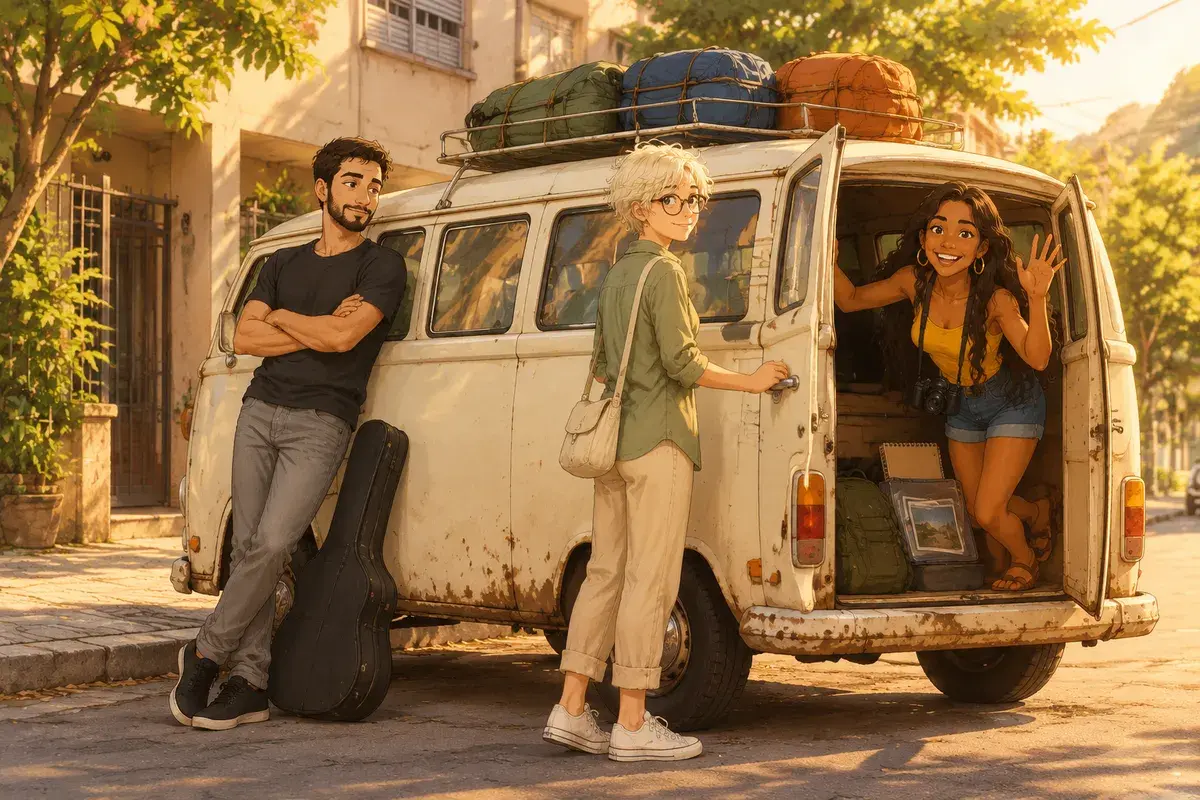
É a última noite no Rio, e eu não consigo dormir.
It's the last night in Rio, and I can't sleep.
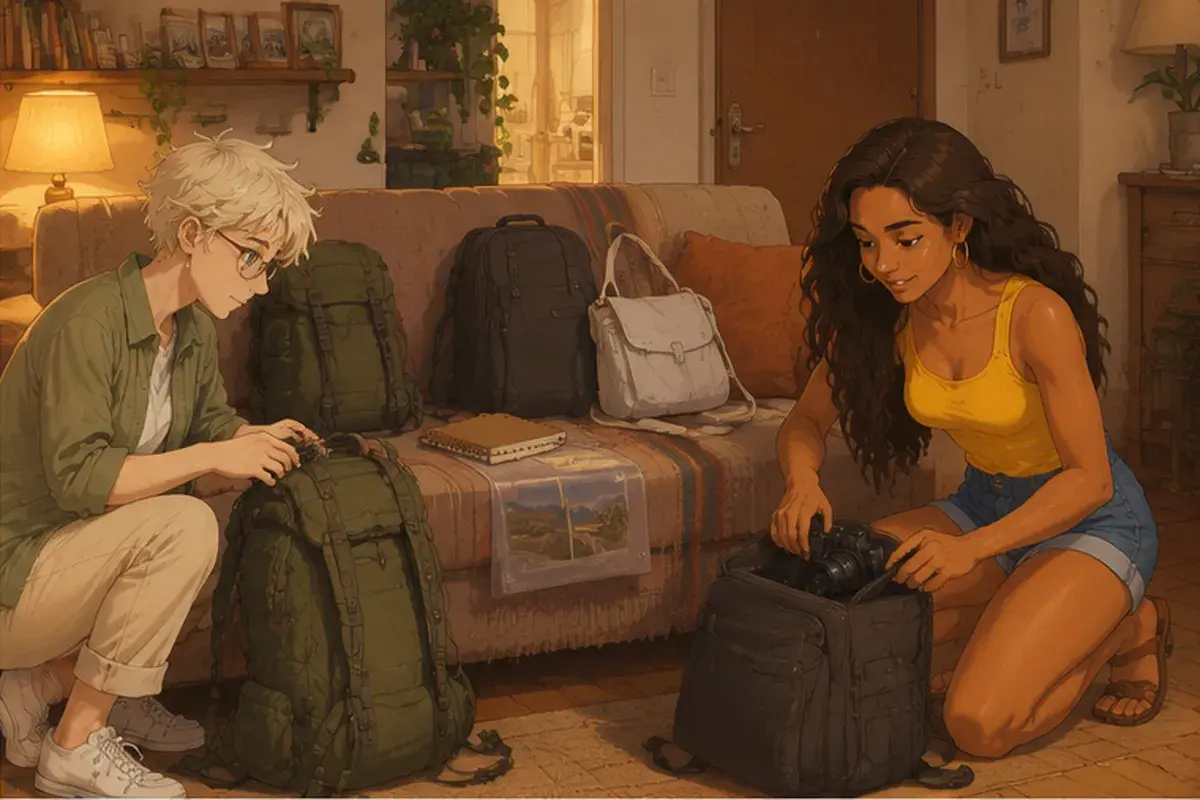
Na quinta o Caio partiu para a ilha. Agora é a nossa vez.
On Thursday Caio left for the island. Now it's our turn.
A bagagem é pequena: três mochilas, o caderno, a pasta de fotos e a câmera da Bia.
The luggage is small: three backpacks, the notebook, the photo folder, and Bia's camera.
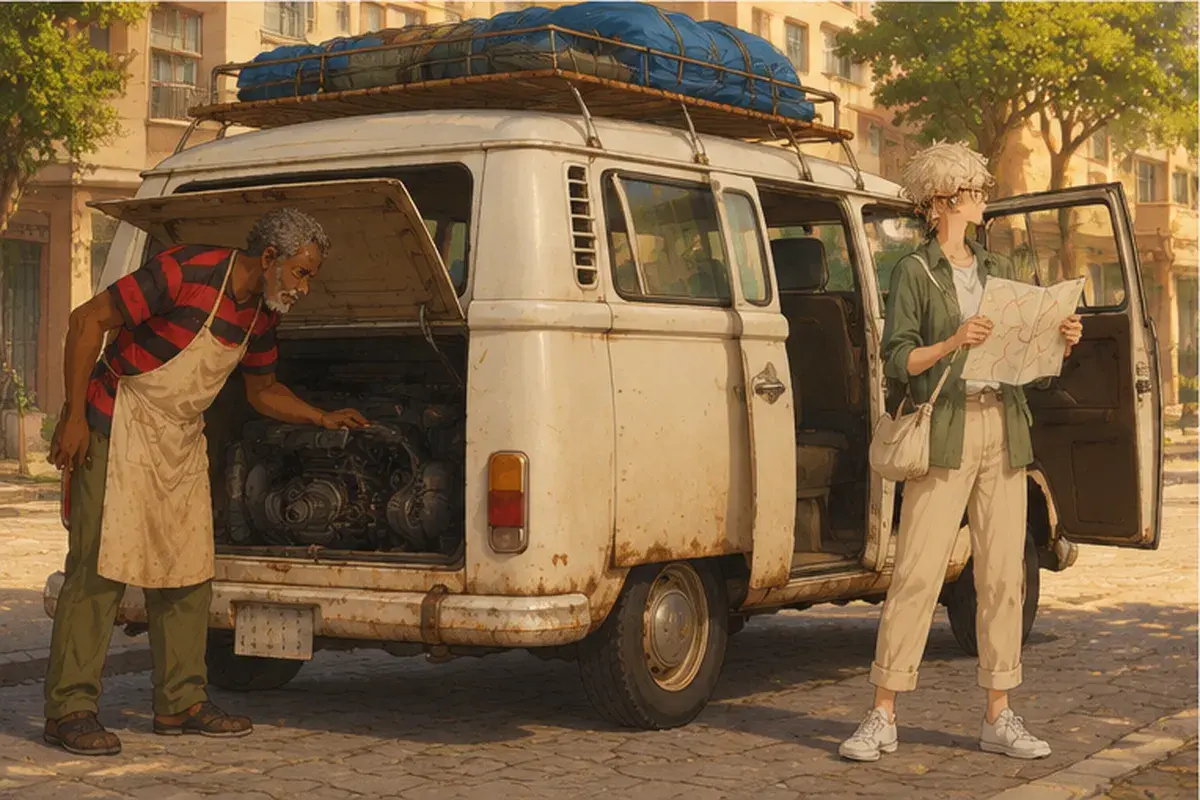
O Seu Jorge olhou o motor duas vezes. O tanque da Branquinha está cheio.
Seu Jorge looked at the engine twice. Branquinha's tank is full.
No mapa, uma linha vermelha segue a estrada, quase sempre perto do mar.
On the map, a red line follows the road, almost always near the sea.

Pelo caminho tem mar, montanha e natureza demais para um caderno só.
Along the way there's sea, mountains, and nature — too much for just one notebook.
Salvador, a capital do estado da Bahia, fica no Nordeste, no fim da linha. O Tiago já espera lá.
Salvador, the capital of the state of Bahia, is in the Northeast, at the end of the line. Tiago is already waiting there.

São mais de mil e seiscentos quilômetros: muita distância para uma Kombi de noventa e quatro.
It's more than one thousand six hundred kilometers: a long distance for a Kombi from ninety-four.
O Léo, sério como sempre, diz que é loucura. A Bia responde que somos loucos mesmo.
Léo, serious as always, says it's madness. Bia answers that we really are crazy.
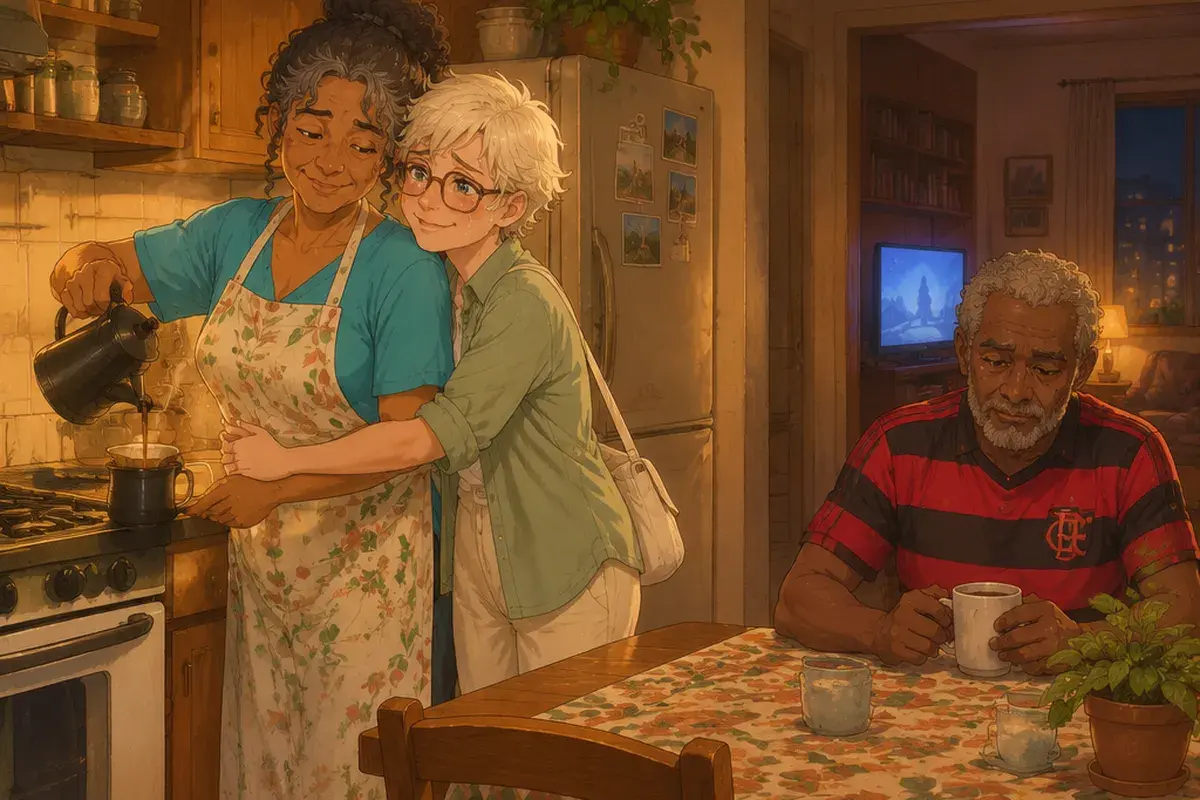
Cheguei como hóspede e saio como alguém da família.
I arrived as a guest, and I'm leaving as one of the family.
Vou morrer de saudade do cheiro de café da Regina e da novela das nove.
I'm going to miss the smell of Regina's coffee and the nine o'clock soap opera so much.
Vou sentir falta até do silêncio do Seu Jorge.
I'm going to miss even Seu Jorge's silence.
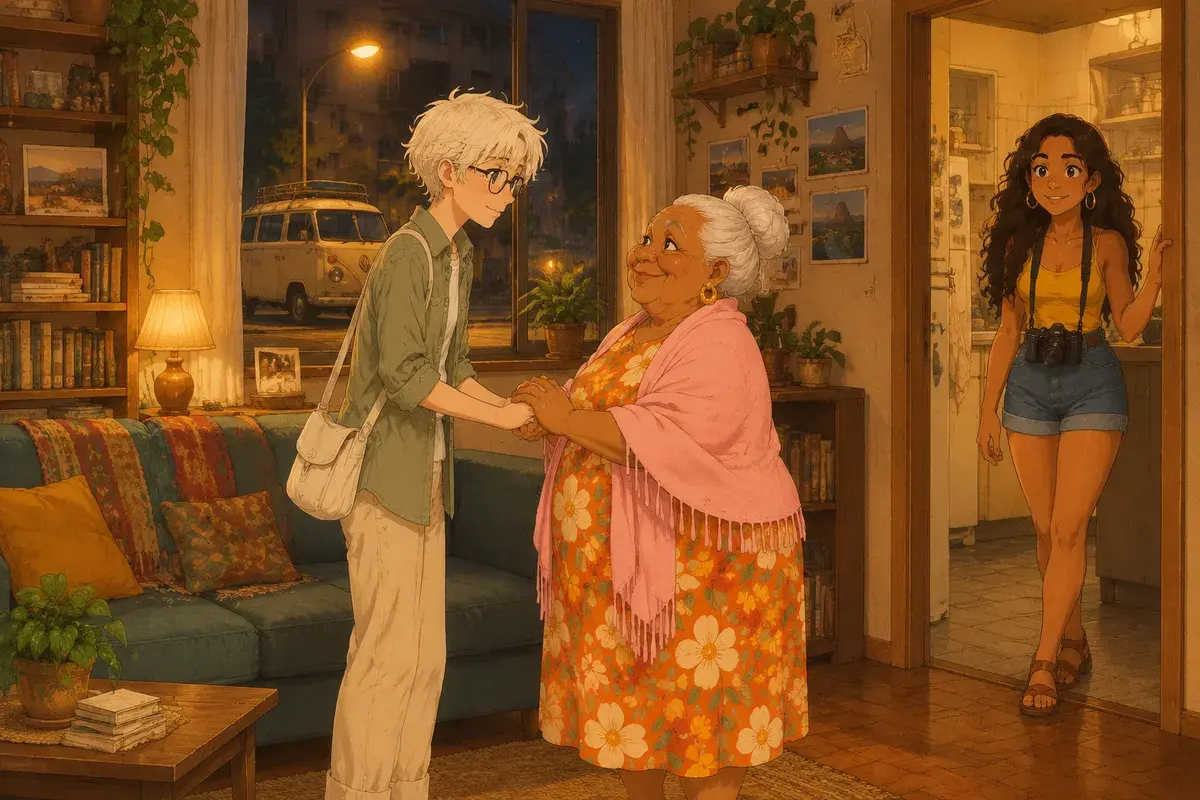
Perguntei à Dona Zezé: “Vai dar certo?” Ela respondeu: “Se Deus quiser, minha filha.”
I asked Dona Zezé, "Will it work out?" She answered, "God willing, dear."
Tomara que a Branquinha aguente.
I hope Branquinha holds up.
Grammar for this text
- Tomara que a Branquinha aguente — tomara que — "I hope (that)". After it comes the special form aguente (from aguentar, not aguenta): this is the subjunctive, and its rule comes at B1. For now, learn the phrase as a whole.
- Se Deus quiser — "God willing": quiser is a special form of querer (not quer); the rule comes at B1. Brazilians say it about plans, whether they're religious or not.
- Vai dar certo? — vai + infinitive (dar certo, unit 6): "will it work out?". This is the ordinary structure. Perguntei à Dona Zezé — à = a + a: "I asked Dona Zezé".
- Na quinta o Caio partiu — partiu — "he left", the preterite of partir (unit 24). Agora é a nossa vez — "now it's our turn". Pelo caminho — pelo = por + o: "along the way".
- Kombi de noventa e quatro — a 1994 Kombi; the road is long and the van is old, hence "I hope".
- Vou morrer de saudade and Vou sentir falta — vou + infinitive: "I'm going to". morrer de saudade de — "to miss terribly" (a playful exaggeration), sentir falta de — "to miss".
- saio como alguém da família — saio — "I'm leaving", the eu form of sair. Cheguei is spelled with gu: the sound stays the same (unit 2).
Words and grammar of the unit: Look back and say goodbye.
Learn the words from the texts with flashcards
In the app, you can tap any word in a text to see its translation, forms and examples, and new words stick with flashcards. 15 minutes a day.
Start for freeEverything is open for free. No card needed to sign up.