
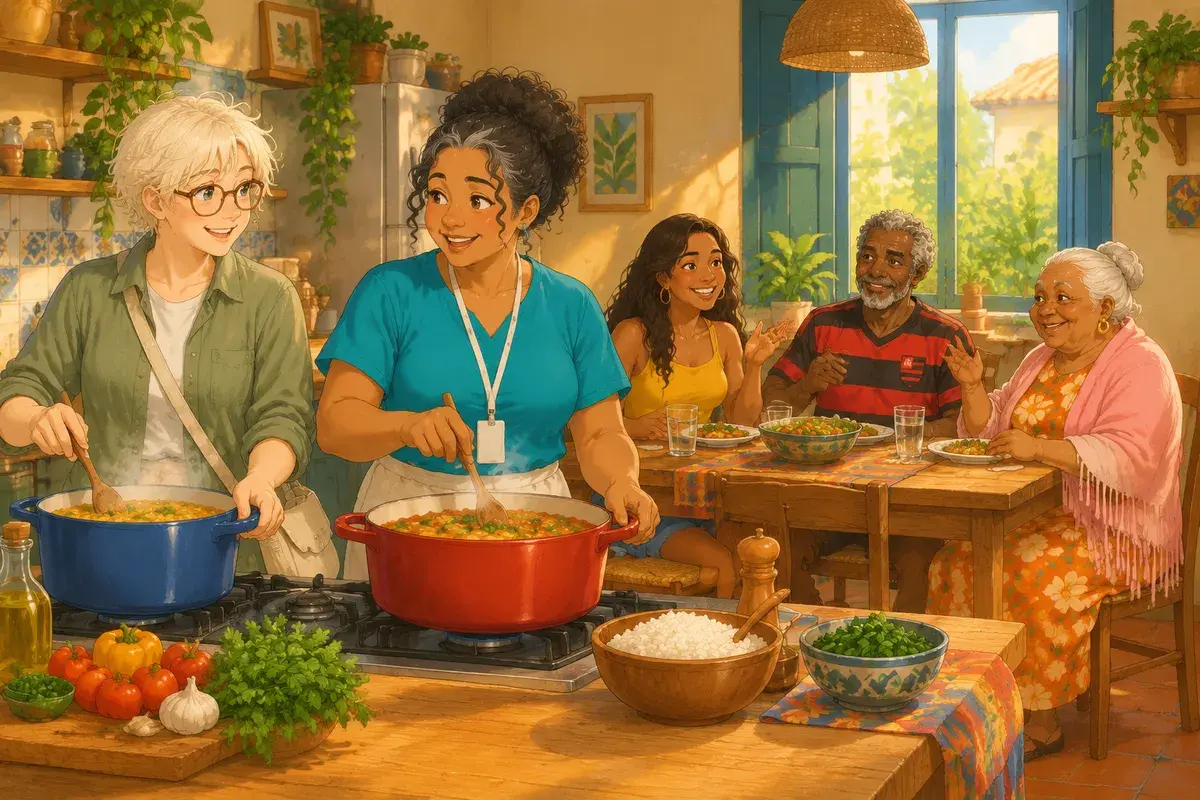
Portuguese dialogue with translation · A2 · 16 lines
Mão na massa! Let's get to work!
Comic · 16 panels
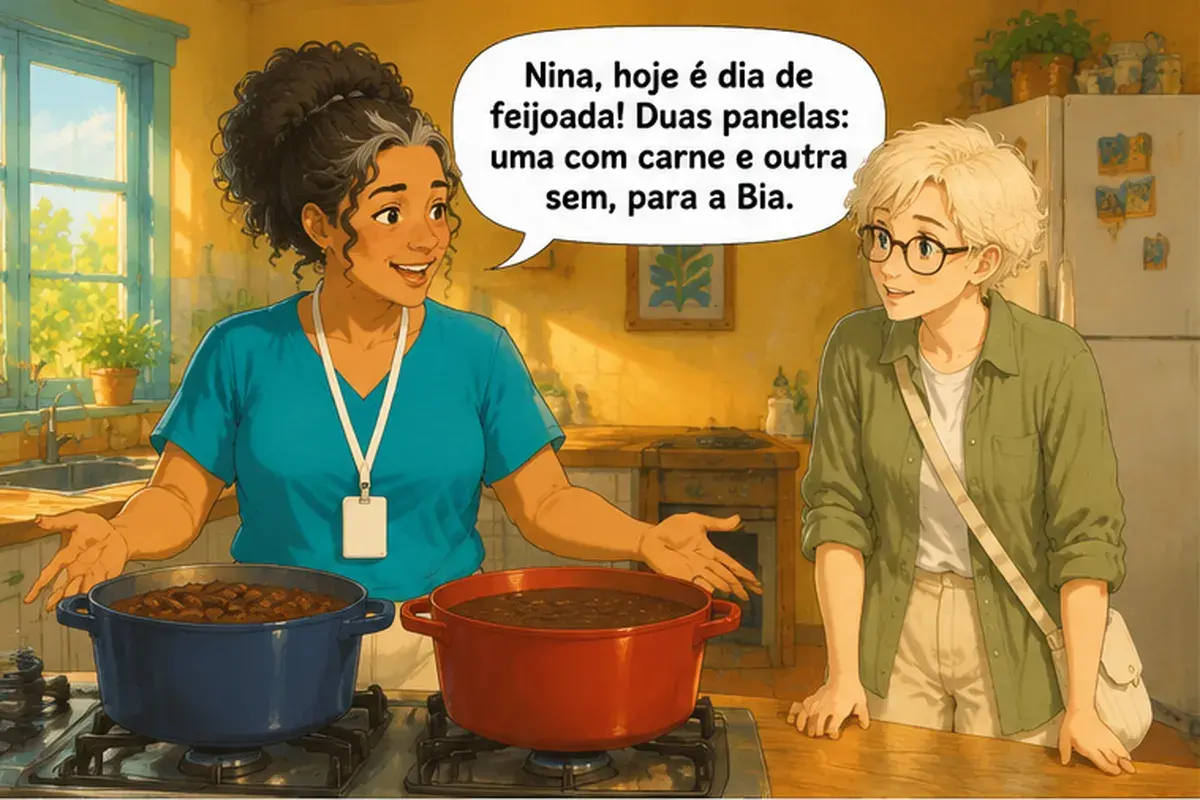
- Regina
Nina, hoje é dia de feijoada! Duas panelas: uma com carne e outra sem, para a Bia.
Nina, today is feijoada day! Two pots: one with meat and one without, for Bia.
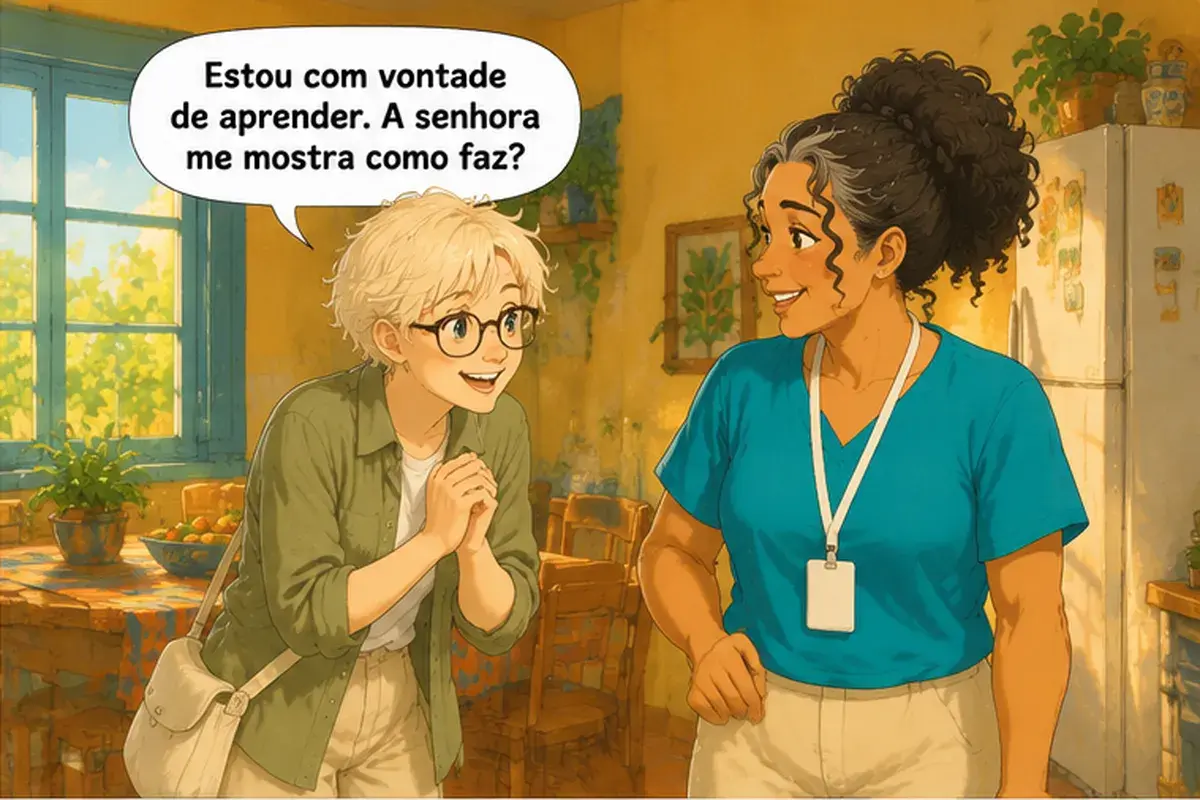
- Nina
Estou com vontade de aprender. A senhora me mostra como faz?
I feel like learning. Will you show me how to make it? (formal)
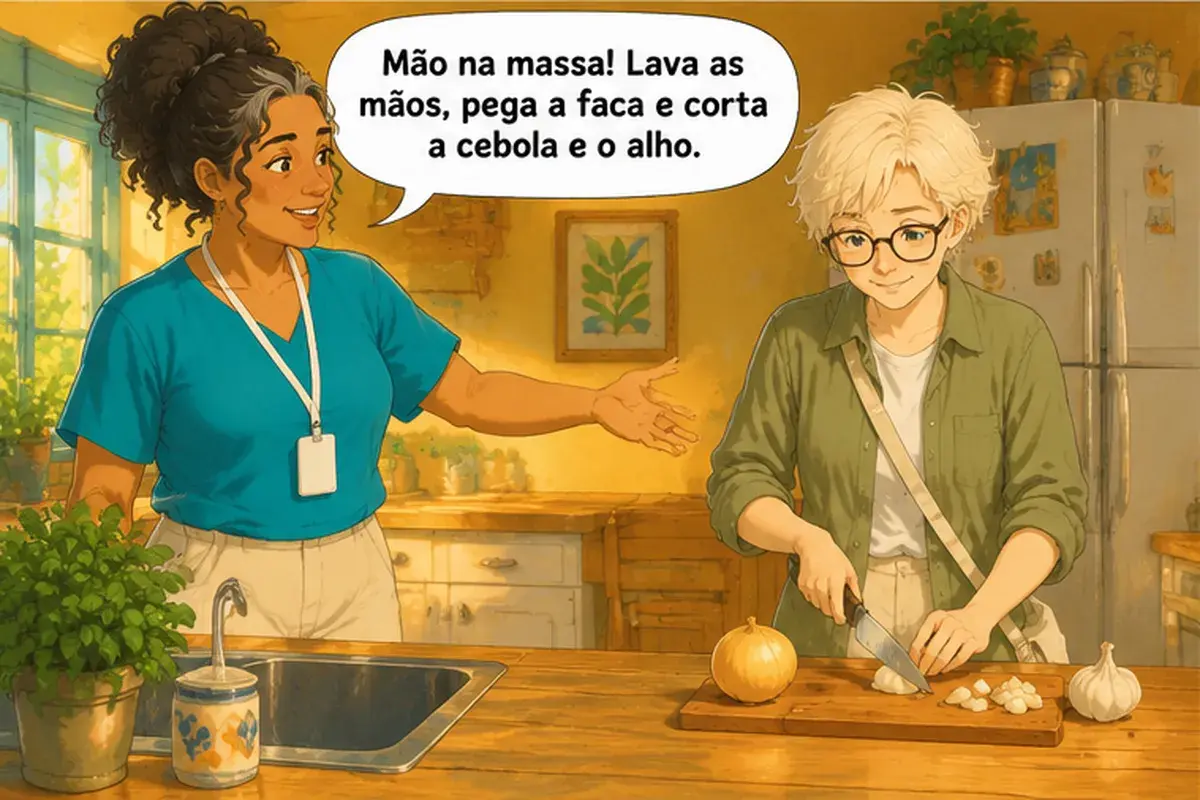
- Regina
Mão na massa! Lava as mãos, pega a faca e corta a cebola e o alho.
Let's get to work! Wash your hands, grab the knife and cut the onion and the garlic.
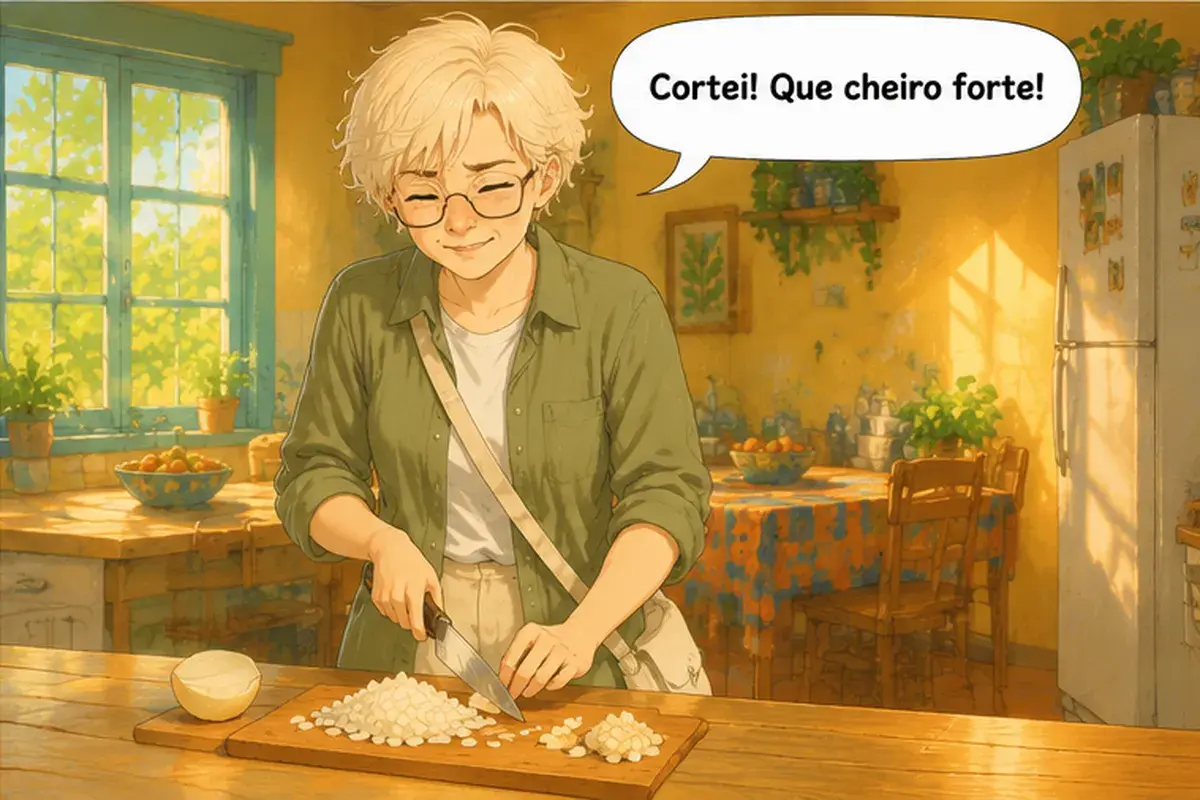
- Nina
Cortei! Que cheiro forte!
I've cut them! What a strong smell!
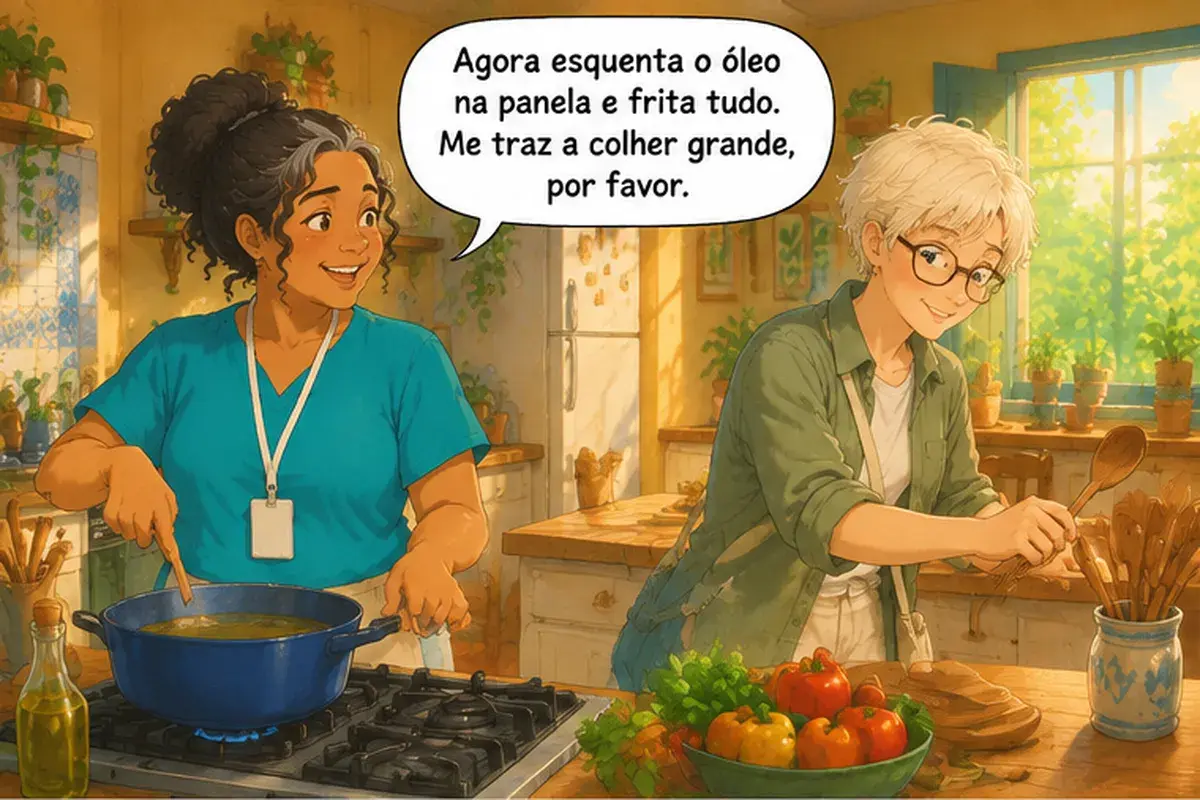
- Regina
Agora esquenta o óleo na panela e frita tudo. Me traz a colher grande, por favor.
Now heat the oil in the pot and fry everything. Bring me the big spoon, please.
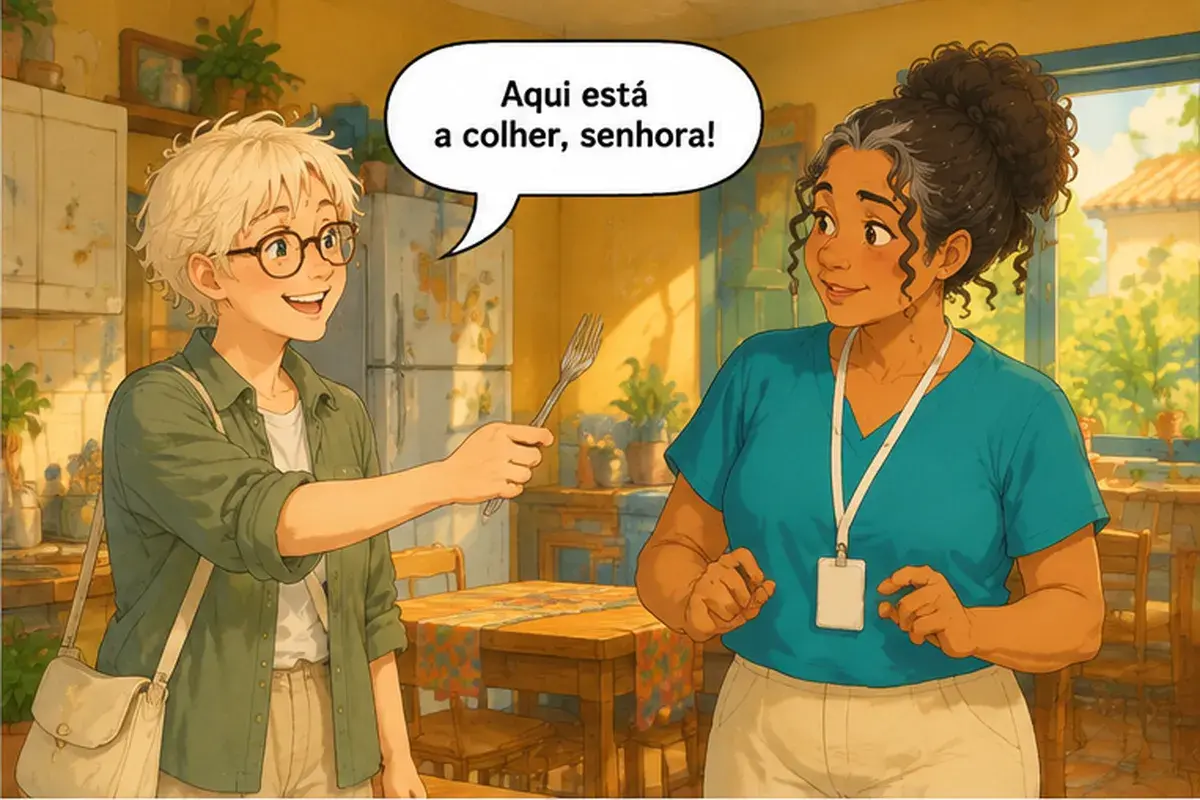
- Nina
Aqui está a colher, senhora!
Here's the spoon, ma'am!
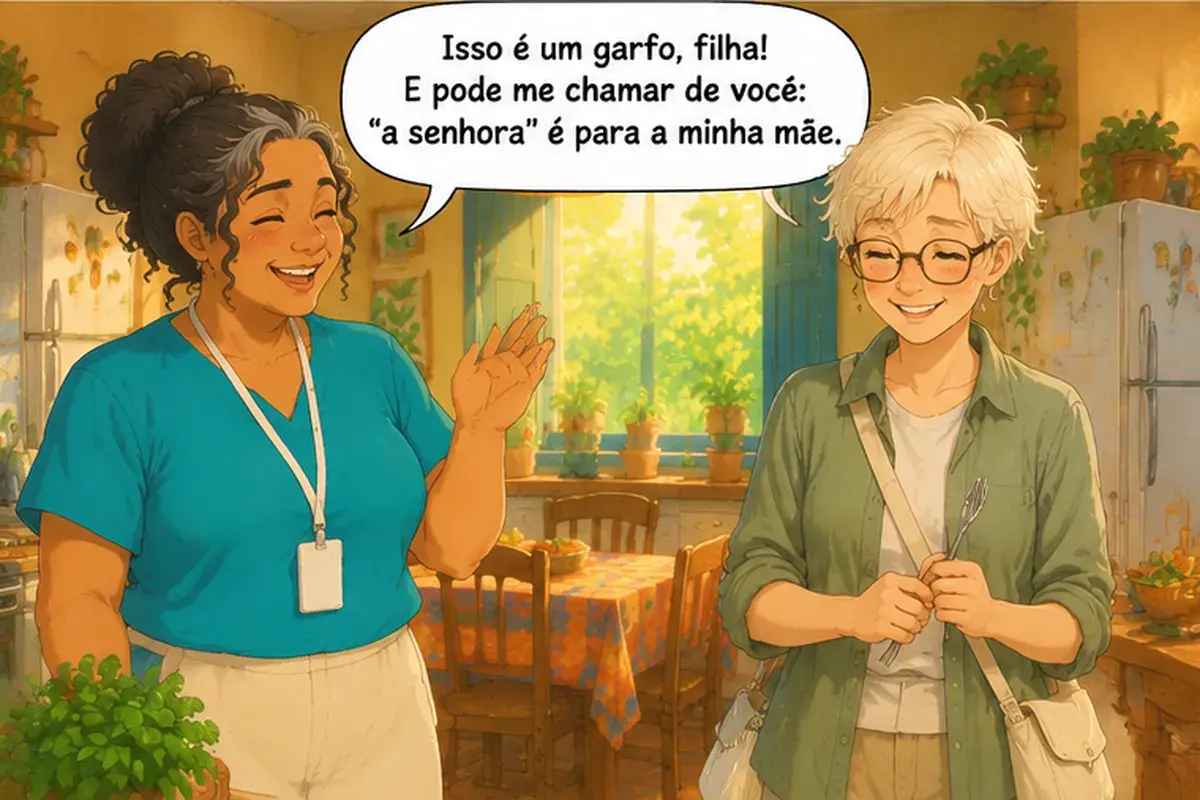
- Regina
Isso é um garfo, filha! E pode me chamar de você: “a senhora” é para a minha mãe.
That's a fork, honey! And you can call me "você": "a senhora" is for my mother.
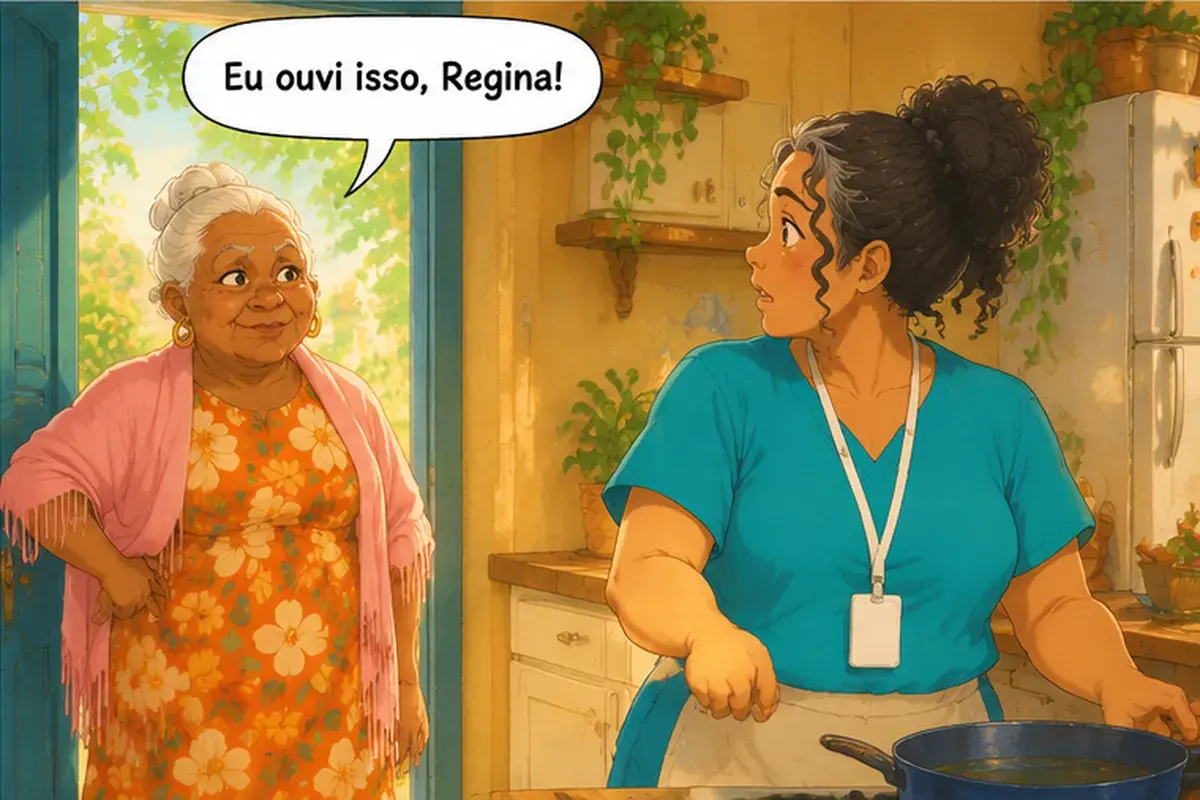
- Dona Zezé
Eu ouvi isso, Regina!
I heard that, Regina!
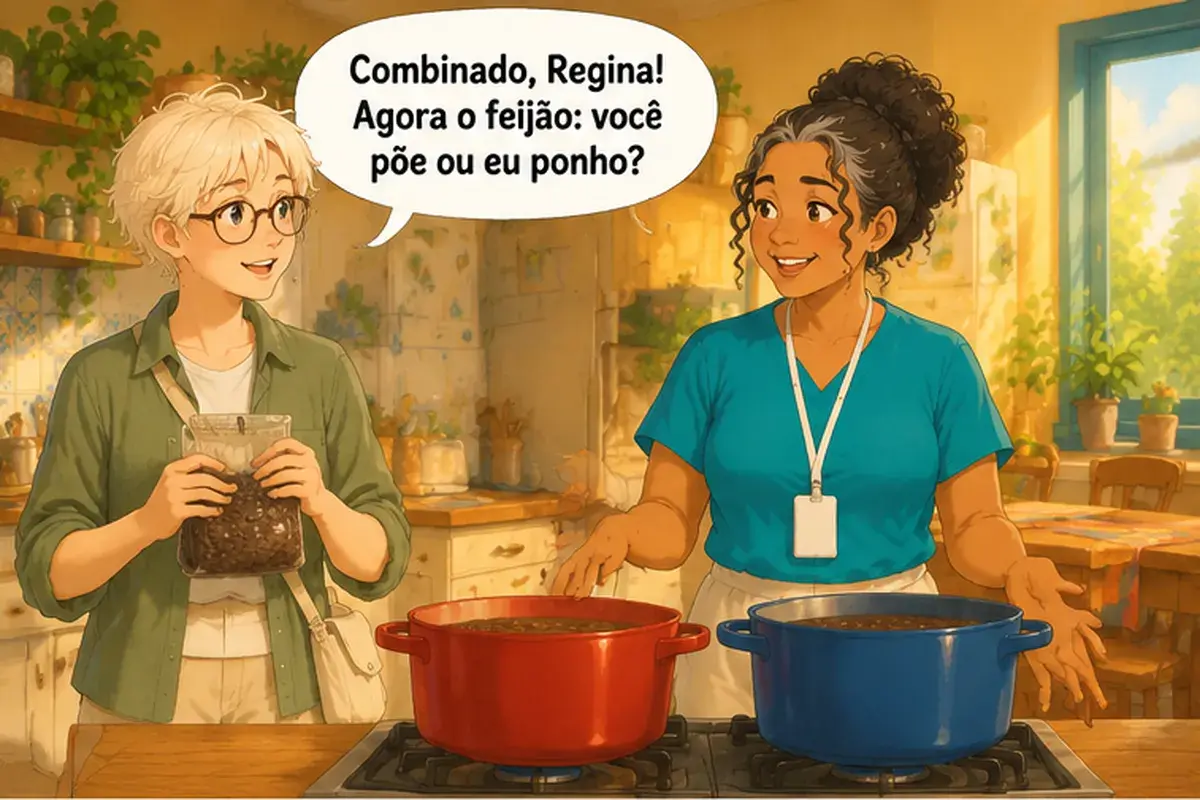
- Nina
Combinado, Regina! Agora o feijão: você põe ou eu ponho?
Deal, Regina! Now the beans: do you put them in, or do I?
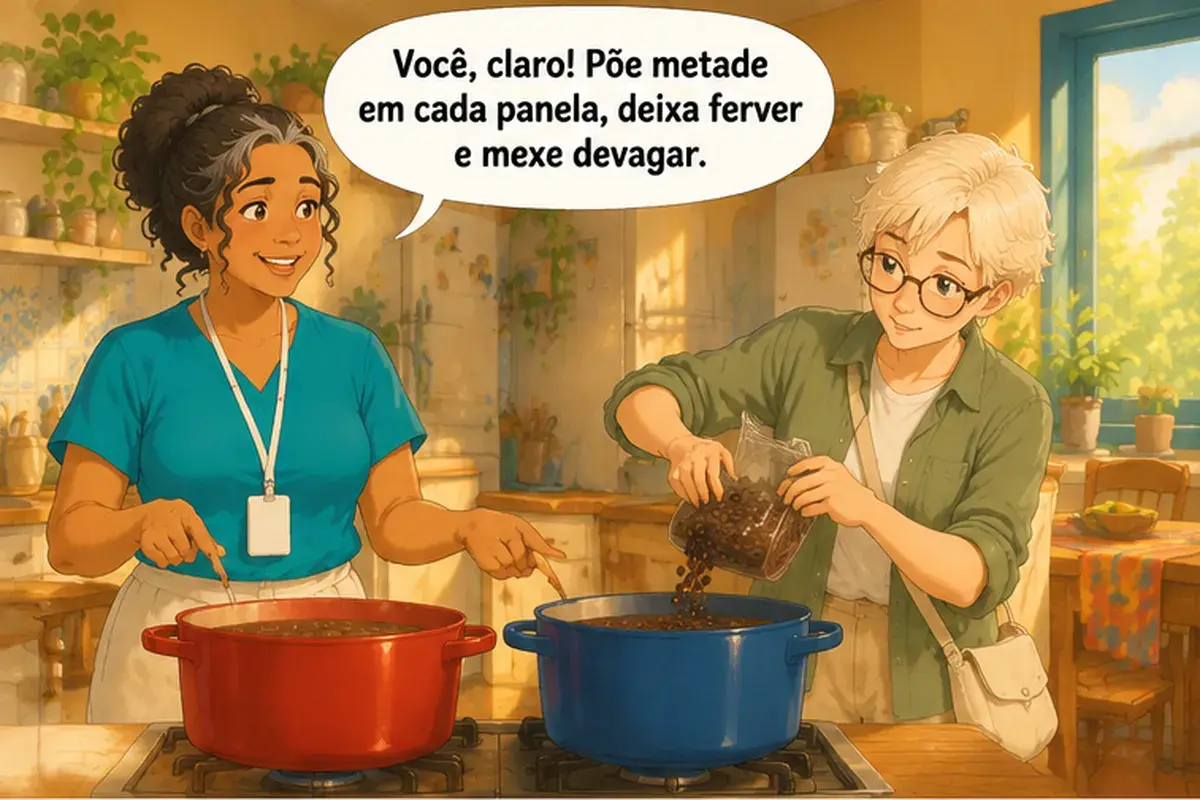
- Regina
Você, claro! Põe metade em cada panela, deixa ferver e mexe devagar.
You, of course! Put half in each pot, let it boil and stir slowly.
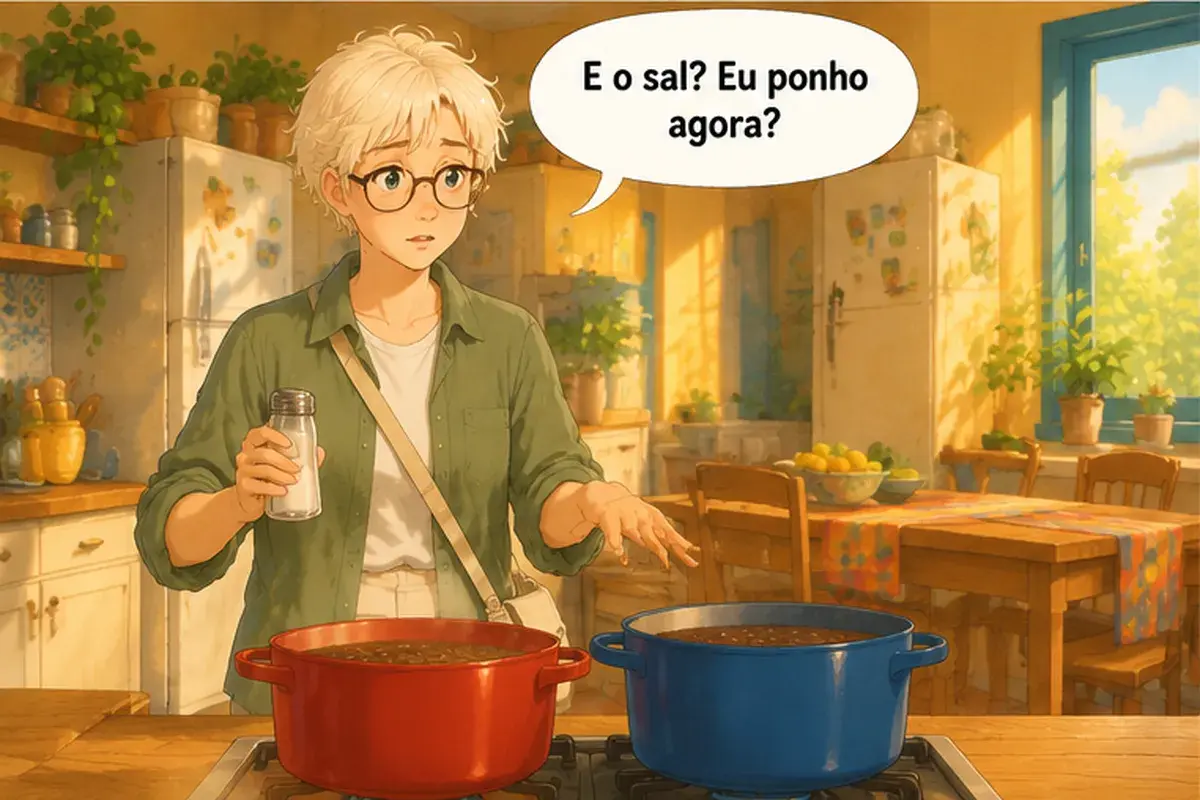
- Nina
E o sal? Eu ponho agora?
What about the salt? Do I put it in now?
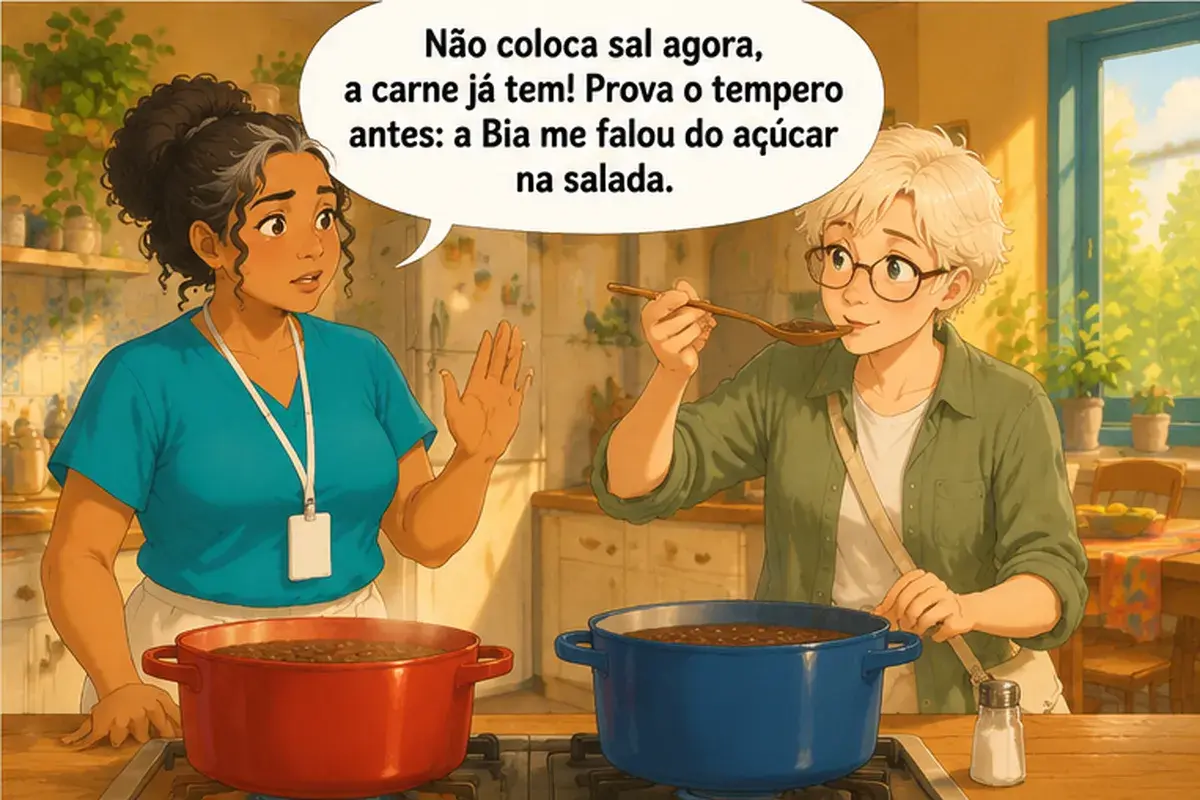
- Regina
Não coloca sal agora, a carne já tem! Prova o tempero antes: a Bia me falou do açúcar na salada.
Don't put salt in now, the meat already has some! Taste the seasoning first: Bia told me about the sugar in the salad.
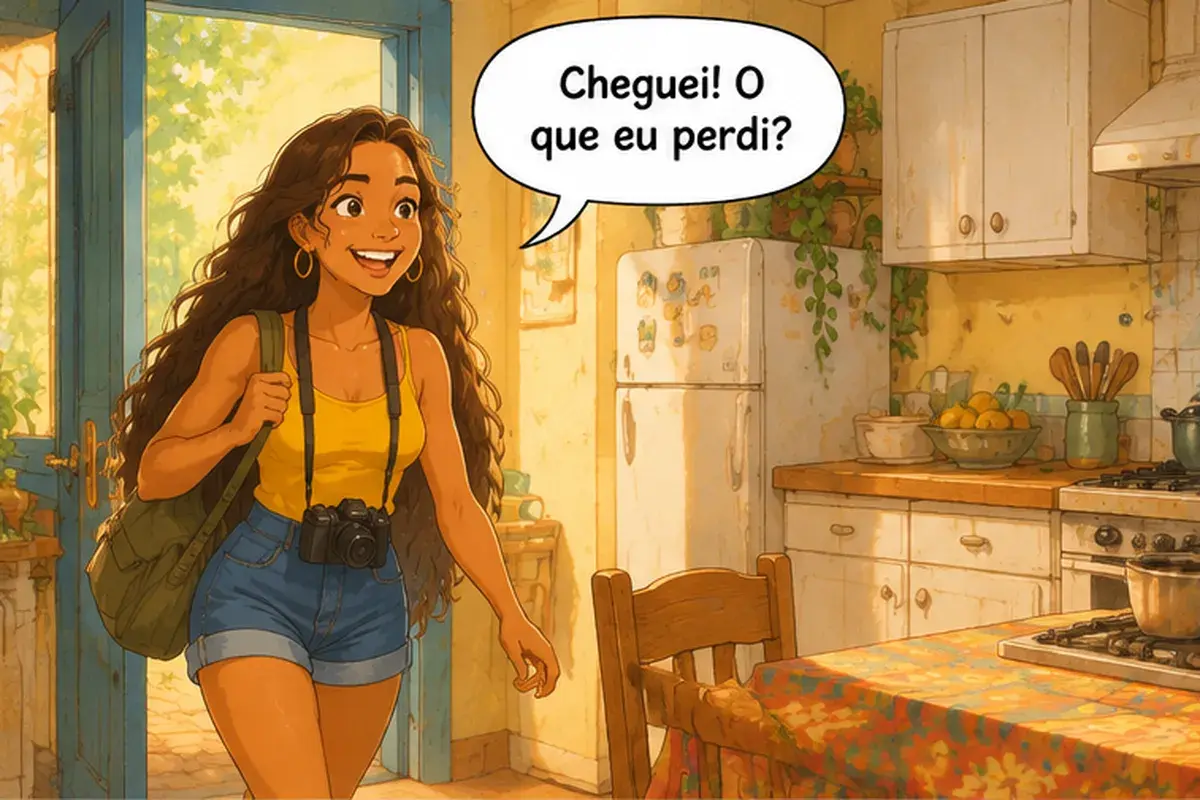
- Bia
Cheguei! O que eu perdi?
I'm here! What did I miss?
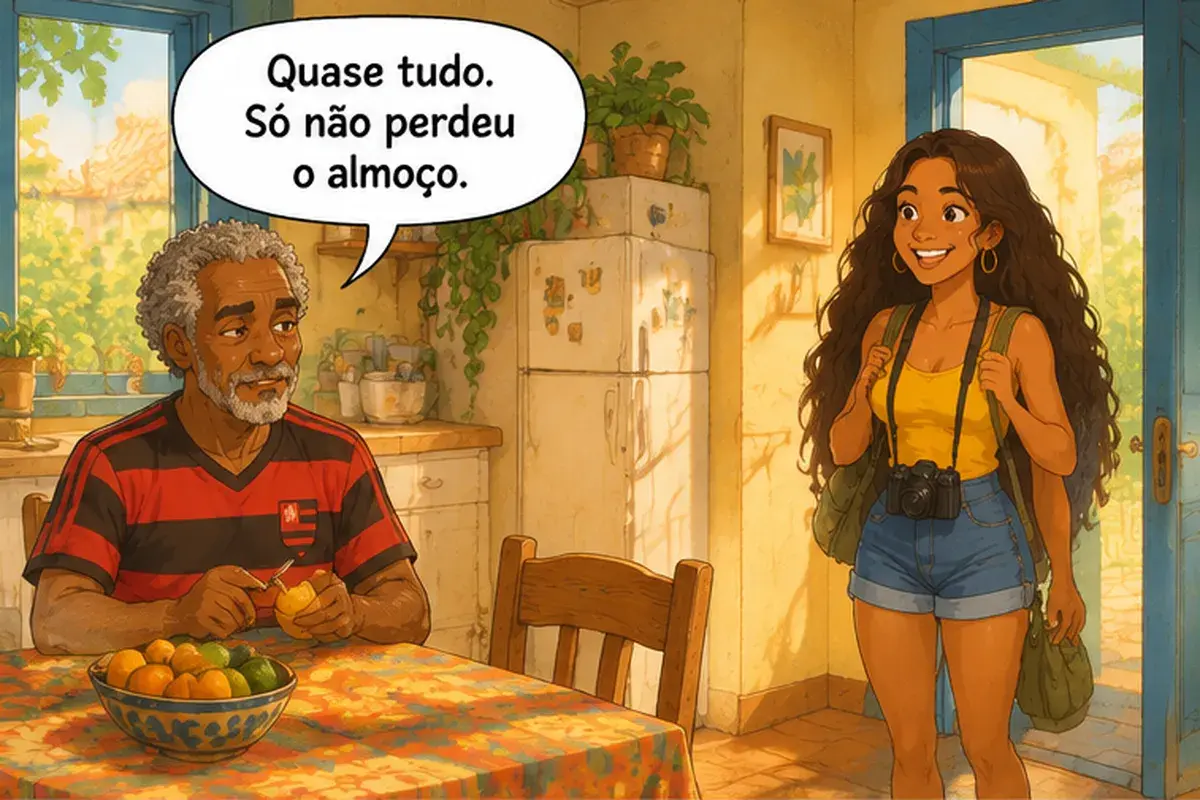
- Jorge
Quase tudo. Só não perdeu o almoço.
Almost everything. You just didn't miss lunch.
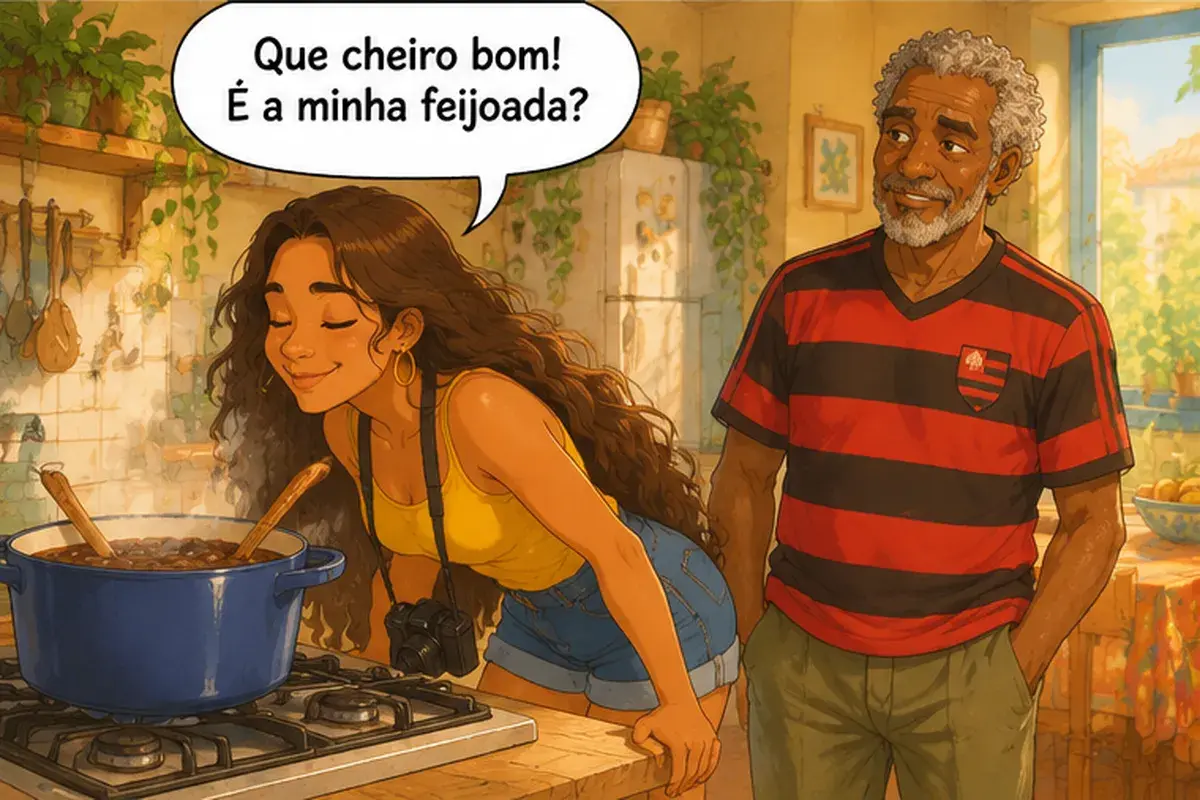
- Bia
Que cheiro bom! É a minha feijoada?
What a nice smell! Is that my feijoada?
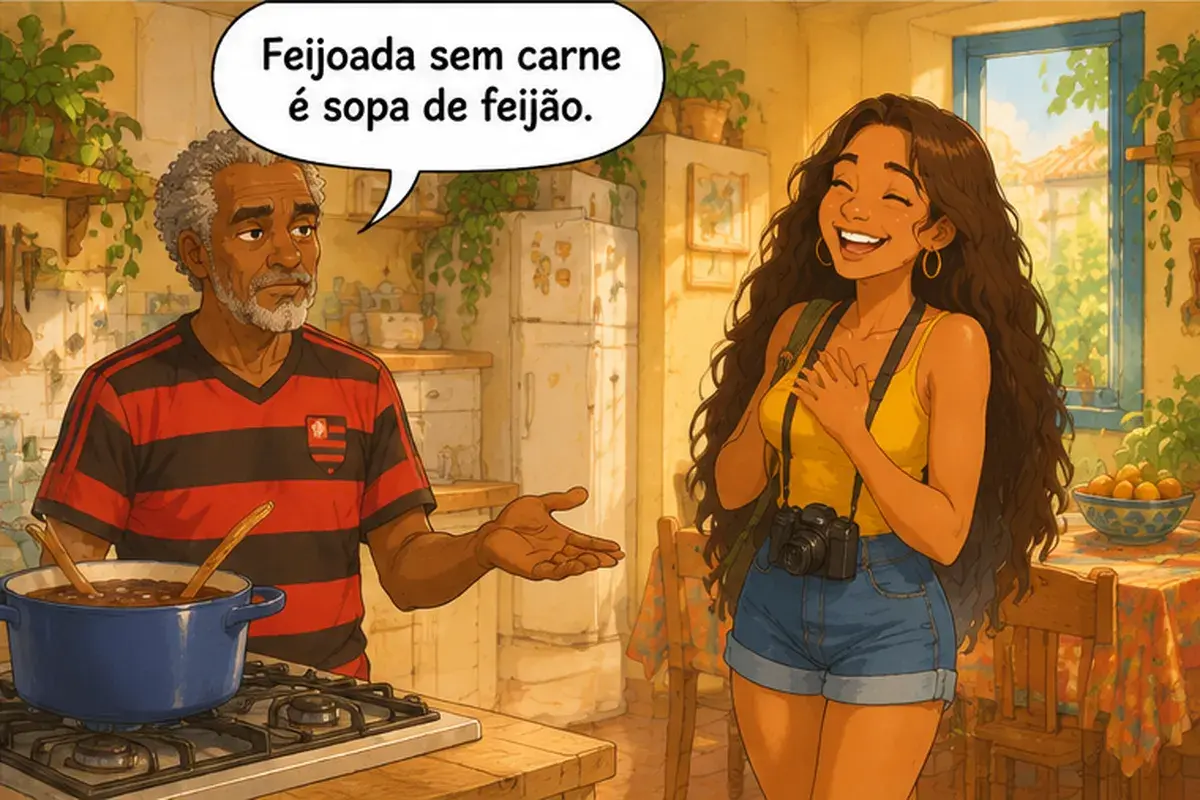
- Jorge
Feijoada sem carne é sopa de feijão.
Feijoada without meat is bean soup.
Grammar for this text
- Lava as mãos, pega a faca e corta a cebola e o alho: a casual command, the same as the você / ele / ela form of the present. lava is from lavar, corta from cortar; the same goes for pega, esquenta, frita, mexe, prova, deixa (deixa ferver means "let it boil"). That's how families give orders in the kitchen; the polite lave, corte are in text 2.
- Me traz a colher grande: traz is a command from trazer (to bring), also the você / ele / ela form. me goes before the verb: "bring me".
- pode me chamar de você: chamar de você is to address someone as você, the everyday "you". a senhora is the respectful "you" for an older woman. From now on Nina says você to Regina and calls her by her first name.
- Põe metade em cada panela: põe is a command from pôr (to put). The eu form is ponho, the você / ele / ela form is põe, with a tilde over the o.
- Não coloca sal agora: a negative command, não + the same form; coloca is from colocar (to put).
- Isso é um garfo, filha!: Nina said "spoon" but brought a fork. Regina laughs and calls her filha (literally "daughter"), a warm way to talk to a young woman.
- a Bia me falou do açúcar na salada: a callback to A1. Nina once put sugar in a salad instead of salt, and Bia told her mom about it. me falou means "told me".
- Feijoada sem carne é sopa de feijão: real feijoada has meat, so in Seu Jorge's joke, without meat it's just bean soup. Bia is a vegetarian, so the joke is about her.
Words and grammar of the unit: Cook a dish from a recipe.
Learn the words from the texts with flashcards
In the app, you can tap any word in a text to see its translation, forms and examples, and new words stick with flashcards. 15 minutes a day.
Start for freeEverything is open for free. No card needed to sign up.