
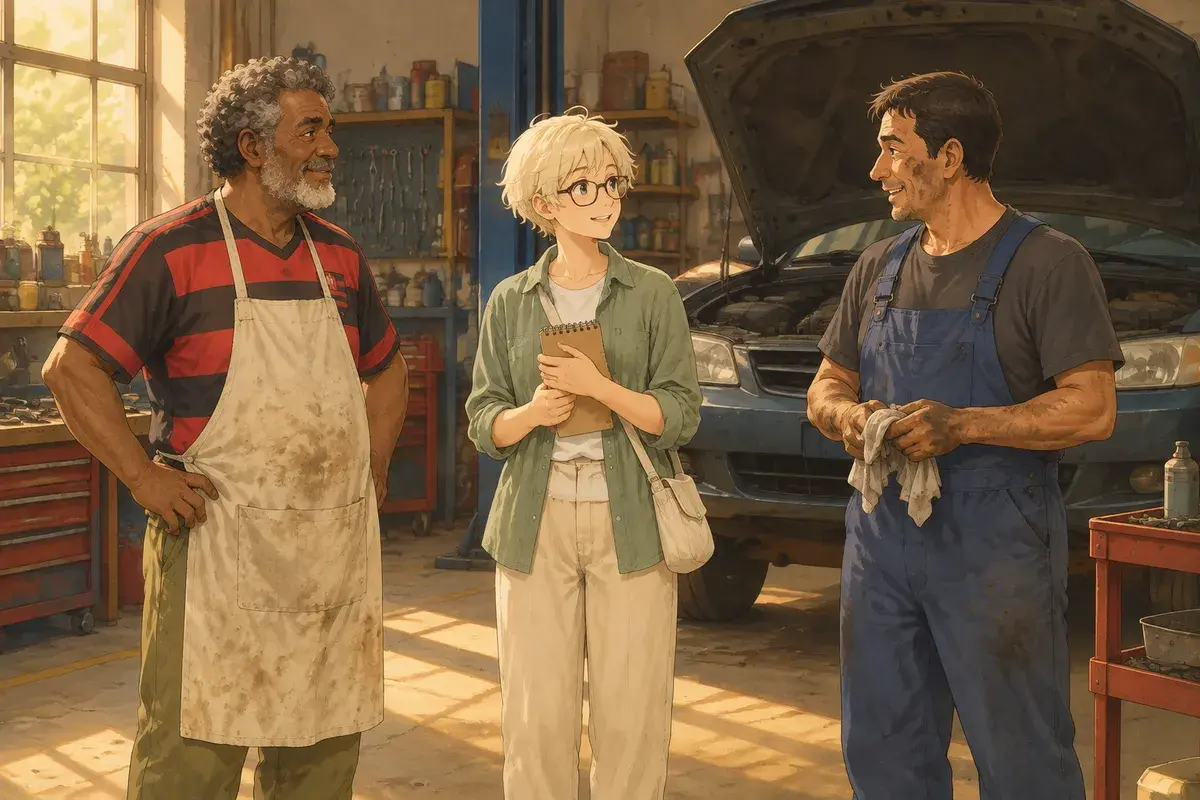
Portuguese dialogue with translation · A2 · 16 lines
Ela não pega It won't start
Comic · 10 panels
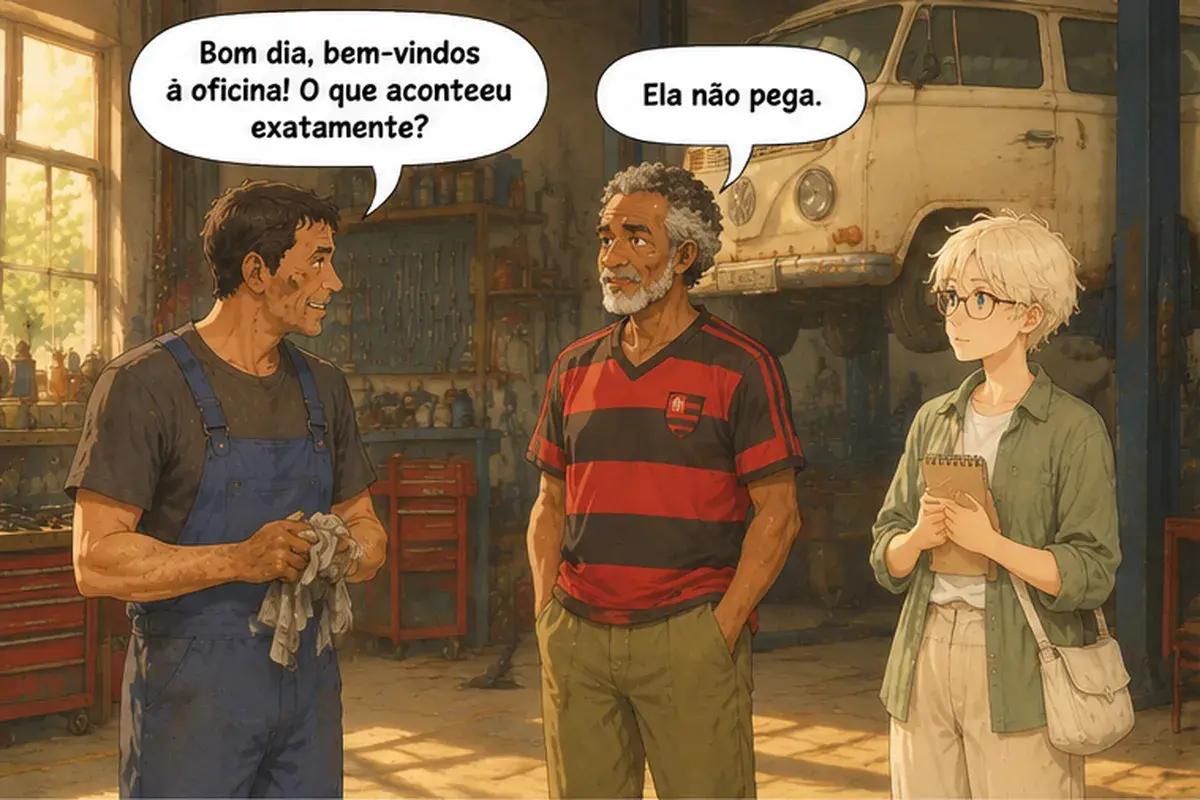
- Mecânico
Bom dia, bem-vindos à oficina! O que aconteceu exatamente?
Good morning, welcome to the repair shop! (to several people) What exactly happened?
- Jorge
Ela não pega.
It won't start.
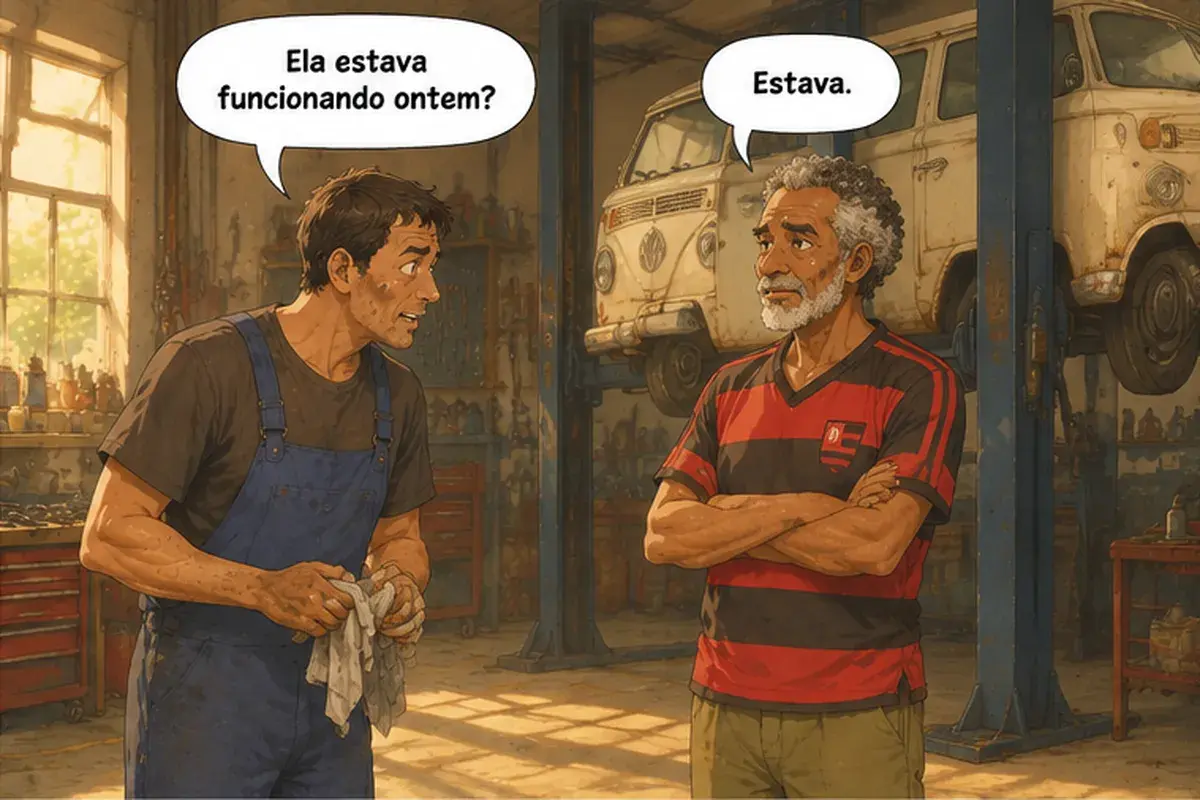
- Mecânico
Ela estava funcionando ontem?
Was it working yesterday?
- Jorge
Estava.
It was.
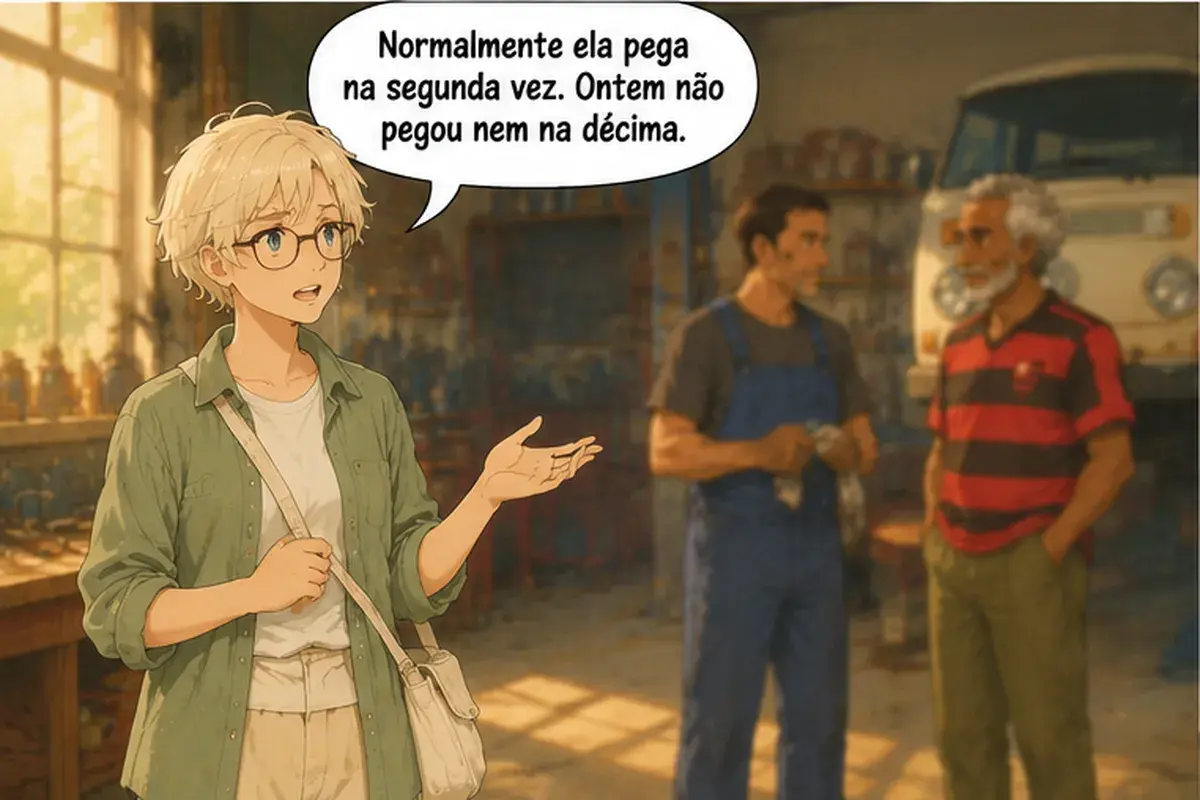
- Nina
Normalmente ela pega na segunda vez. Ontem não pegou nem na décima.
It usually starts on the second try. Yesterday it didn't even start on the tenth.
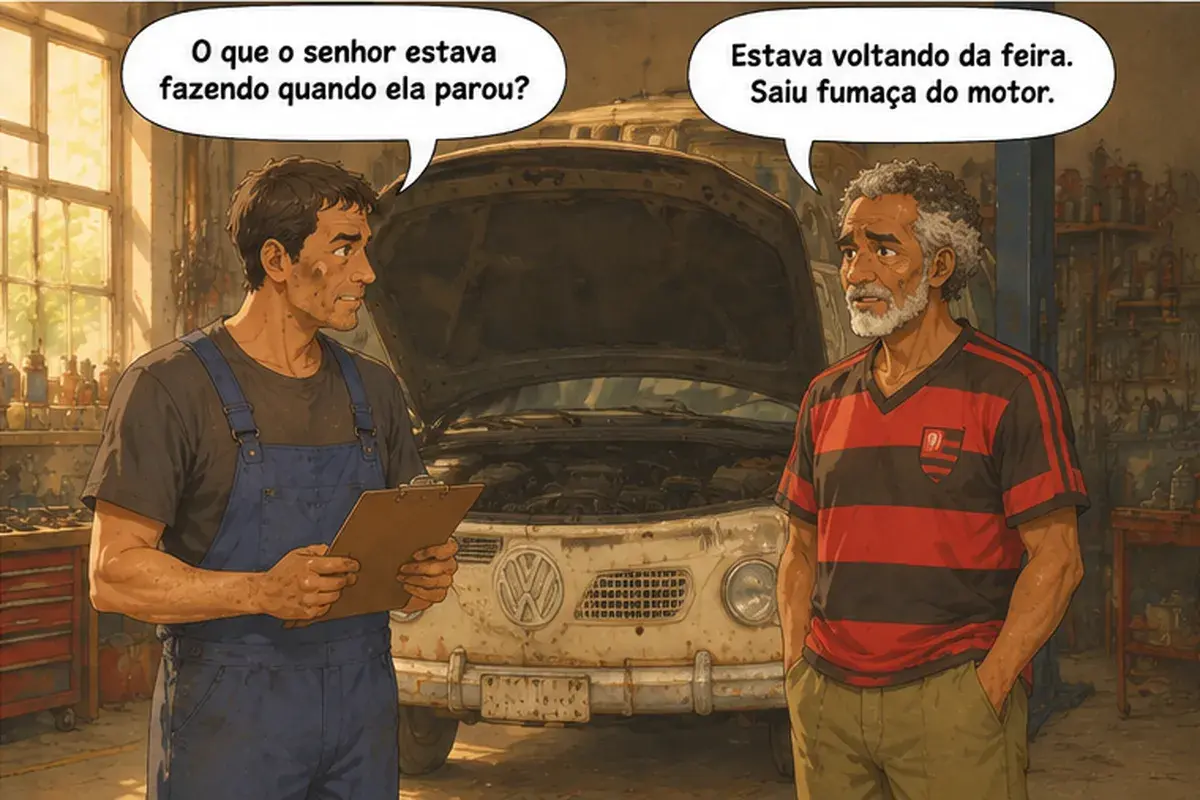
- Mecânico
O que o senhor estava fazendo quando ela parou?
What were you doing when it stopped? (formal)
- Jorge
Estava voltando da feira. Saiu fumaça do motor.
I was coming back from the street market. Smoke came out of the engine.
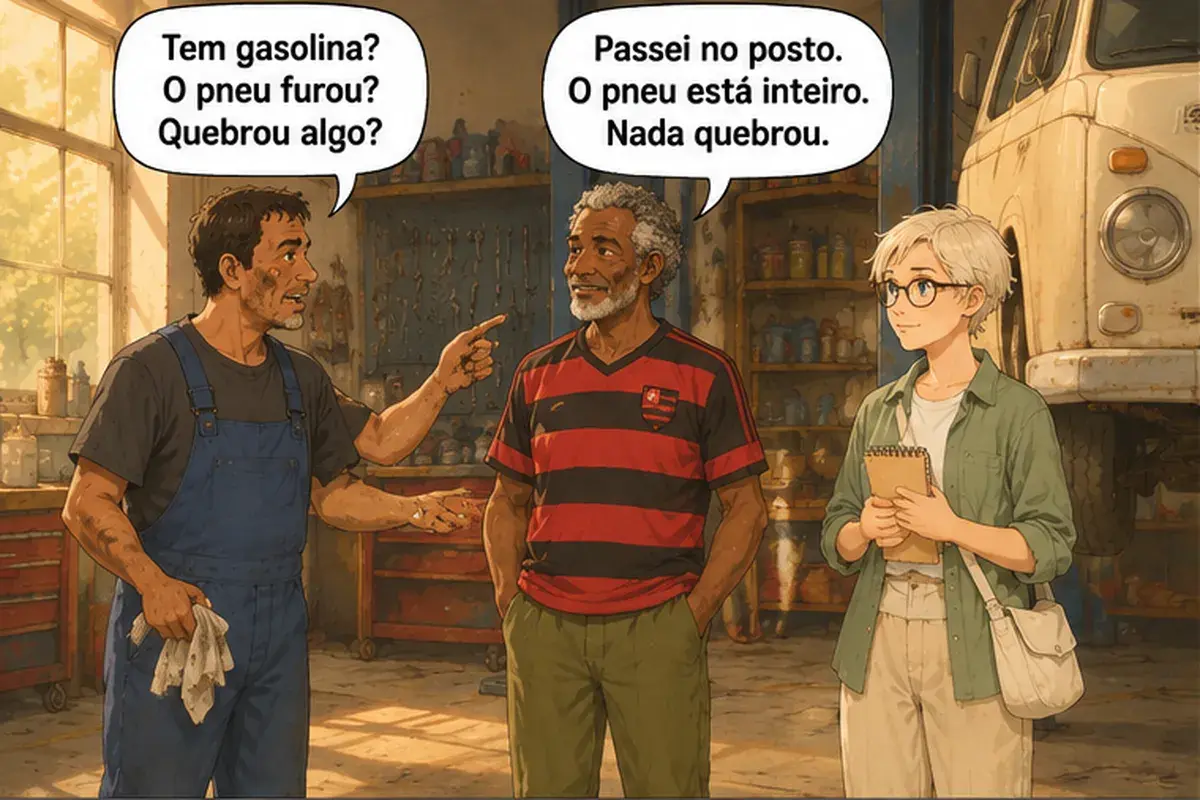
- Mecânico
Tem gasolina? O pneu furou? Quebrou algo?
Is there any gas? Did the tire get punctured? Did something break?
- Jorge
Passei no posto. O pneu está inteiro. Nada quebrou.
I stopped by the gas station. The tire is intact. Nothing broke.
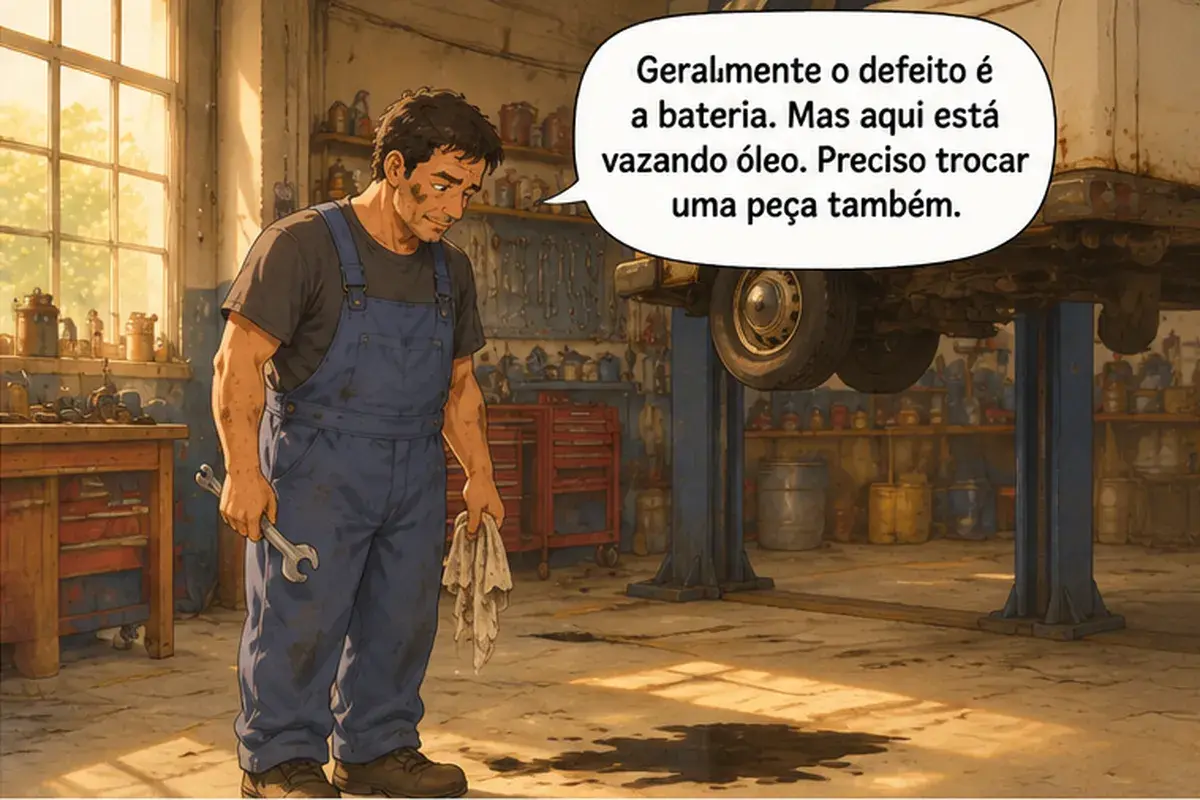
- Mecânico
Geralmente o defeito é a bateria. Mas aqui está vazando óleo. Preciso trocar uma peça também.
Usually the fault is in the battery. But oil is leaking here. I also need to replace a part.
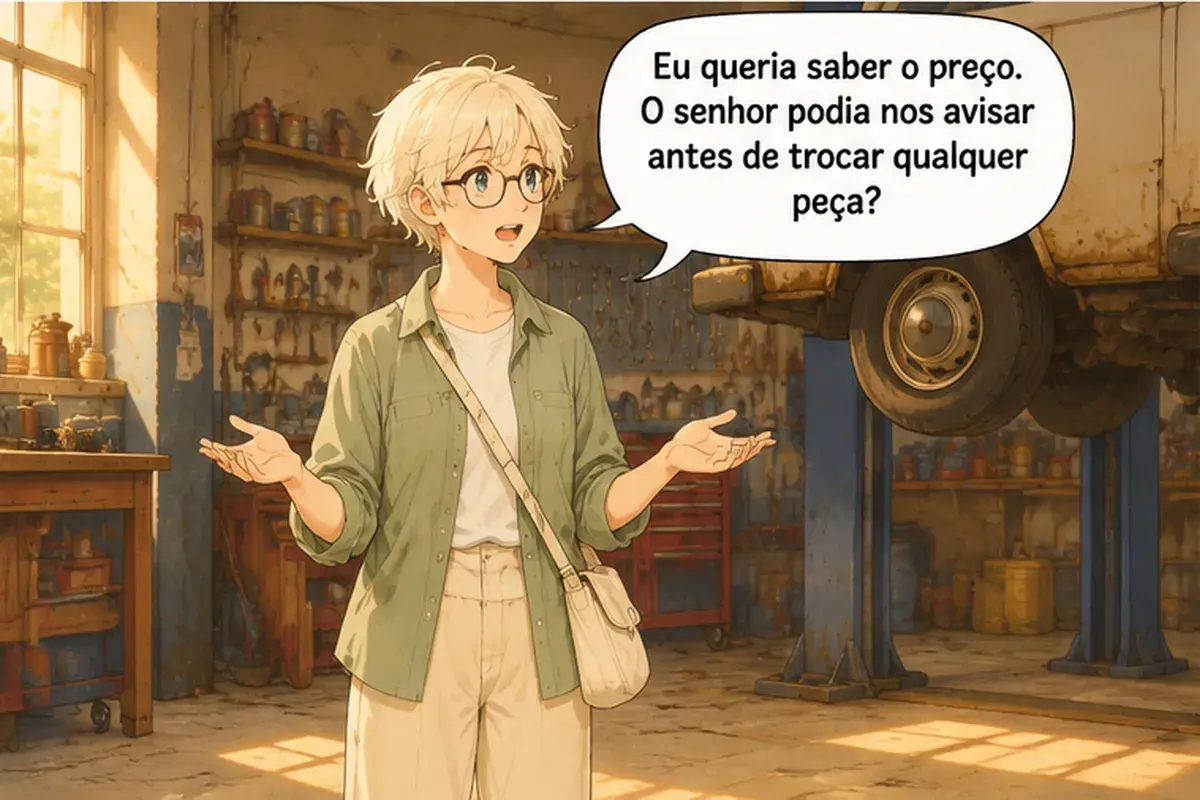
- Nina
Eu queria saber o preço. O senhor podia nos avisar antes de trocar qualquer peça?
I'd like to know the price. Could you let us know before replacing any part? (formal)
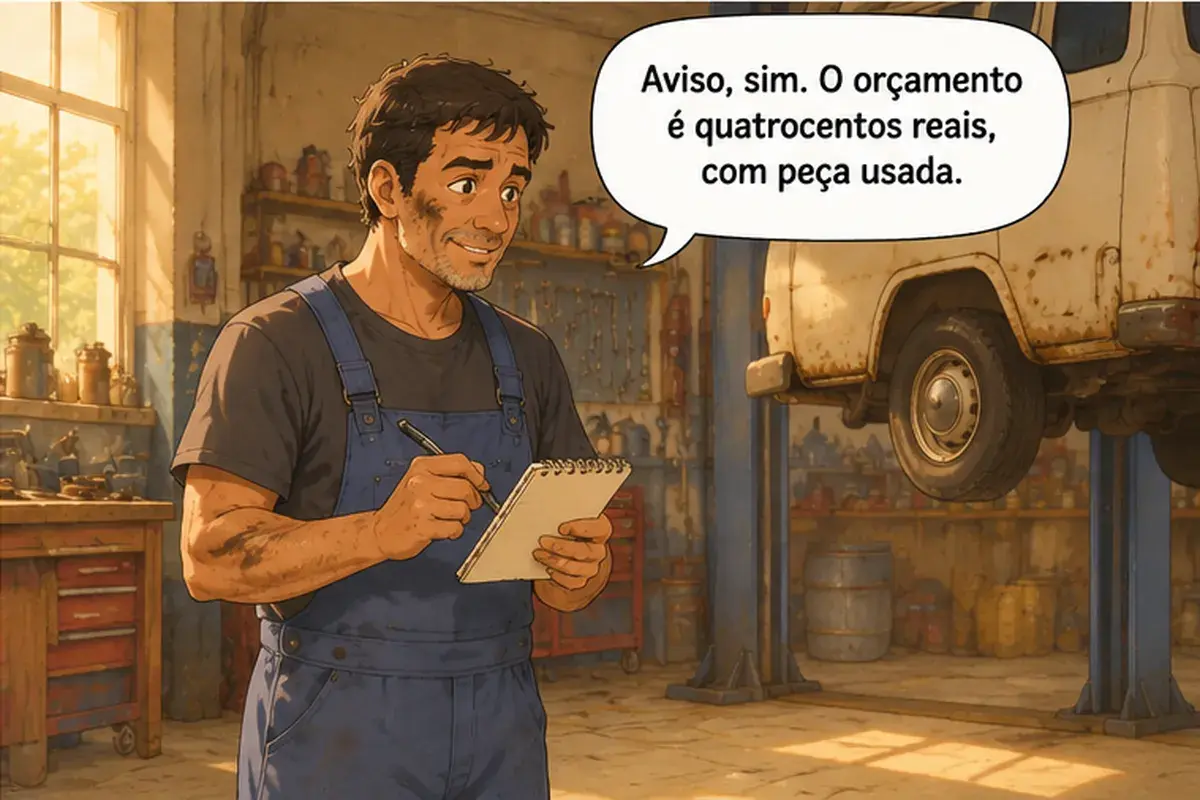
- Mecânico
Aviso, sim. O orçamento é quatrocentos reais, com peça usada.
Sure, I'll let you know. The estimate is four hundred reais, with a used part.
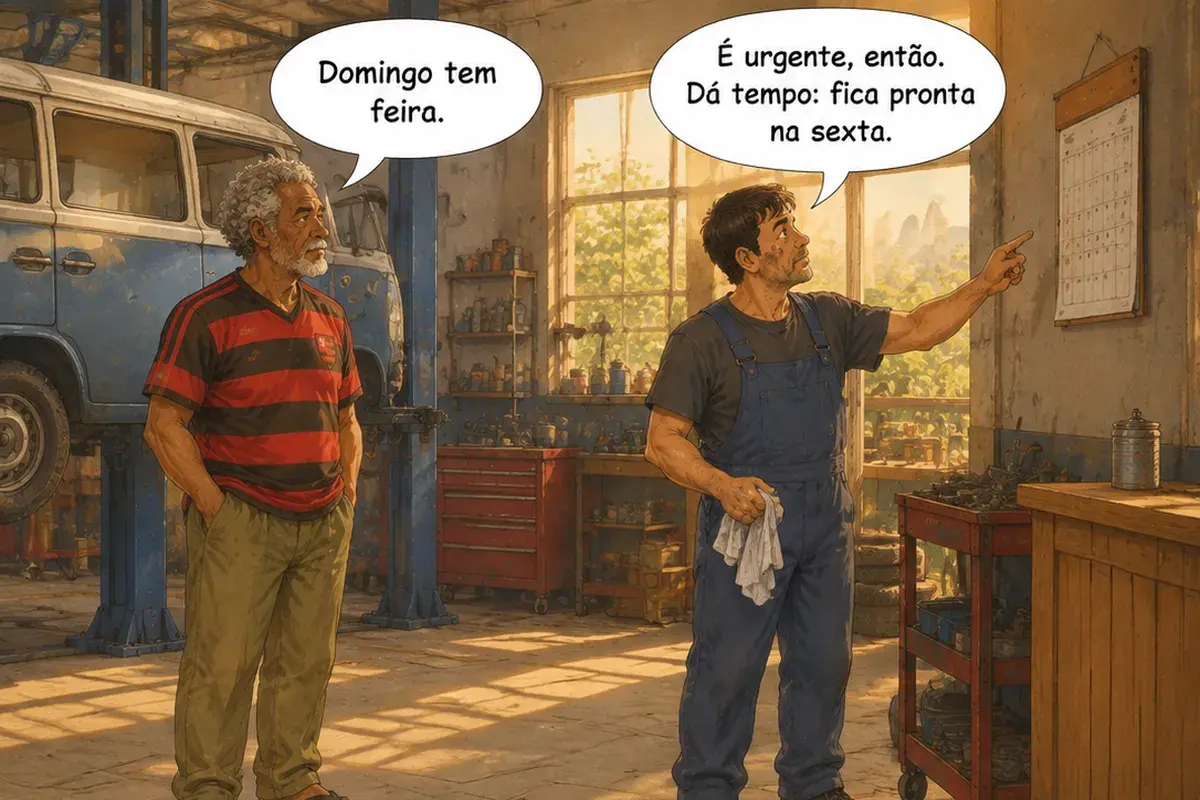
- Jorge
Domingo tem feira.
There's a street market on Sunday.
- Mecânico
É urgente, então. Dá tempo: fica pronta na sexta.
It's urgent, then. There's time: it'll be ready on Friday.
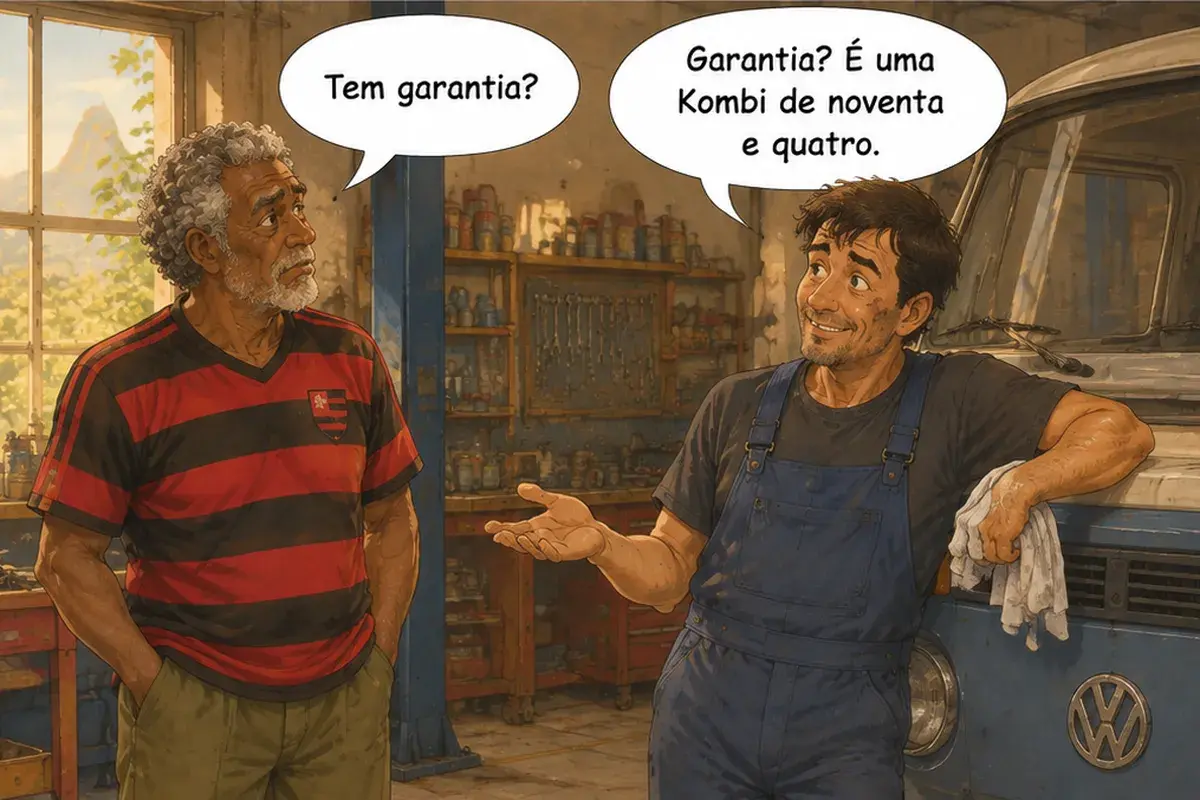
- Jorge
Tem garantia?
Is there a warranty?
- Mecânico
Garantia? É uma Kombi de noventa e quatro.
A warranty? It's a Kombi from ninety-four.
Grammar for this text
- Ela não pega — pegar from A1 means "to take, to grab". About a car it means "to start" (literally "it doesn't catch"). Normalmente ela pega na segunda vez — "it usually starts on the second try". Não pegou nem na décima — pegou is the preterite ele / ela form, nem here means "not even", décima — "tenth" (ordinal numbers, unit 18). Ela — because the Kombi is feminine (a Kombi).
- Estava. — people often answer a yes / no question with just the verb, without sim: Estava funcionando ontem? — Estava.
- quando ela parou — parou: "stopped, stalled" (the preterite ele / ela form of parar). O senhor — the polite "you".
- Saiu fumaça do motor — saiu: "came out" (the preterite ele / ela form of sair, unit 3). Portuguese often puts the subject after verbs like this, so fumaça ("smoke") comes after saiu; English says "smoke came out".
- Passei no posto — passar em means "to stop by"; posto here is the gas station. O pneu está inteiro — "the tire is intact" (inteiro — "whole, in one piece").
- Eu queria saber o preço and O senhor podia nos avisar — polite requests: queria and podia are imperfect forms of querer and poder (unit 11), but the meaning is soft: "I'd like", "could you". These are set phrases; the rule is in the unit grammar. nos avisar — "let us know": nos goes before the verb.
- Dá tempo: fica pronta na sexta — dar tempo — "to have enough time". Fica pronta — "it'll be ready" (the Kombi): Brazilians often use the present tense for the future.
- Uma Kombi de noventa e quatro — a year is said as a plain number: "from ninety-four". The warranty ran out some thirty years ago.
Words and grammar of the unit: Explain what's broken.
Learn the words from the texts with flashcards
In the app, you can tap any word in a text to see its translation, forms and examples, and new words stick with flashcards. 15 minutes a day.
Start for freeEverything is open for free. No card needed to sign up.