

Portuguese dialogue with translation · A1 · 14 lines
De manhã faz sol, à tarde chove Sunny in the morning, rain in the afternoon
Comic · 11 panels
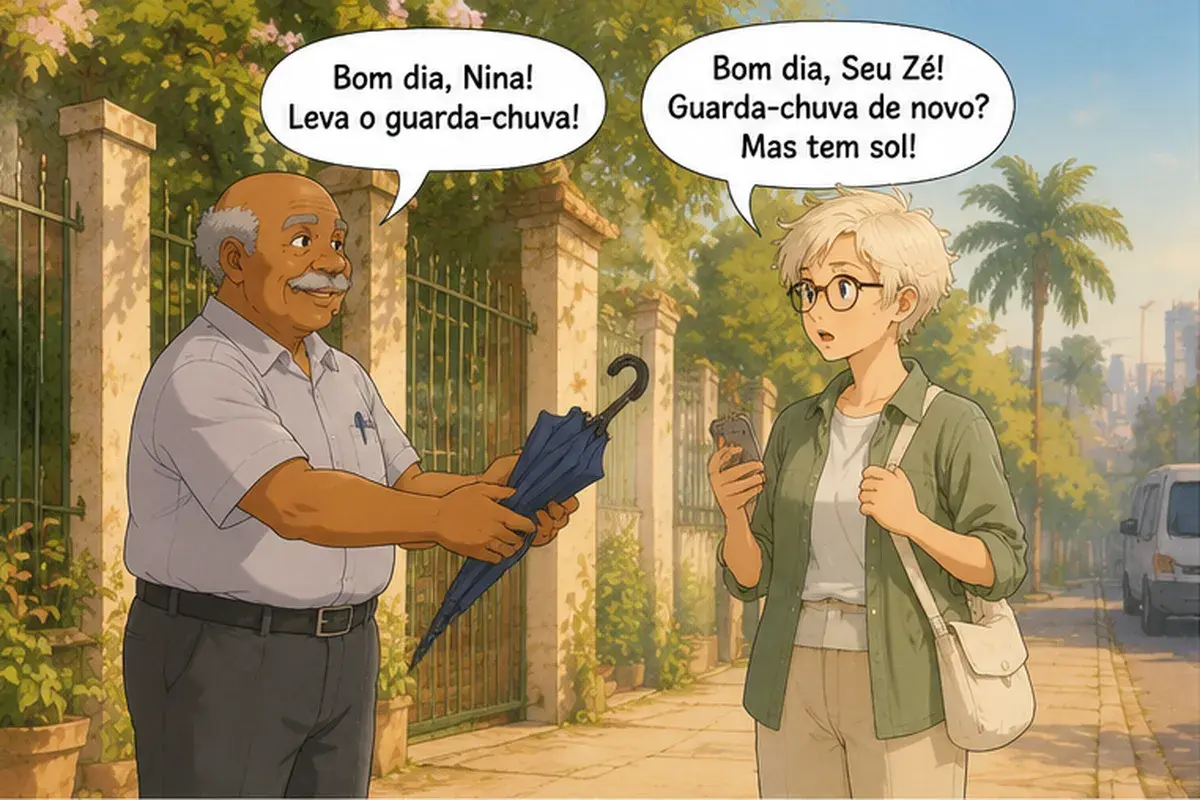
- Seu Zé
Bom dia, Nina! Leva o guarda-chuva!
Good morning, Nina! Take your umbrella!
- Nina
Bom dia, Seu Zé! Guarda-chuva de novo? Mas tem sol!
Good morning, Seu Zé! The umbrella again? But it's sunny!

- Seu Zé
Aqui é São Paulo. De manhã faz sol, à tarde chove, à noite faz frio.
This is São Paulo. In the morning it's sunny, in the afternoon it rains, at night it's cold.
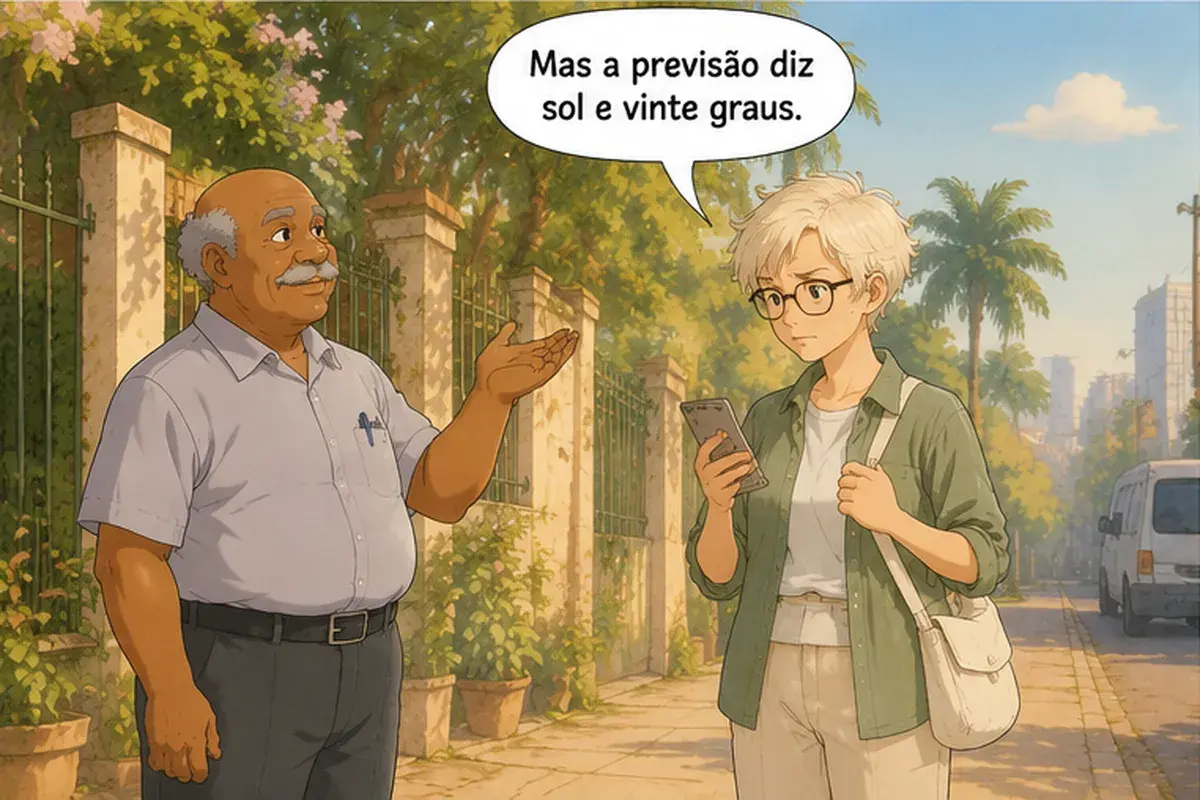
- Nina
Mas a previsão diz sol e vinte graus.
But the forecast says sun and twenty degrees.
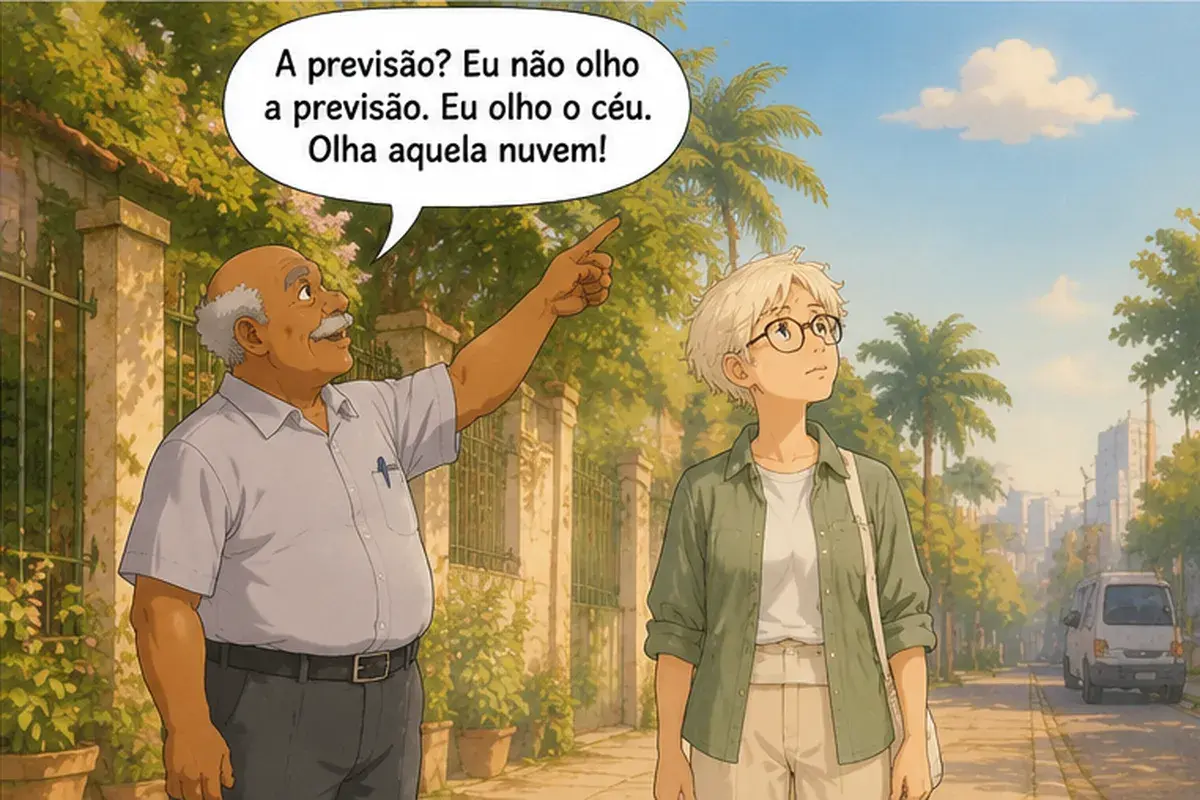
- Seu Zé
A previsão? Eu não olho a previsão. Eu olho o céu. Olha aquela nuvem!
The forecast? I don't look at the forecast. I look at the sky. Look at that cloud!

- Nina
É uma nuvem pequena.
It's a small cloud.
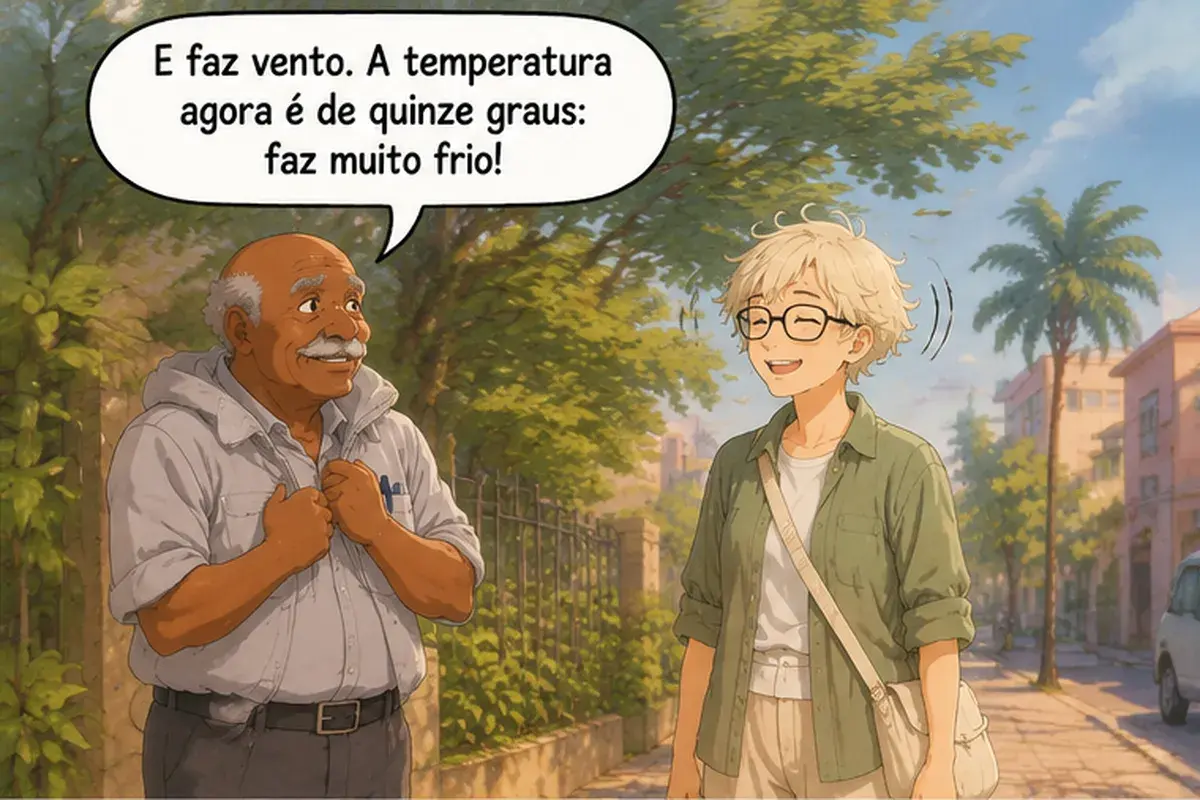
- Seu Zé
E faz vento. A temperatura agora é de quinze graus: faz muito frio!
And it's windy. The temperature now is fifteen degrees: it's very cold!

- Nina
Muito frio? Na minha cidade, quinze graus é verão!
Very cold? In my city, fifteen degrees is summer!
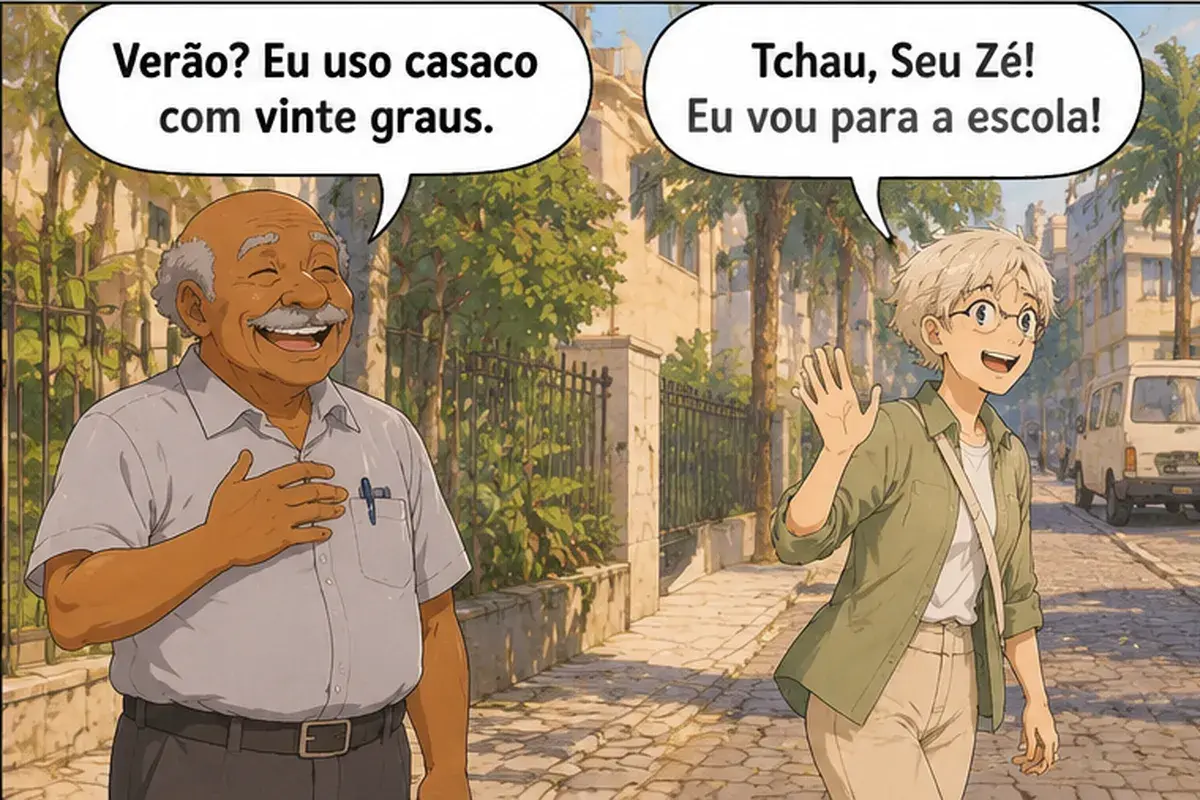
- Seu Zé
Verão? Eu uso casaco com vinte graus.
Summer? I wear a jacket at twenty degrees.
- Nina
Tchau, Seu Zé! Eu vou para a escola!
Bye, Seu Zé! I'm going to school!

- Seu Zé
Nina! Olha o céu!
Nina! Look at the sky!
- Nina
Tem garoa!
It's drizzling!
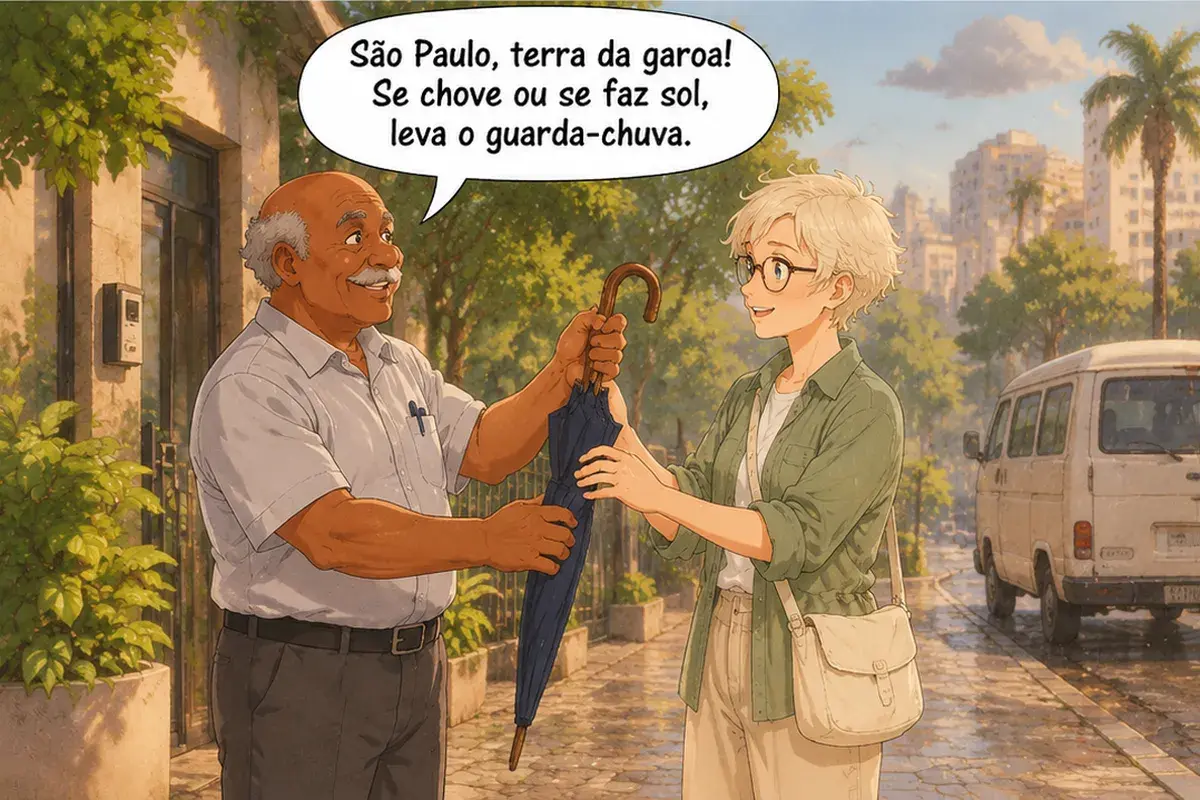
- Seu Zé
São Paulo, terra da garoa! Se chove ou se faz sol, leva o guarda-chuva.
São Paulo, land of drizzle! If it rains or if it's sunny, take your umbrella.
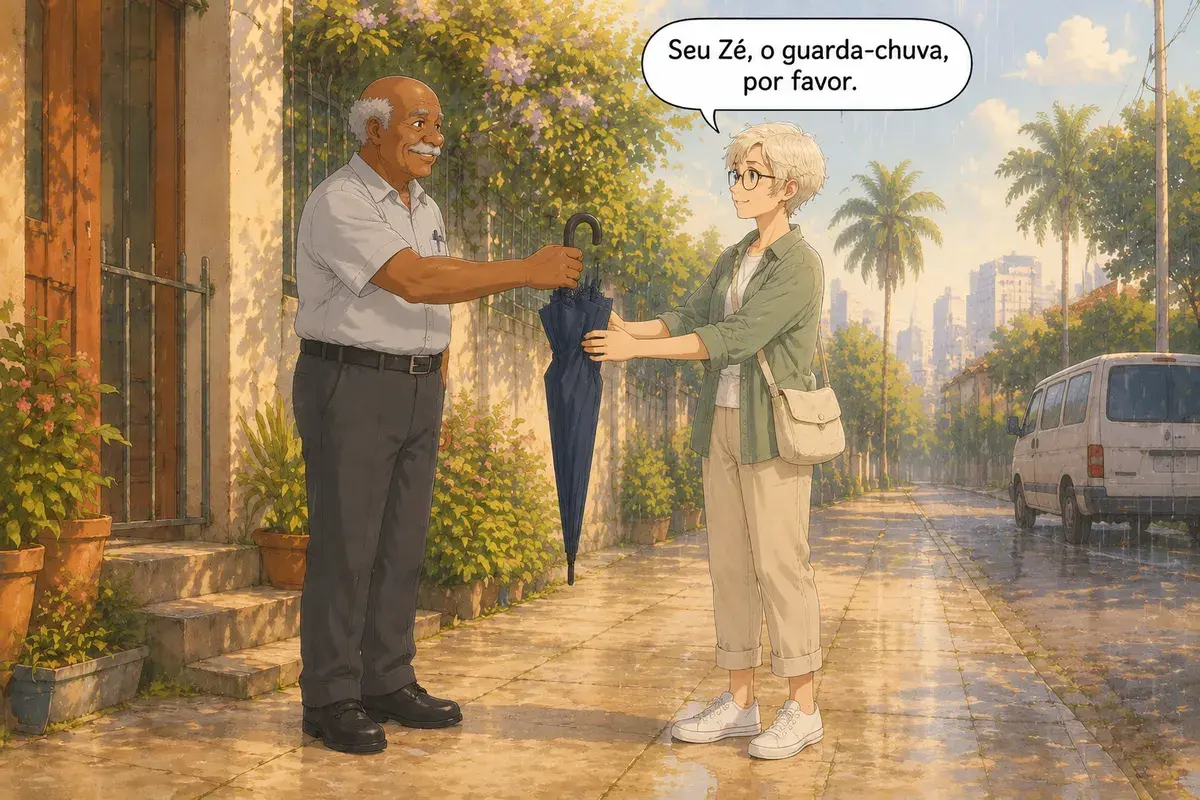
- Nina
Seu Zé, o guarda-chuva, por favor.
Seu Zé, the umbrella, please.
Grammar for this text
- Leva o guarda-chuva! and Olha aquela nuvem! — leva and olha are commands, "take!" and "look!", from levar and olhar. In everyday speech a command looks just like the você / ele / ela form (ele leva, ele olha); the full rule comes in A2. aquela — "that (over there)": the feminine form of aquele (unit 9).
- De manhã faz sol, à tarde chove, à noite faz frio — weather sentences have no subject, not even "it". faz is the você / ele / ela form of fazer (unit 10): faz sol is literally "makes sun", that is, "it's sunny". chove is the only form of chover. à tarde = a + a: "in the afternoon".
- Mas tem sol! — tem is the você / ele / ela form of ter, here "there is": tem sol means the same as faz sol.
- A previsão diz sol e vinte graus — diz is the você / ele / ela form of the irregular verb dizer (to say). The subject is a previsão: "the forecast says".
- Guarda-chuva de novo? — de novo means "again": Seu Zé talks about the umbrella every day.
- São Paulo, terra da garoa — terra means "land", and da = de + a: "land of drizzle". garoa is a fine, light rain, not chuva.
- Se chove ou se faz sol — se + the simple present: "if it rains or if it's sunny".
Words and grammar of the unit: Talk about the weather.
Learn the words from the texts with flashcards
In the app, you can tap any word in a text to see its translation, forms and examples, and new words stick with flashcards. 15 minutes a day.
Start for freeEverything is open for free. No card needed to sign up.