

Portuguese dialogue with translation · A1 · 13 lines
Estou com dor de garganta I have a sore throat
Comic · 10 panels
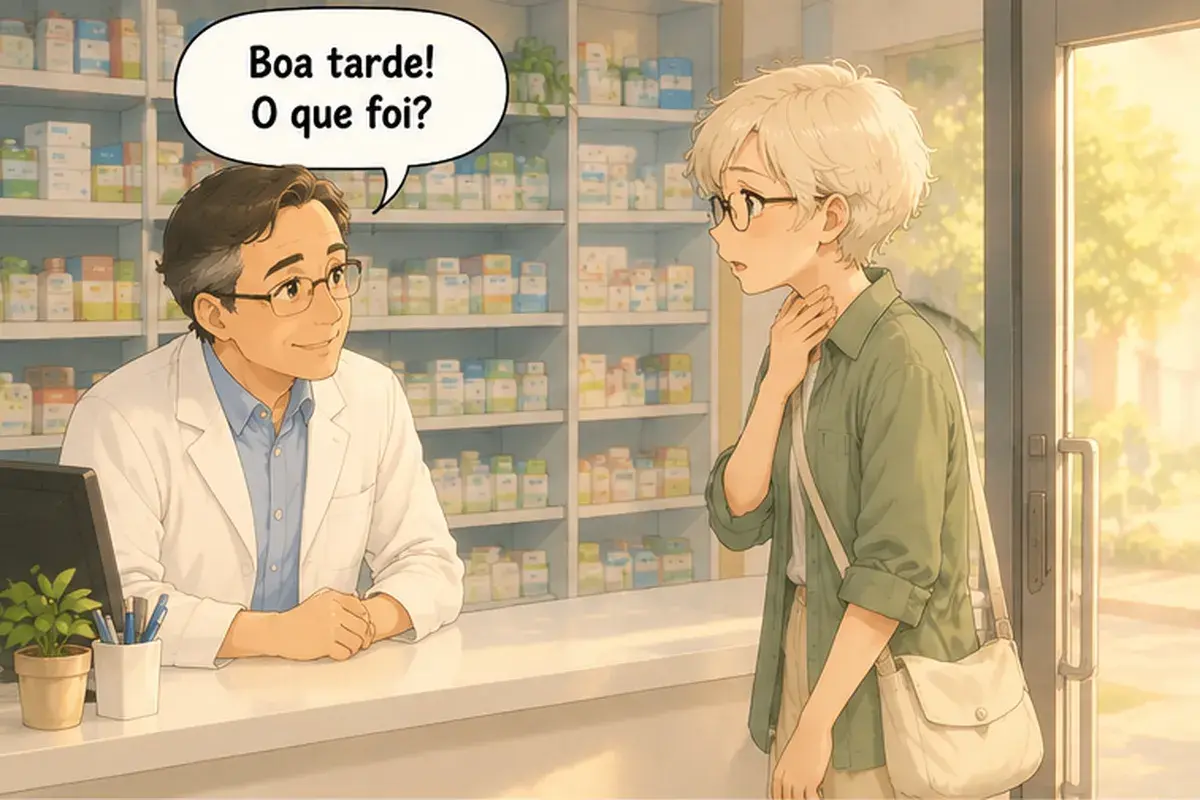
- Farmacêutico
Boa tarde! O que foi?
Good afternoon! What's wrong?
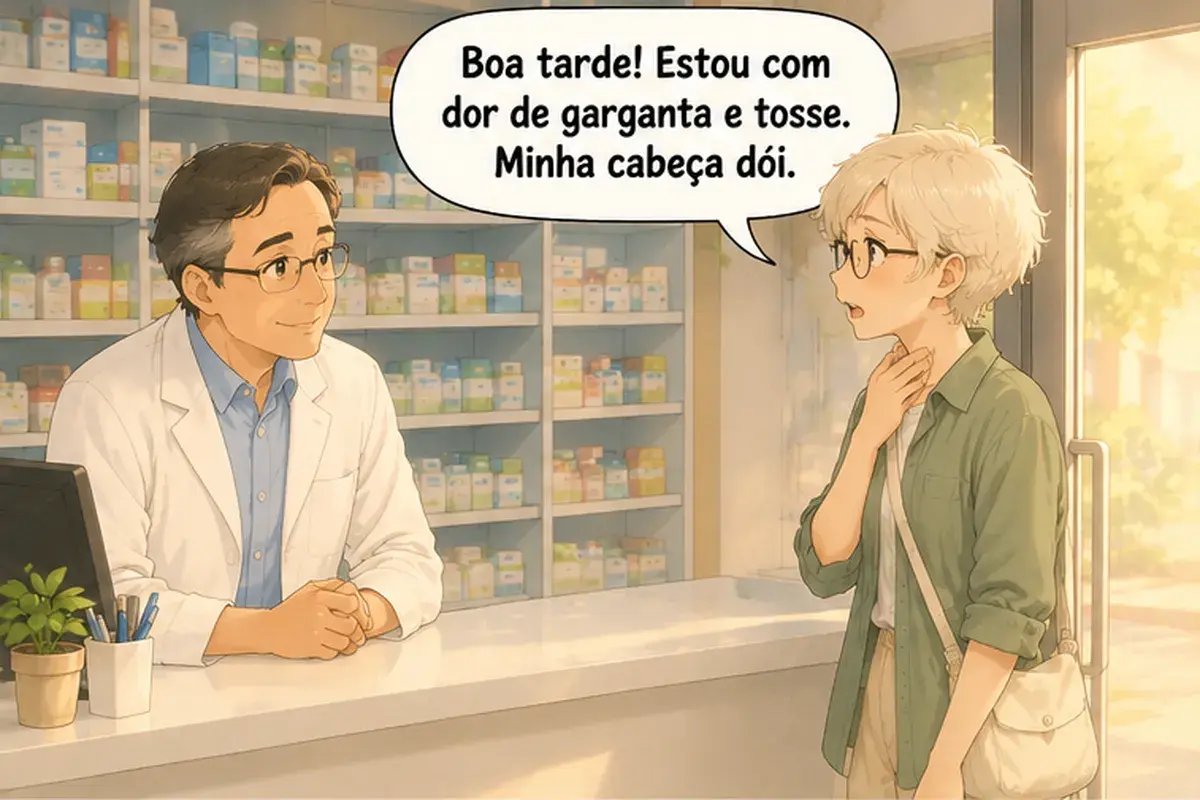
- Nina
Boa tarde! Estou com dor de garganta e tosse. Minha cabeça dói.
Good afternoon! I have a sore throat and a cough. My head hurts.
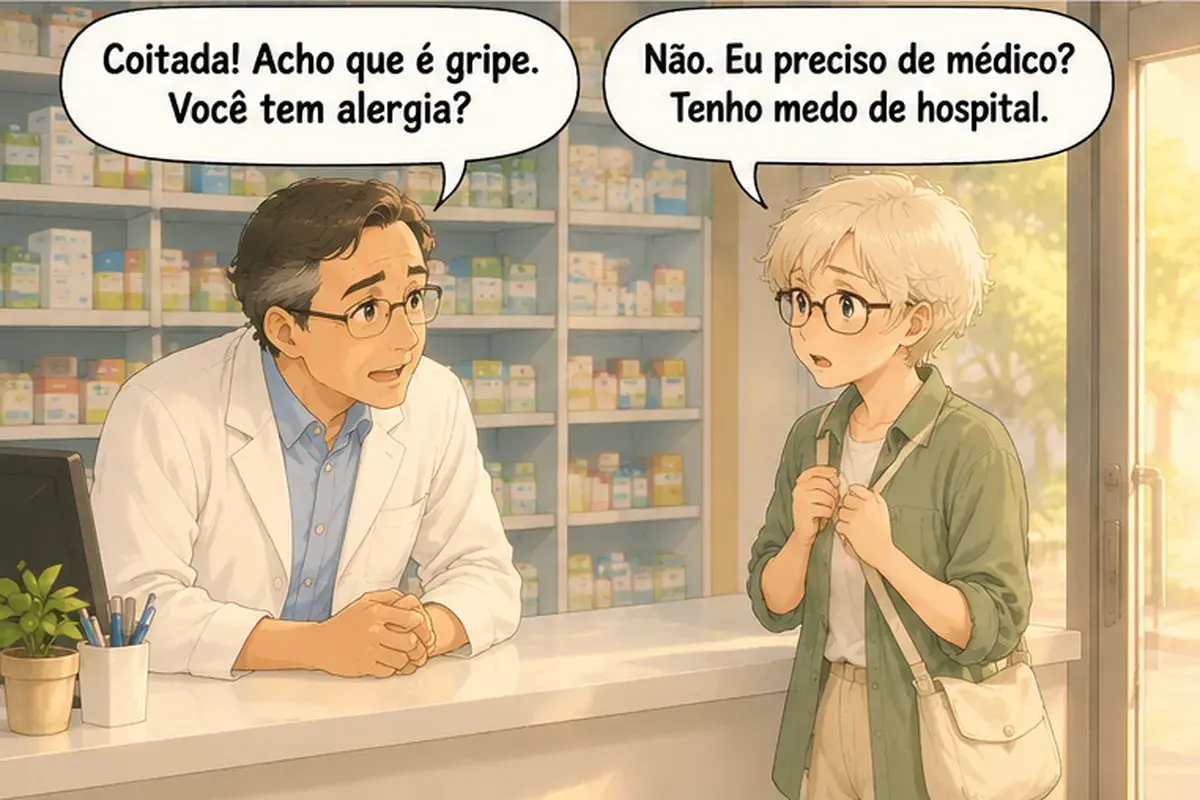
- Farmacêutico
Coitada! Acho que é gripe. Você tem alergia?
Poor thing! I think it's the flu. Do you have any allergies?
- Nina
Não. Eu preciso de médico? Tenho medo de hospital.
No. Do I need a doctor? I'm afraid of hospitals.

- Farmacêutico
Hospital? Não precisa! Você deve descansar e beber chá quente.
The hospital? No need! You should rest and drink hot tea.
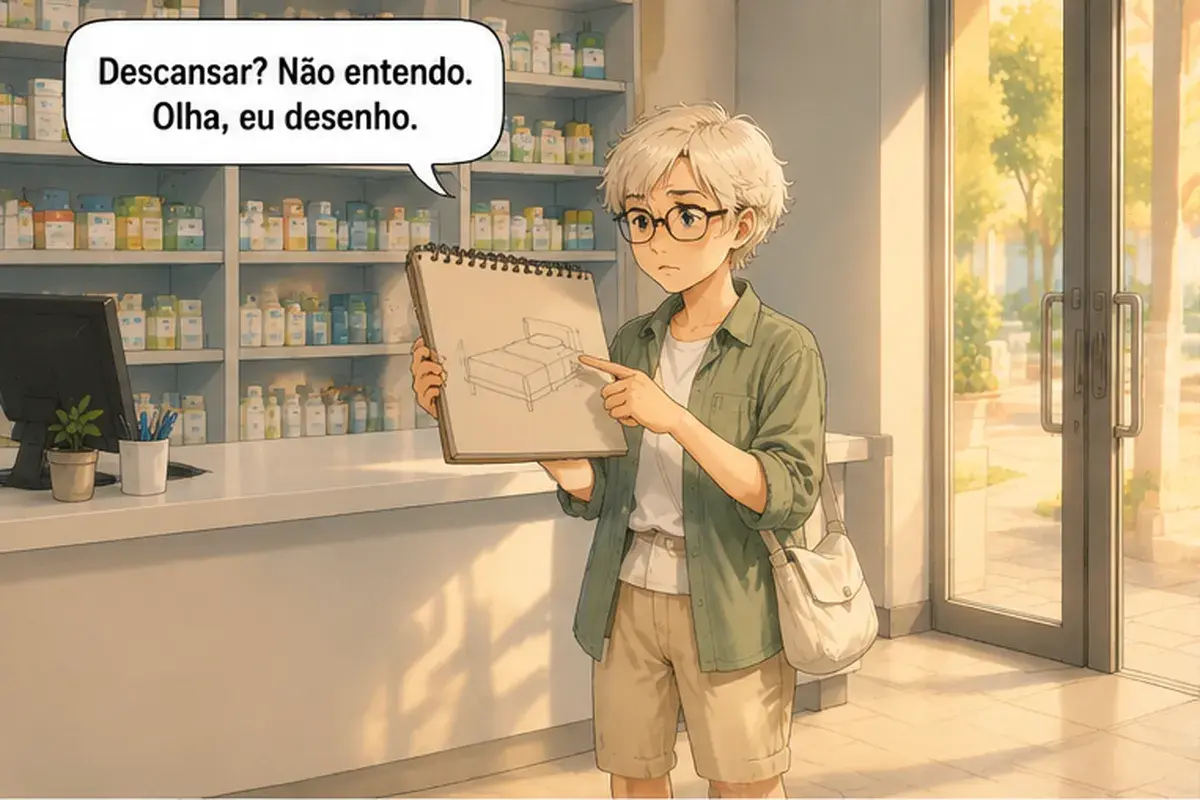
- Nina
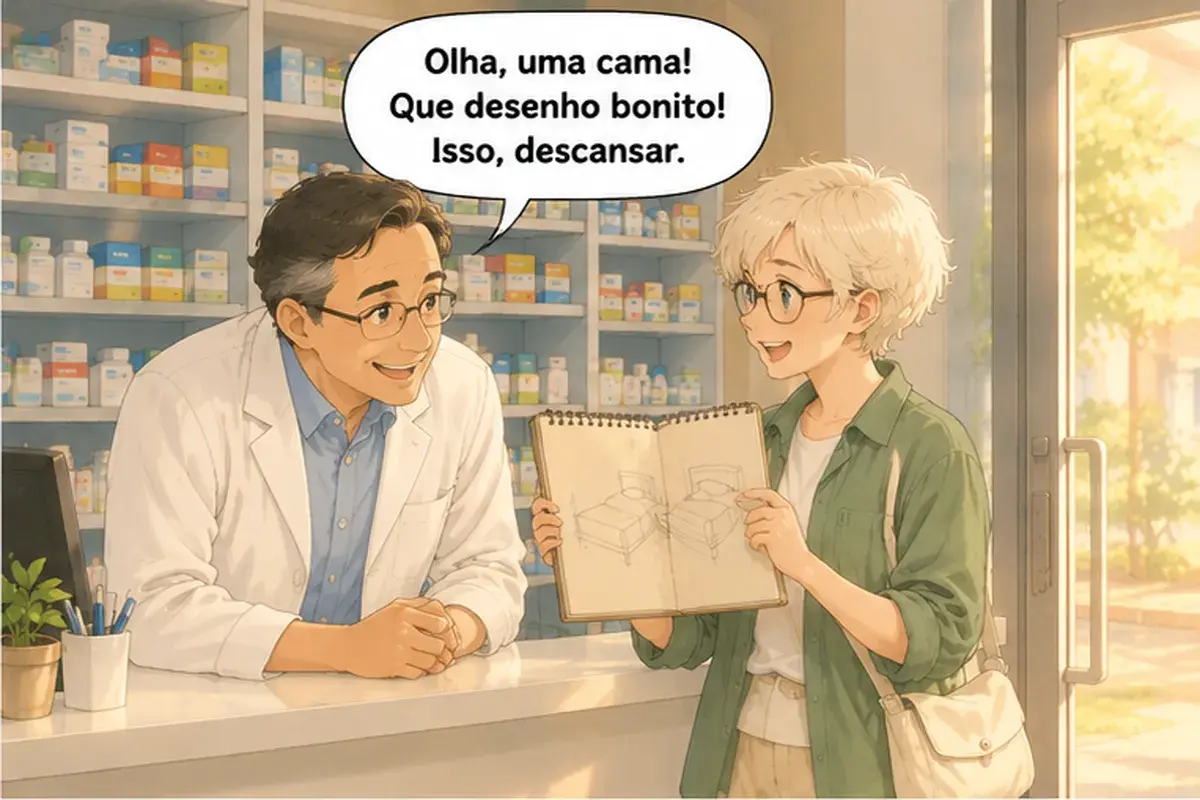
Descansar? Não entendo. Olha, eu desenho.
Rest? I don't understand. Look, I'll draw it.
- Farmacêutico
Olha, uma cama! Que desenho bonito! Isso, descansar.
Look, a bed! What a nice drawing! That's it, rest.

- Nina
Entendi! E o remédio?
Got it! And the medicine?
- Farmacêutico
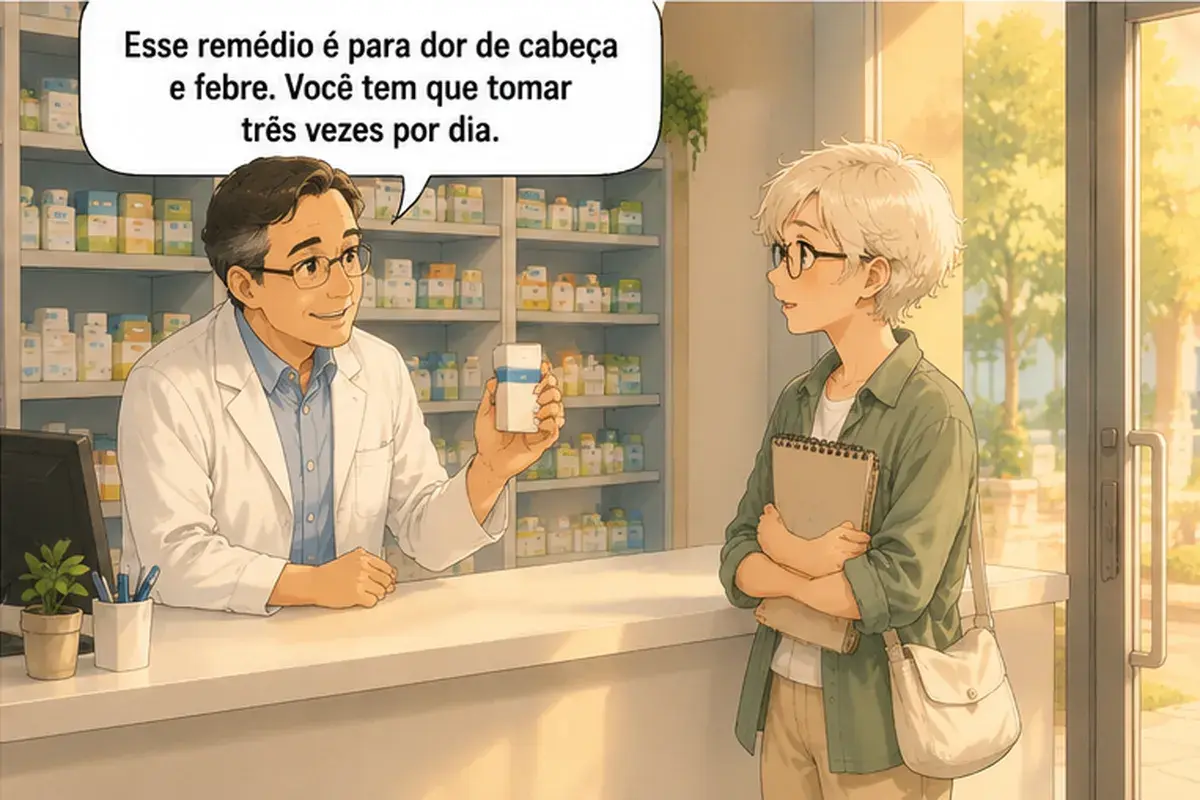
Esse remédio é para dor de cabeça e febre. Você tem que tomar três vezes por dia.
This medicine is for headaches and fever. You have to take it three times a day.
- Nina
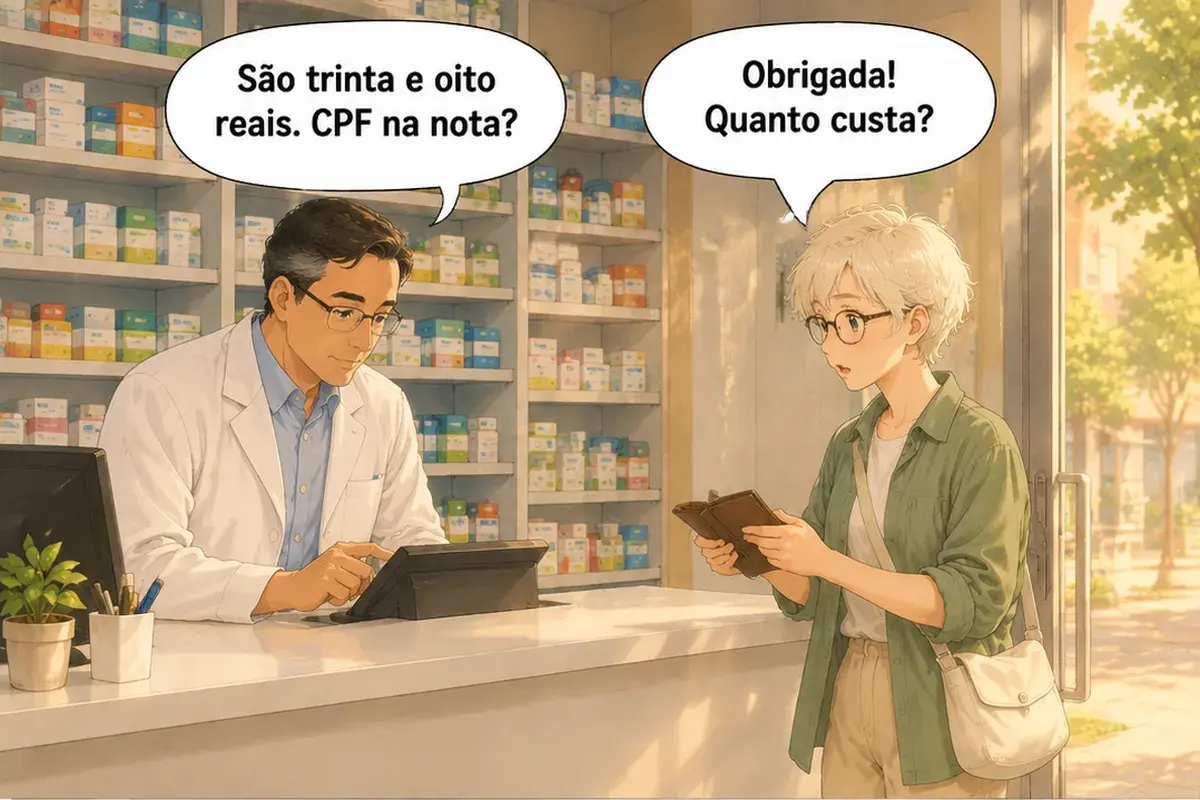
Obrigada! Quanto custa?
Thank you! How much does it cost?
- Farmacêutico
São trinta e oito reais. CPF na nota?
That's thirty-eight reais. Do you want your CPF on the receipt?

- Nina
Não, obrigada. Tchau!
No, thank you. Bye!
- Farmacêutico
Melhoras! Isso passa rápido.
Get well soon! This goes away quickly.
Grammar for this text
- O que foi? and Entendi! — set phrases in the past tense; learn them as a whole. foi is a past form of ser: "what happened? / what's wrong?". entendi is the eu form of entender (to understand) in the past: "got it". The past tense comes in A2.
- Estou com dor de garganta and Minha cabeça dói — estar com + a noun: literally "I'm with throat pain", where English says "I have a sore throat". dói is the singular form of the irregular verb doer (to hurt); the subject here is the head: "my head hurts", just like in English. If several parts hurt, it's doem.
- Acho que é gripe — acho is the eu form of achar, here "I think" (in unit 7 this word meant "to find"). gripe — the flu, a cold.
- Eu preciso de médico? and Não precisa! — preciso is the eu form and precisa the você / ele / ela form of precisar (to need); before a noun it takes de. Não precisa! — "no need!". Tenho medo de hospital — ter medo de means "to be afraid of".
- Olha, eu desenho — olha is a casual "look": it has the same form as the ele / ela form of olhar; commands come in A2. desenho — "I draw", the eu form of desenhar. In Que desenho bonito! it's already a noun: "drawing".
- São trinta e oito reais — são is the eles / elas form of ser: there are many reais, so it's são, not é. There is no word for "cost" here.
- Você tem que tomar — tem que + infinitive: "have to" (unit 7). Isso passa rápido — passa is the ele / ela form of passar: "goes away". Portuguese uses the present here, where English might say "it'll pass"; the form vai passar comes in unit 13.
Words and grammar of the unit: Say what hurts at the pharmacy.
Learn the words from the texts with flashcards
In the app, you can tap any word in a text to see its translation, forms and examples, and new words stick with flashcards. 15 minutes a day.
Start for freeEverything is open for free. No card needed to sign up.