

Portuguese dialogue with translation · A1 · 14 lines
Parece sério, mas é engraçado He looks serious, but he's funny
Comic · 12 panels
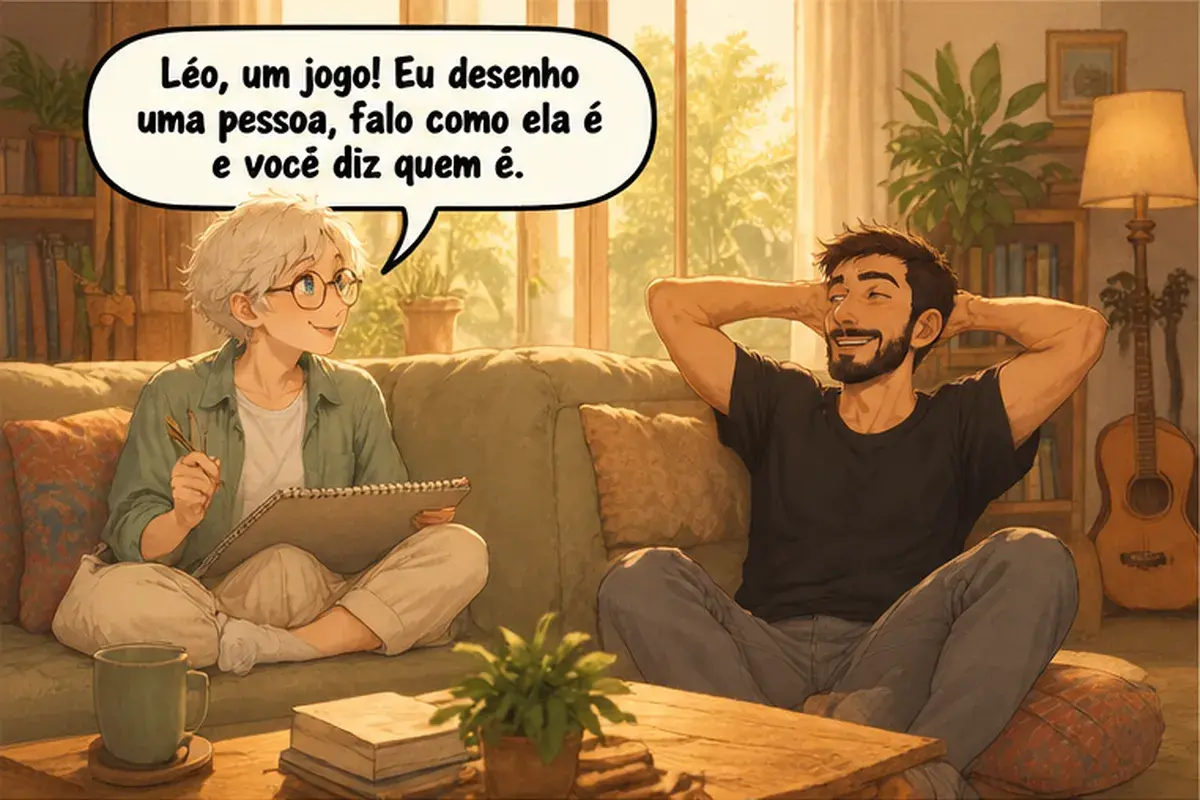
- Nina
Léo, um jogo! Eu desenho uma pessoa, falo como ela é e você diz quem é.
Léo, a game! I draw a person, I say what they're like, and you say who it is.
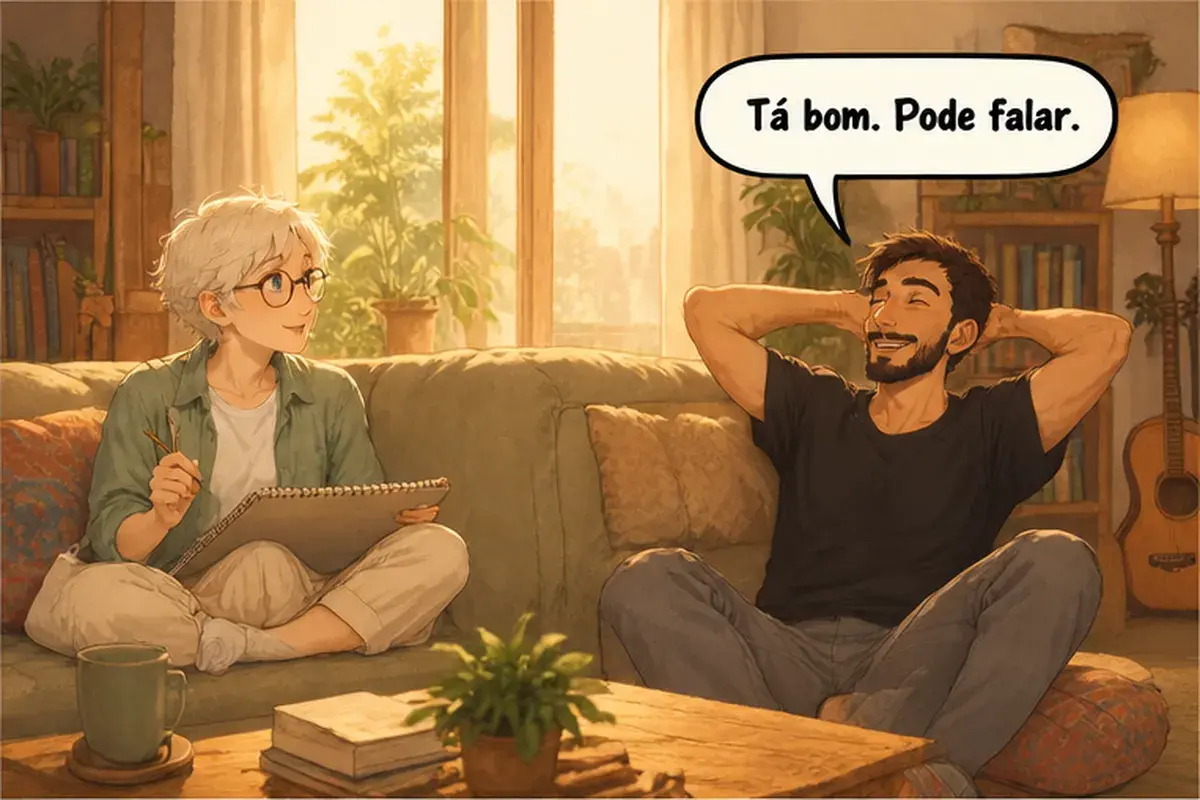
- Léo
Tá bom. Pode falar.
OK. Go ahead.
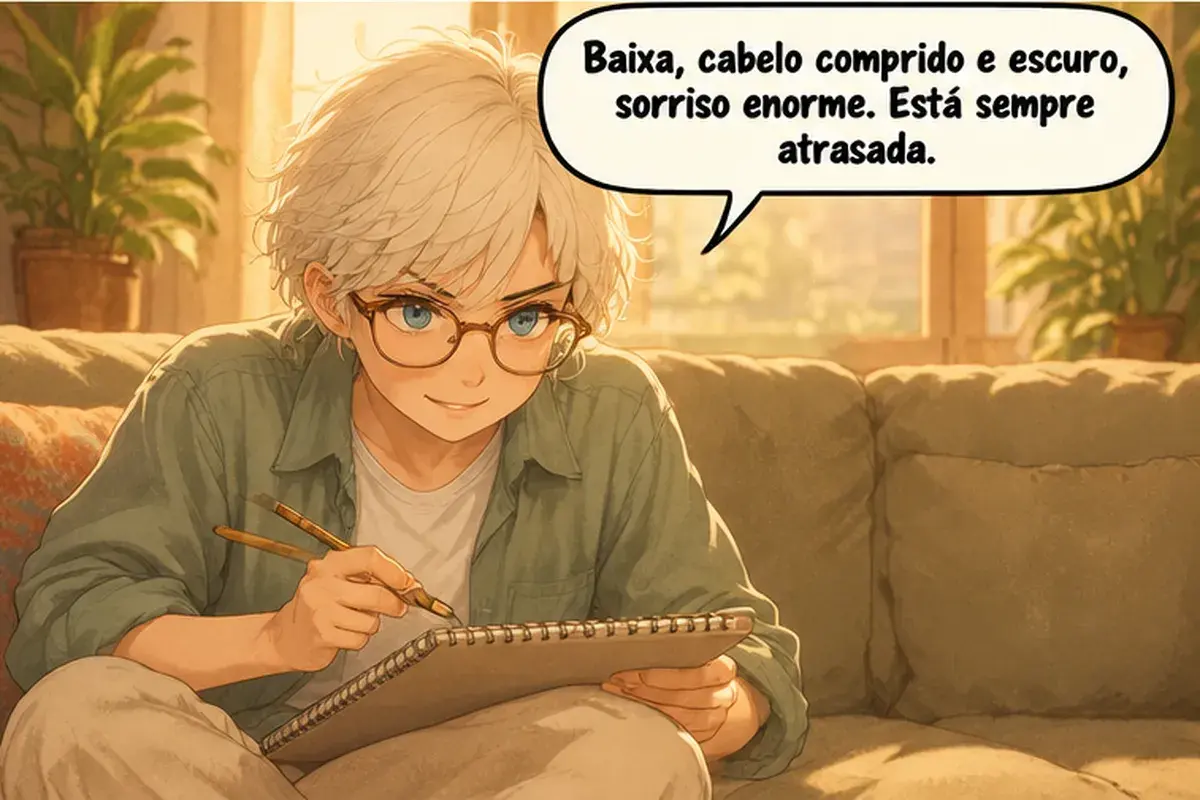
- Nina
Baixa, cabelo comprido e escuro, sorriso enorme. Está sempre atrasada.
Short, long dark hair, a huge smile. She's always late.
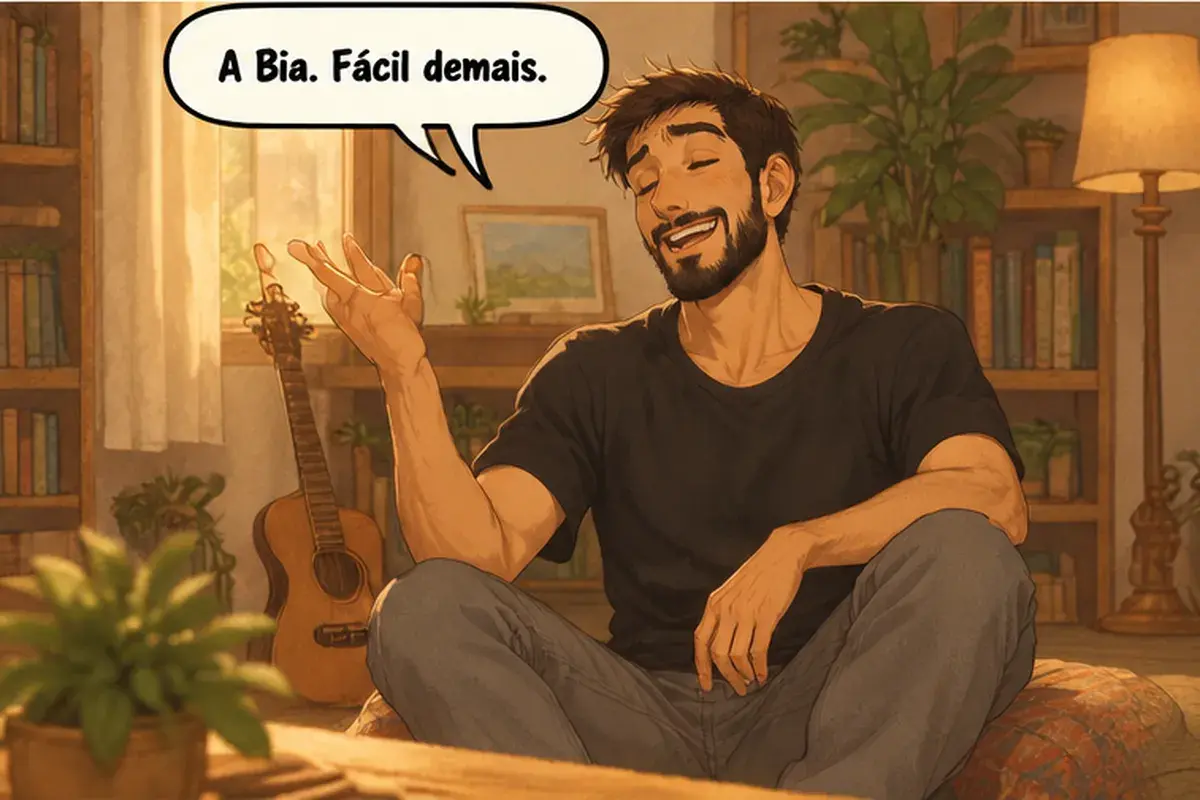
- Léo
A Bia. Fácil demais.
Bia. Too easy.
- Nina
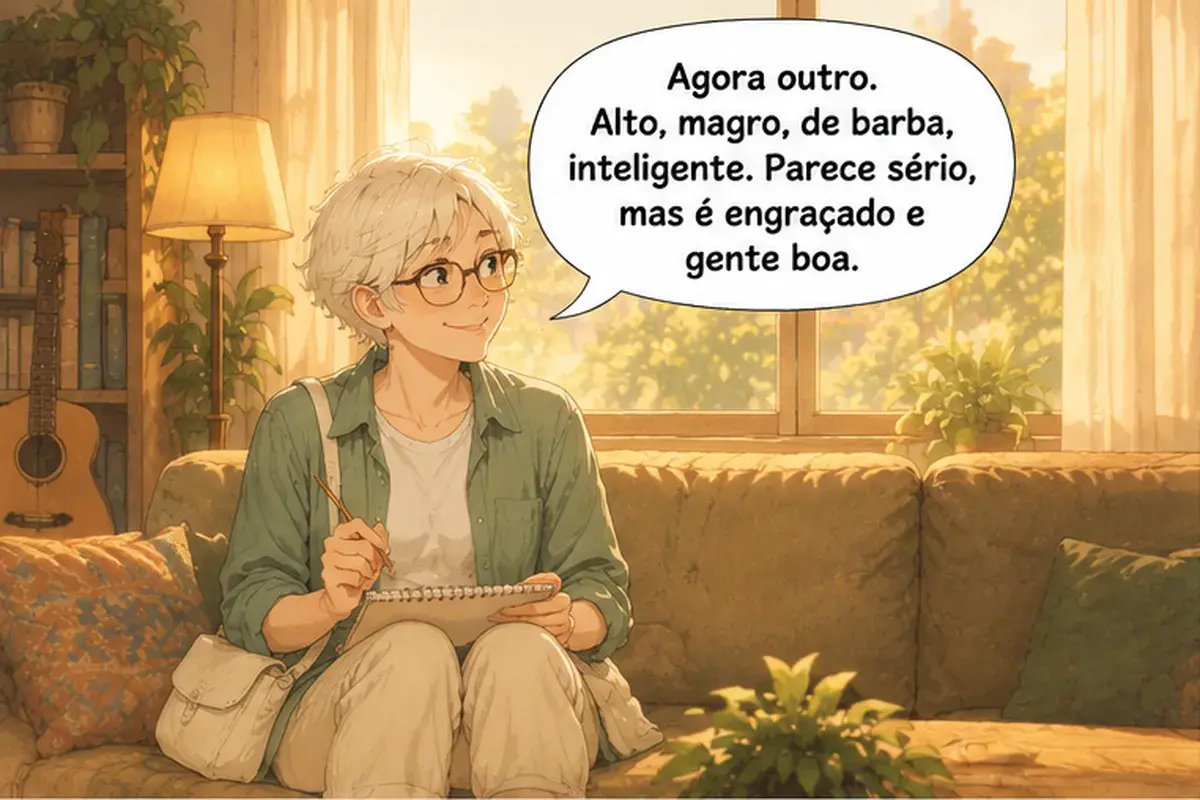
Agora outro. Alto, magro, de barba, inteligente. Parece sério, mas é engraçado e gente boa.
Now another one. Tall, thin, with a beard, smart. He looks serious, but he's funny and a good guy.
- Léo
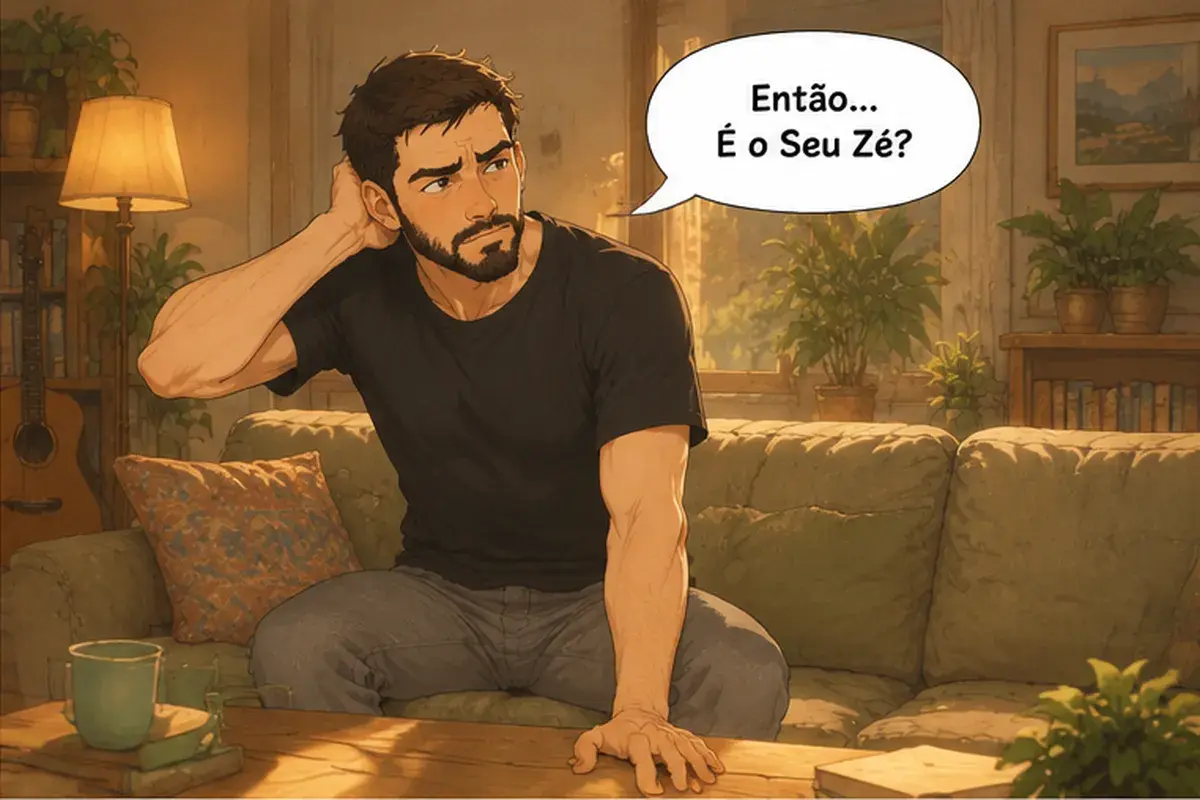
Então... É o Seu Zé?
So... is it Seu Zé?
- Nina
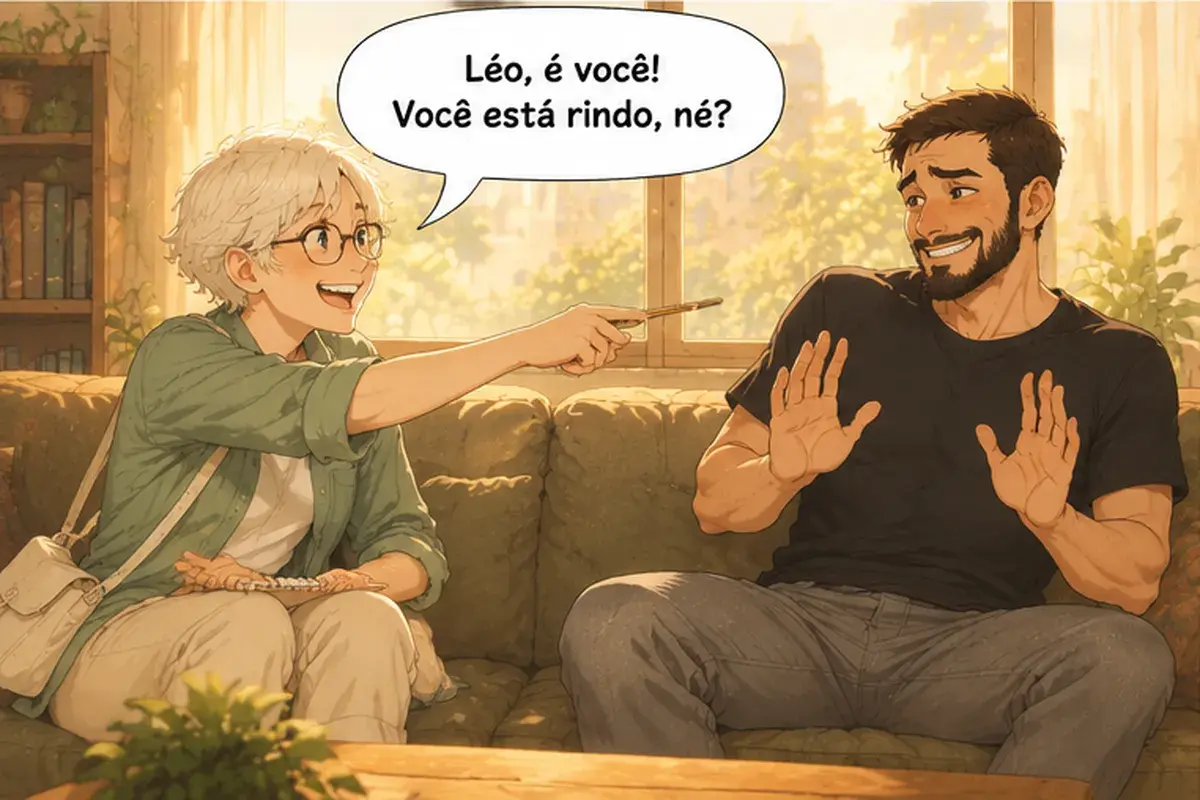
Léo, é você! Você está rindo, né?
Léo, it's you! You're laughing, right?
- Léo
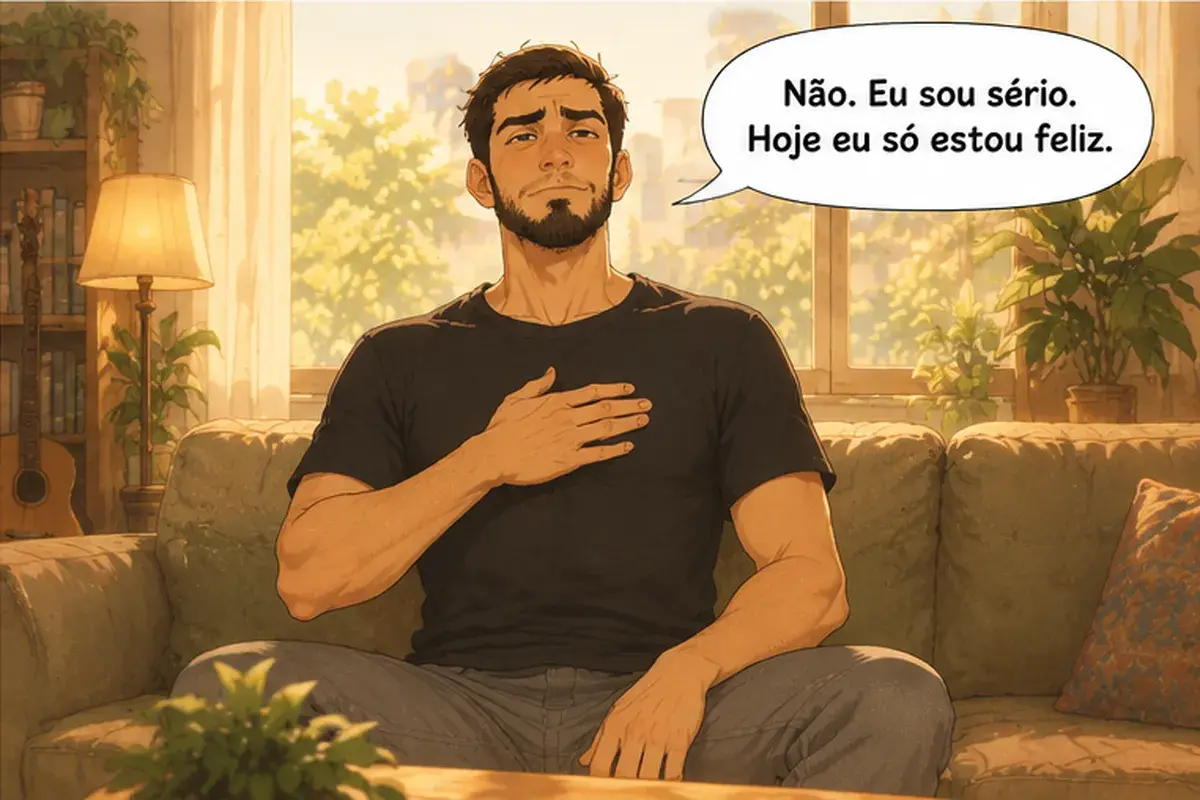
Não. Eu sou sério. Hoje eu só estou feliz.
No. I'm a serious guy. Today I'm just happy.
- Nina
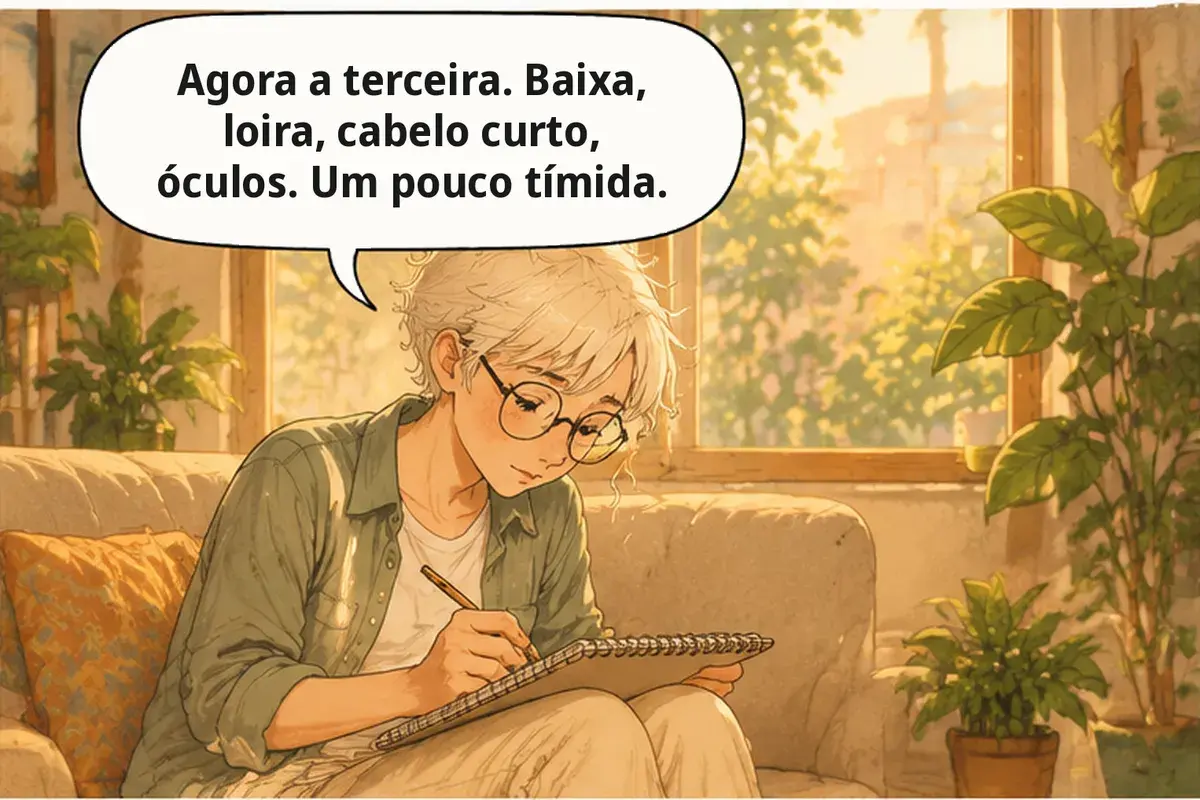
Agora a terceira. Baixa, loira, cabelo curto, óculos. Um pouco tímida.
Now the third one. Short, blonde, short hair, glasses. A little shy (about a woman).
- Léo
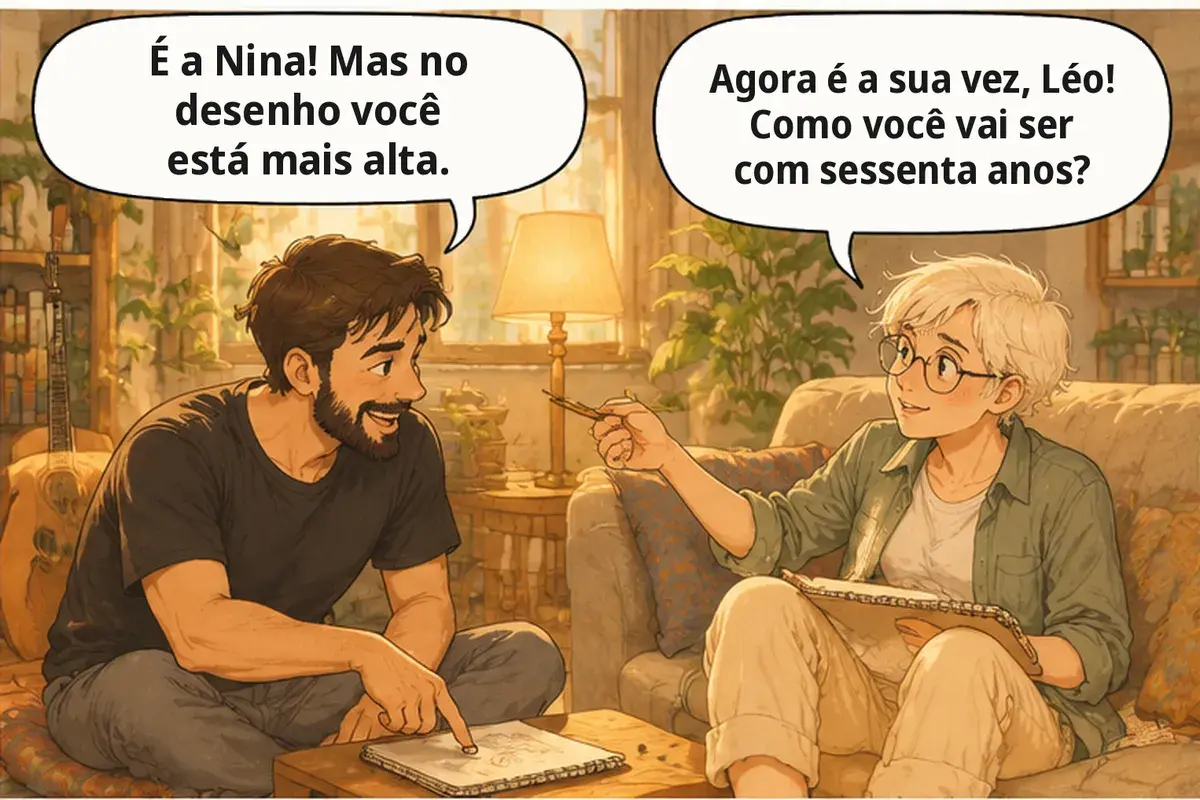
É a Nina! Mas no desenho você está mais alta.
It's Nina! But in the drawing you're taller (to a woman).
- Nina
Agora é a sua vez, Léo! Como você vai ser com sessenta anos?
Now it's your turn, Léo! What are you going to be like at sixty?
- Léo
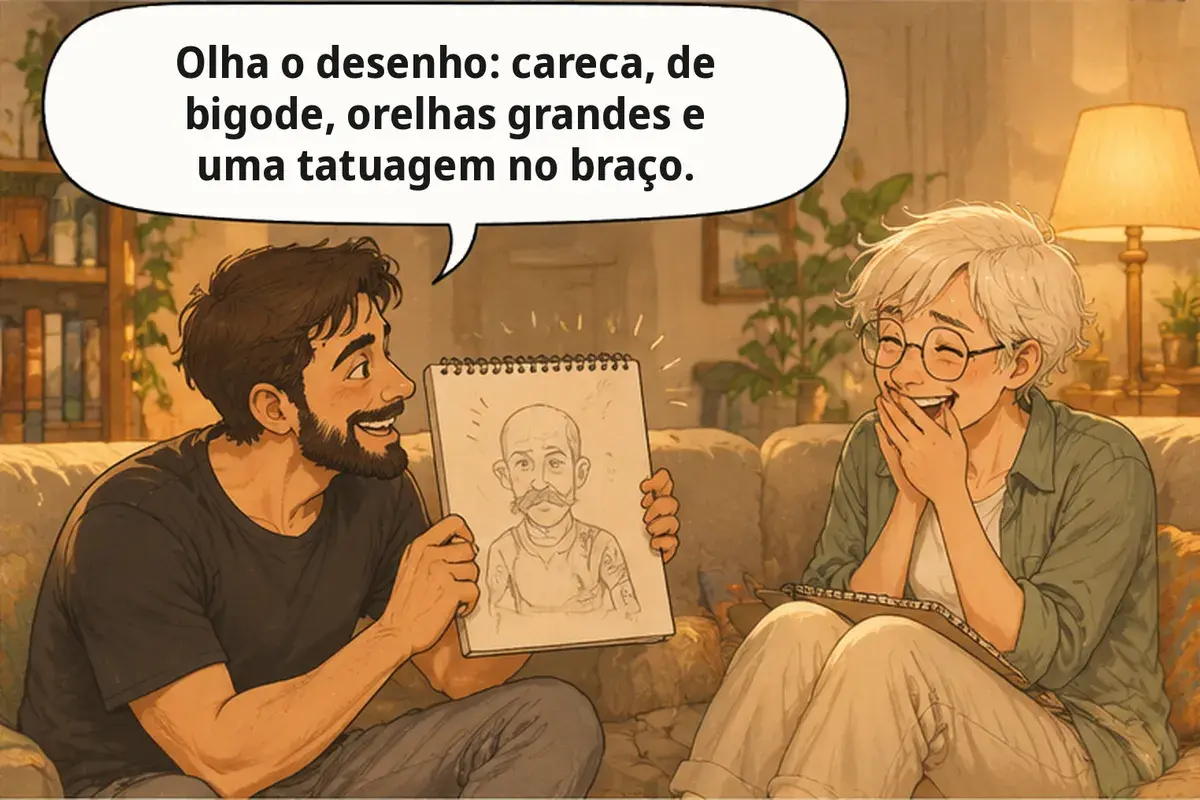
Olha o desenho: careca, de bigode, orelhas grandes e uma tatuagem no braço.
Look at the drawing: bald, with a mustache, big ears and a tattoo on my arm.
- Nina
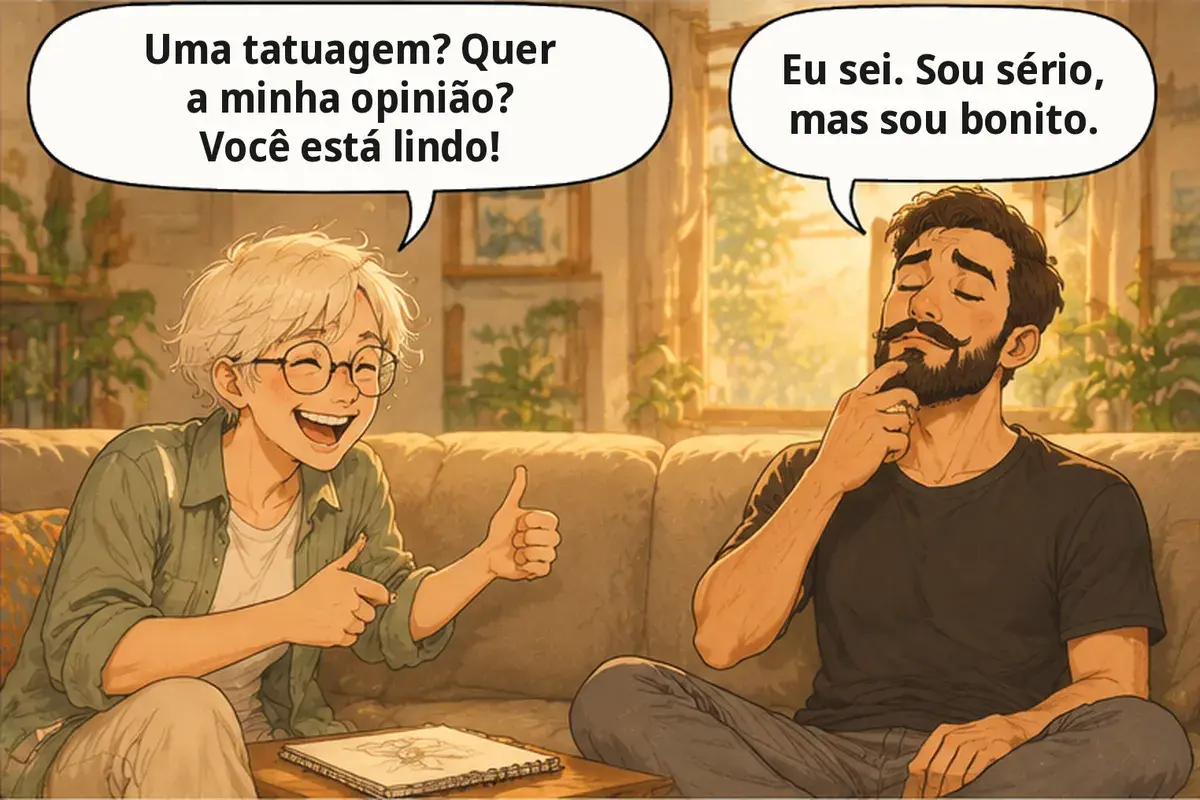
Uma tatuagem? Quer a minha opinião? Você está lindo!
A tattoo? Want my opinion? You look handsome!
- Léo
Eu sei. Sou sério, mas sou bonito.
I know. I'm a serious guy, but I'm handsome.
Grammar for this text
- Alto, magro, de barba, inteligente. — when you describe a drawing, you don't need a verb: you can just list the words. de barba means "with a beard" (literally "of beard"); you can also say tem barba.
- Parece sério, mas é engraçado e gente boa. — parece is the ele / ela form of parecer: "seems, looks". gente boa doesn't change for gender or number.
- Eu sou sério. Hoje eu só estou feliz. — sou is the eu form of ser (lasting), estou is the eu form of estar (today). só here means "just".
- Você está rindo, né? — estar + rindo: rindo is the -ndo form of rir, like English -ing, "you're laughing right now". né means "right?".
- Fácil demais. — demais after a word means "too".
- Tá bom. Pode falar. — tá is casual está; tá bom means "OK". pode is the você form of poder: pode falar — "go ahead, you can talk".
- no desenho você está mais alta — Léo's joke: Nina drew herself taller than she is (in real life she's baixa, line 9). está here means "you look, you came out". mais alta means "taller"; the second part ("than in real life") is left out because it's clear anyway.
- Como você vai ser com sessenta anos? — vai ser means "are going to be": ir + infinitive (unit 13). com sessenta anos means "at sixty".
- careca, de bigode — careca means "bald" (for a man or a woman); de bigode means "with a mustache", like de barba.
- Quer a minha opinião? Você está lindo! — estar here is about how Léo looks in the drawing.
Words and grammar of the unit: Describe people and places.
Learn the words from the texts with flashcards
In the app, you can tap any word in a text to see its translation, forms and examples, and new words stick with flashcards. 15 minutes a day.
Start for freeEverything is open for free. No card needed to sign up.