

Portuguese dialogue with translation · A1 · 14 lines
Eu queria um pão na chapa e um café I'd like a pão na chapa and a coffee
Comic · 14 panels
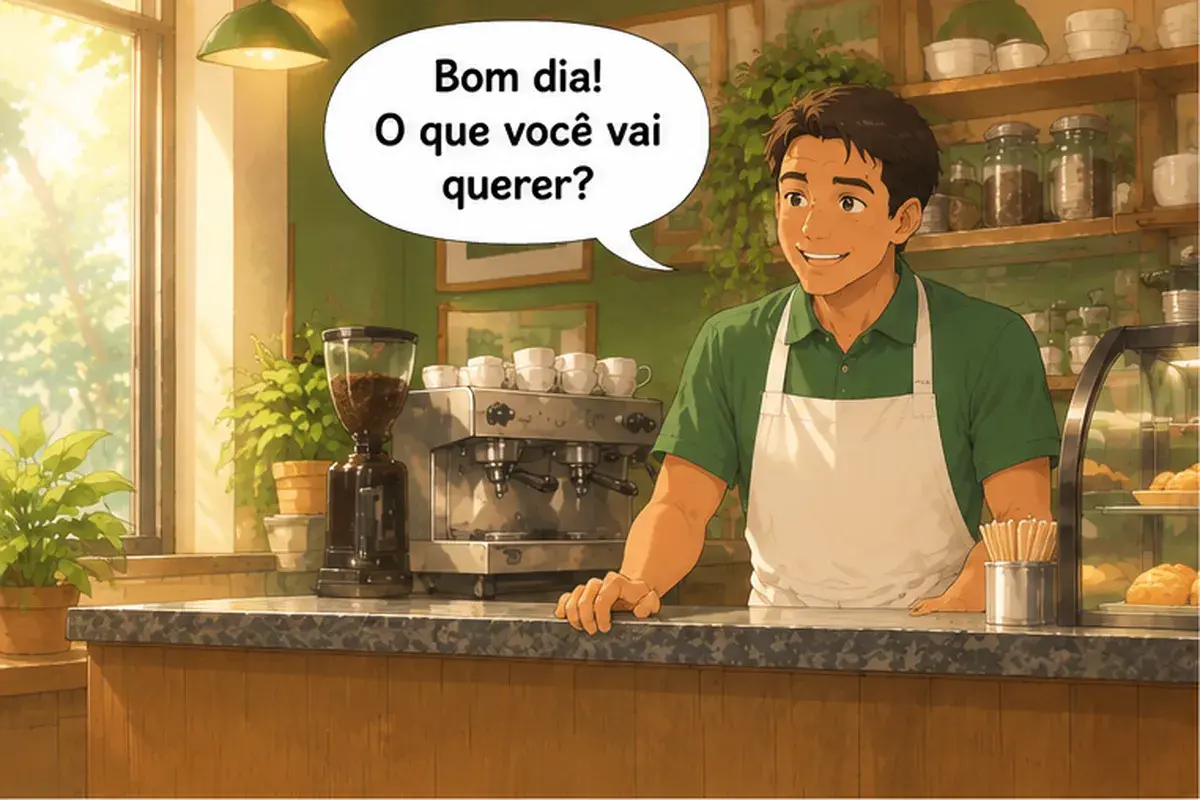
- Atendente
Bom dia! O que você vai querer?
Good morning! What will you have?

- Nina
Bom dia! Eu queria um pão na chapa e um café, por favor.
Good morning! I'd like a pão na chapa and a coffee, please.
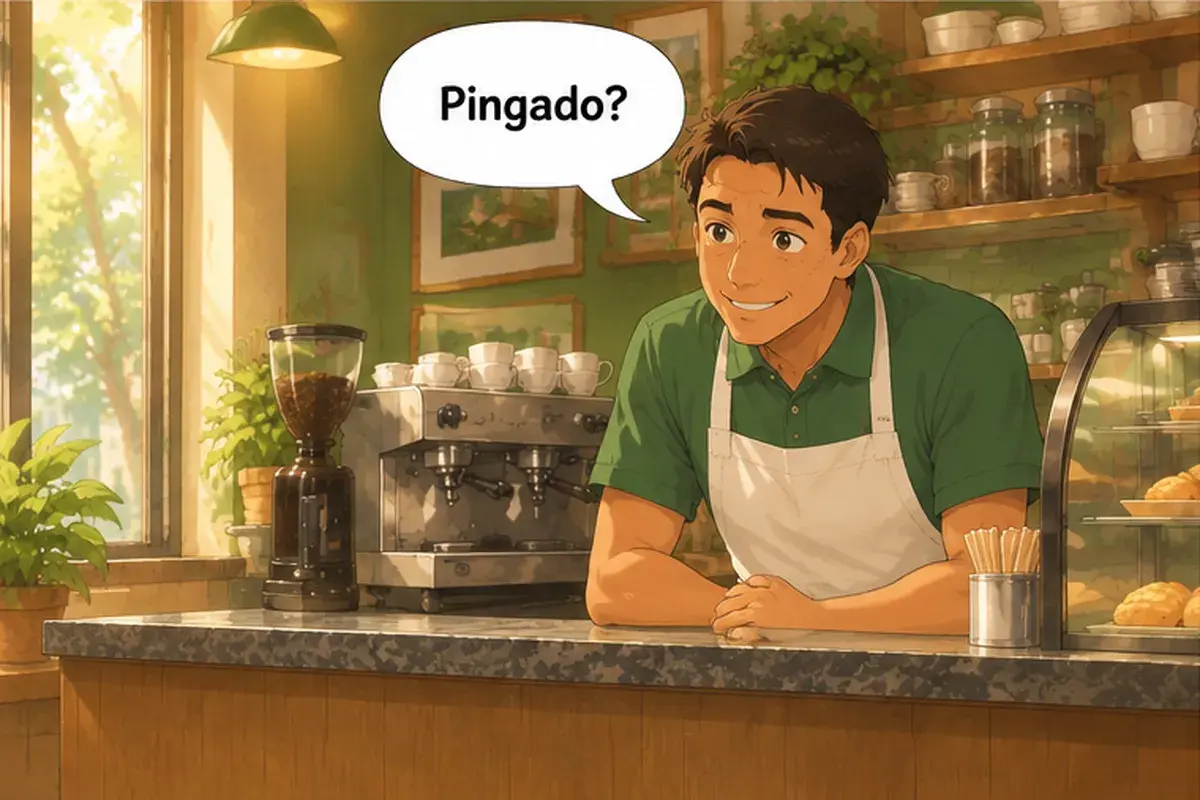
- Atendente
Pingado?
Pingado?
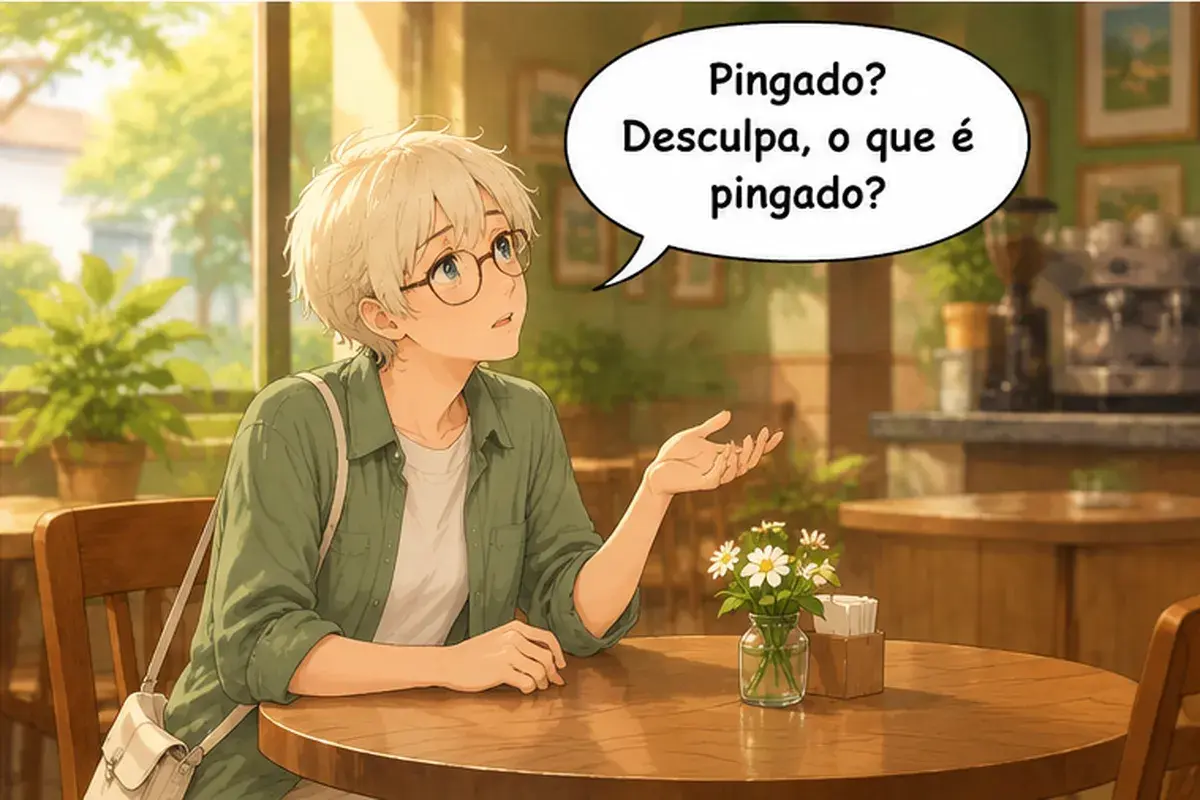
- Nina
Pingado? Desculpa, o que é pingado?
Pingado? Sorry, what's a pingado?
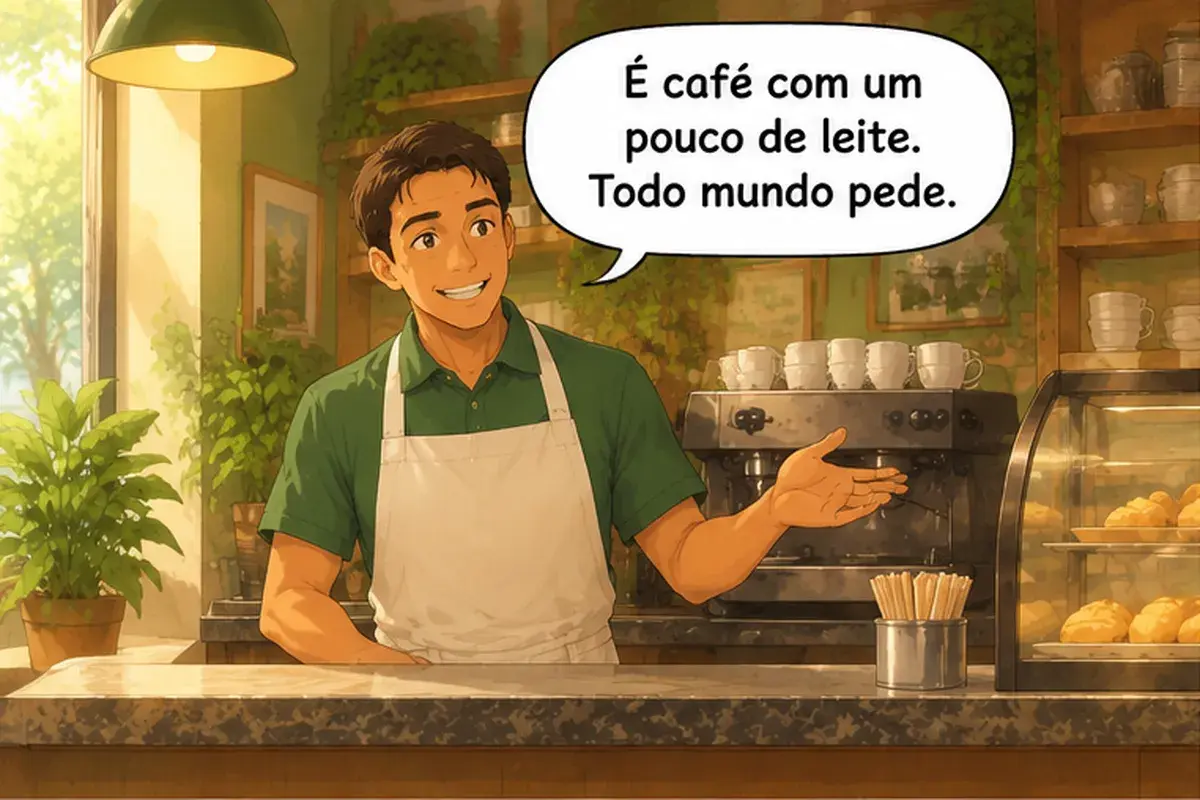
- Atendente
É café com um pouco de leite. Todo mundo pede.
It's coffee with a little milk. Everyone orders it.
- Nina
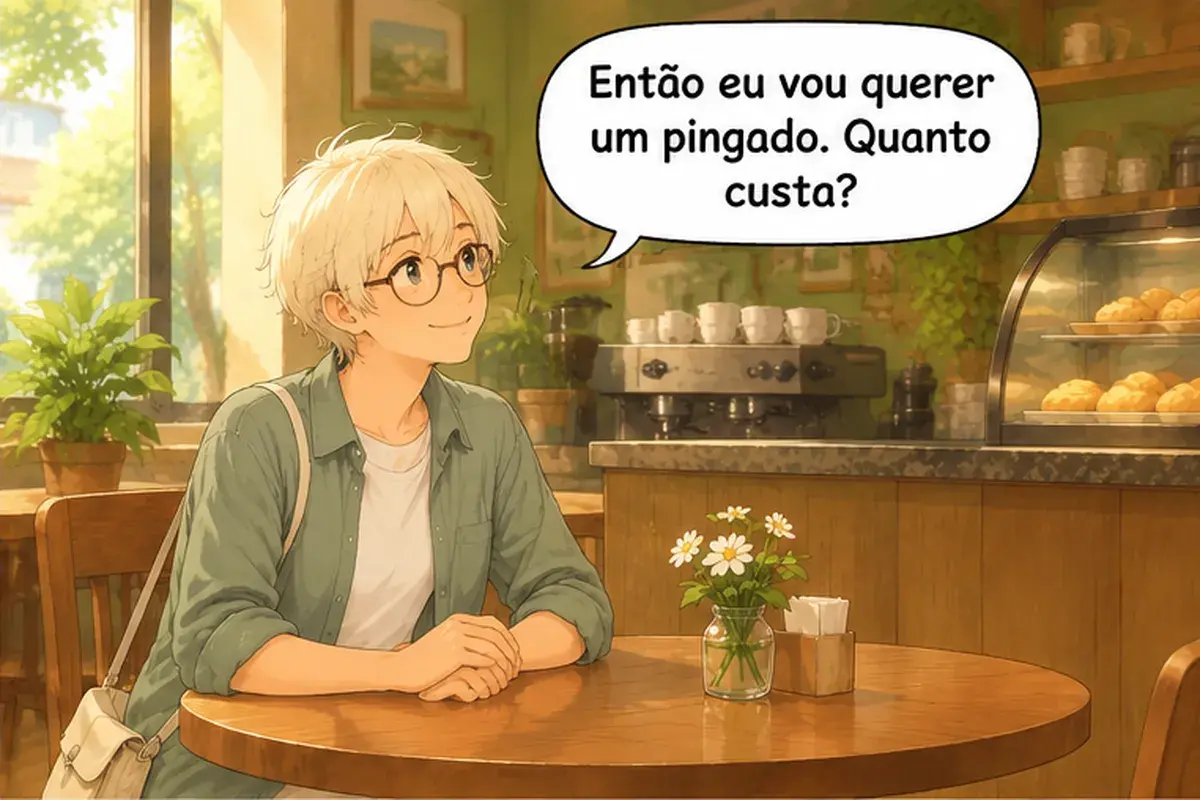
Então eu vou querer um pingado. Quanto custa?
Then I'll have a pingado. How much does it cost?

- Atendente
Seis reais. Mais alguma coisa?
Six reais. Anything else?

- Nina
Só isso. Quanto é?
That's all. How much is that?
- Atendente
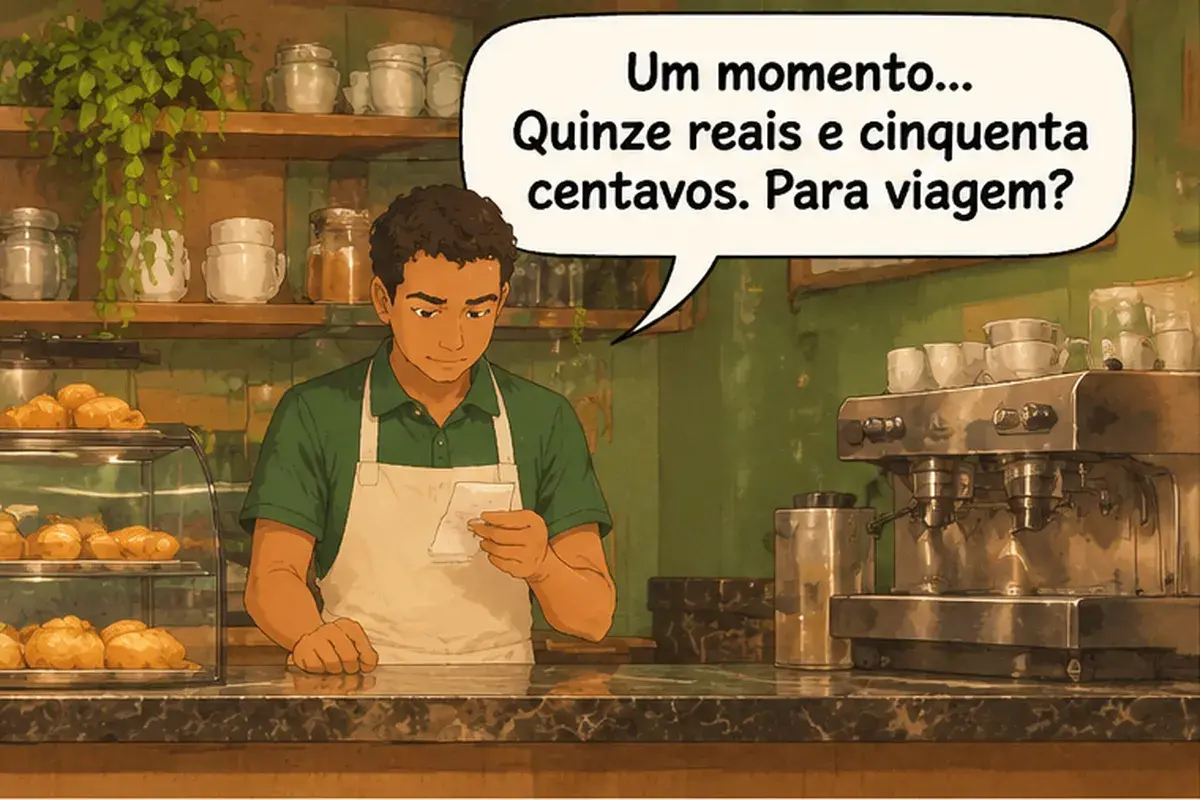
Um momento… Quinze reais e cinquenta centavos. Para viagem?
One moment… Fifteen reais and fifty centavos. To go?
- Nina
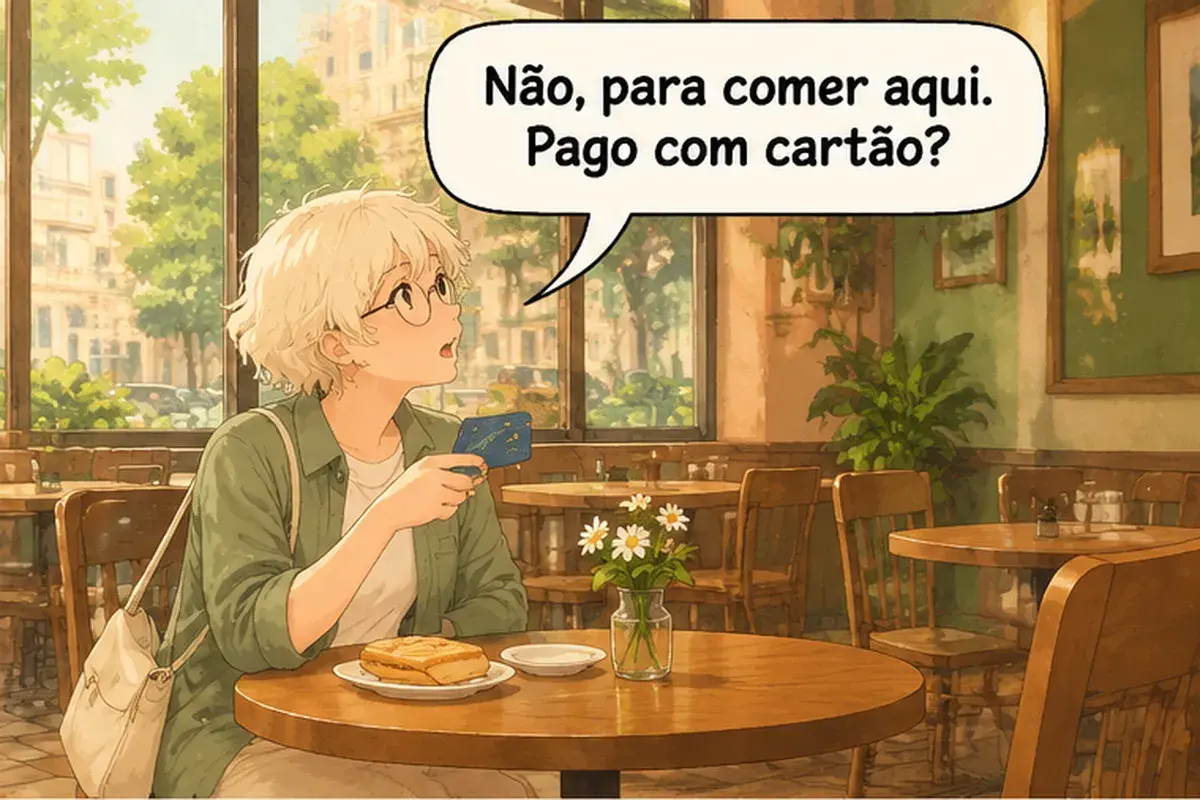
Não, para comer aqui. Pago com cartão?
No, to eat here. Do I pay by card?
- Atendente
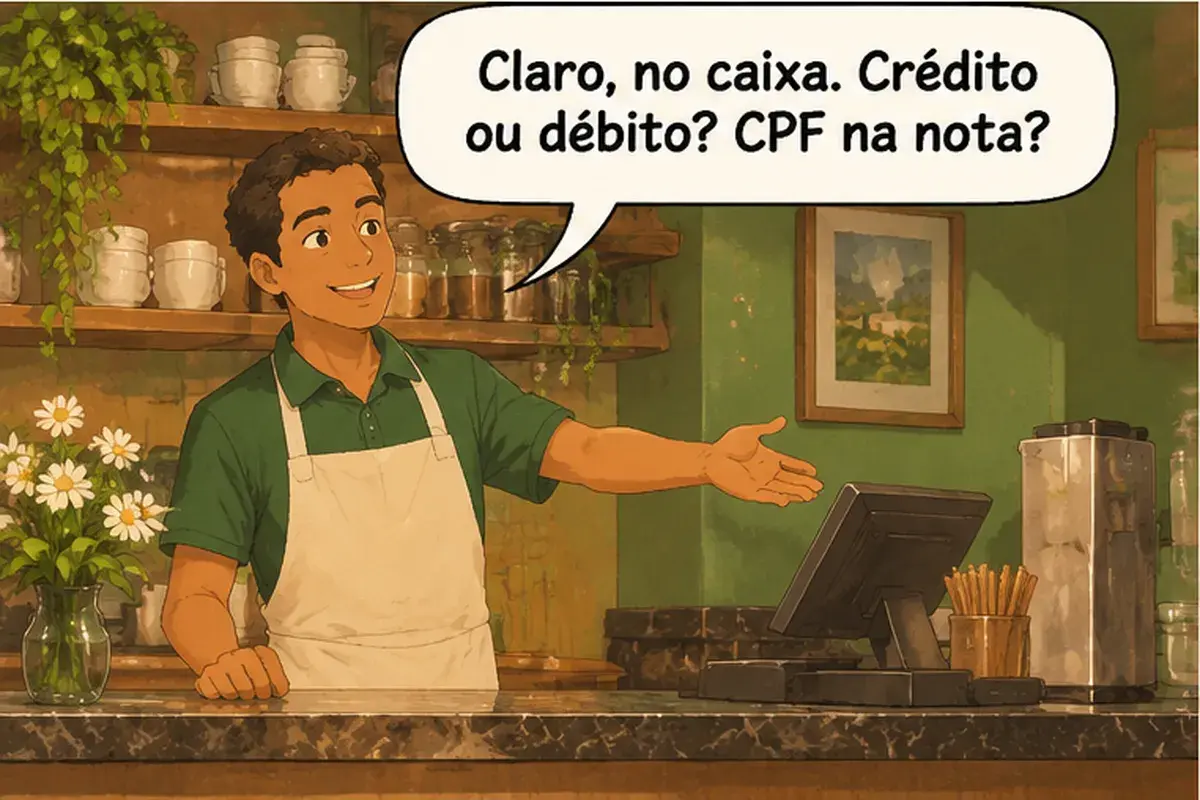
Claro, no caixa. Crédito ou débito? CPF na nota?
Of course, at the register. Credit or debit? CPF on the receipt?
- Nina
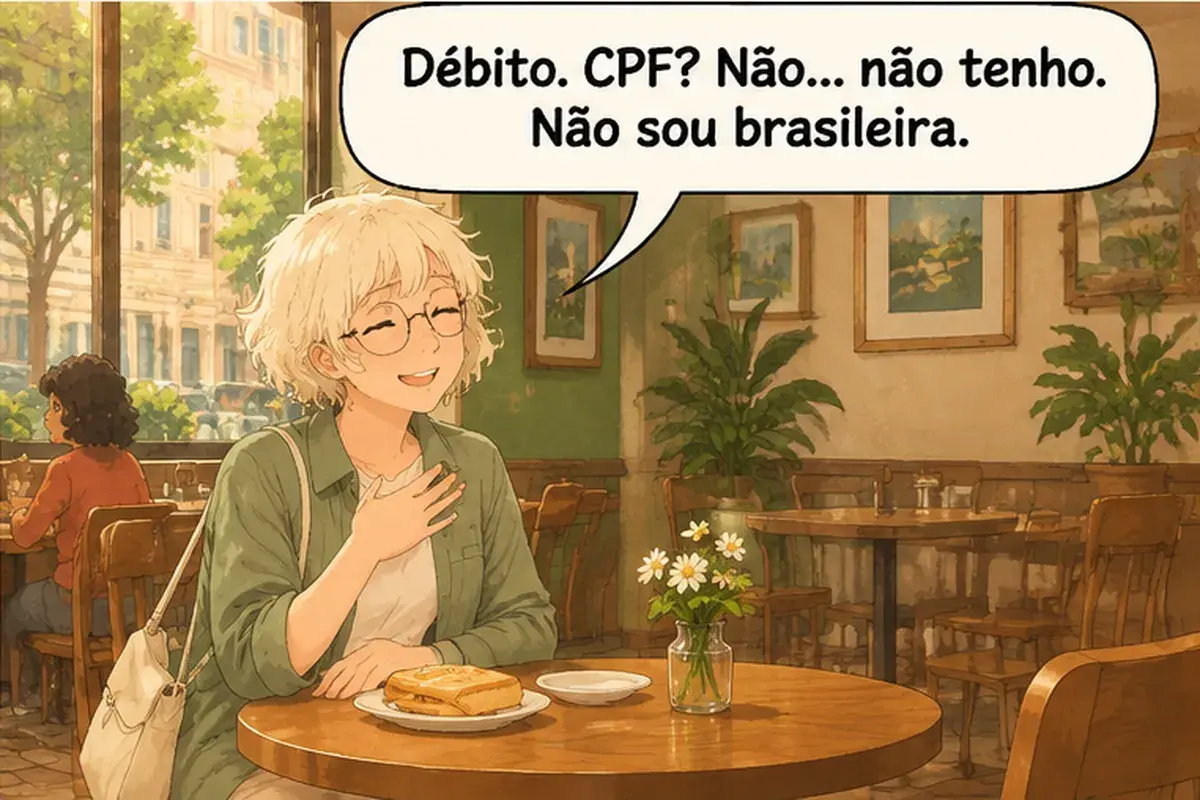
Débito. CPF? Não… não tenho. Não sou brasileira.
Debit. CPF? No… I don't have one. I'm not Brazilian (woman speaking).
- Atendente
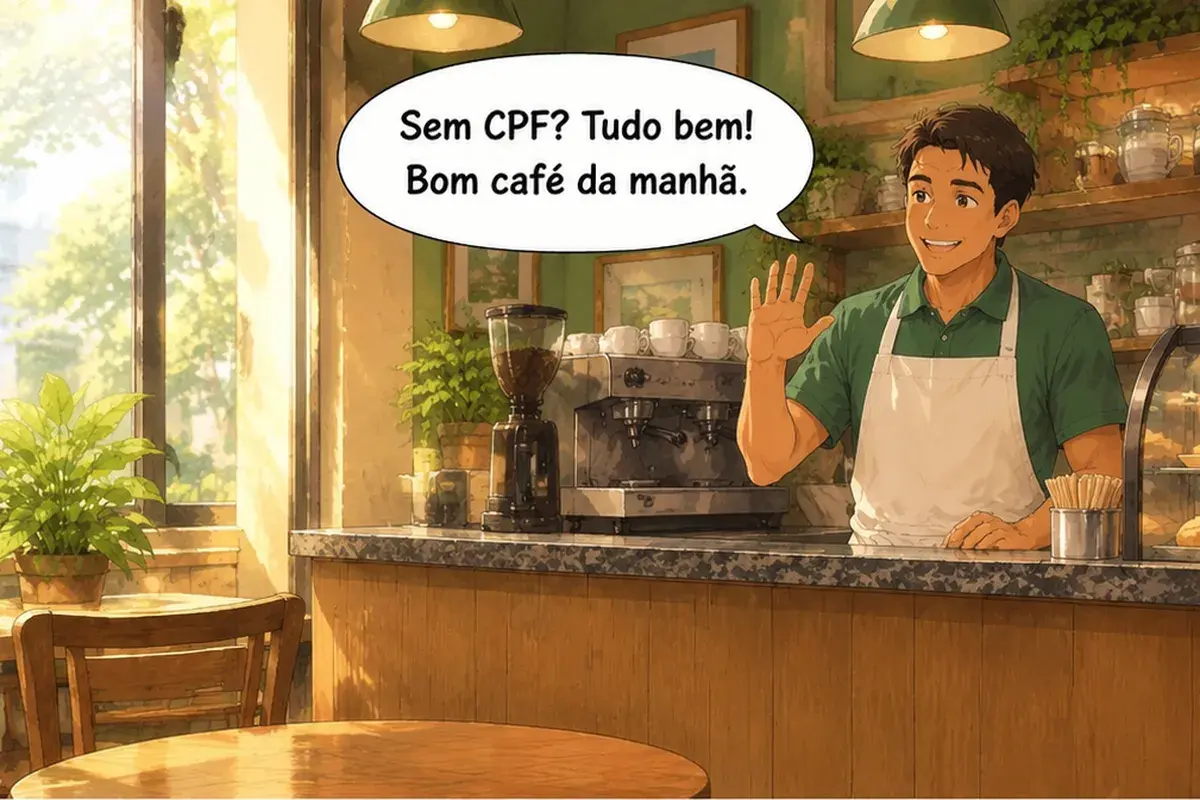
Sem CPF? Tudo bem! Bom café da manhã.
Without a CPF? That's OK! Have a good breakfast.

- Nina
Obrigada! Até logo!
Thank you! See you later!
Grammar for this text
- O que você vai querer? — vai is the você / ele / ela form of ir (to go), and vai querer is literally "are going to want". It's how staff ask "what will you have?". The verb ir comes in unit 7, the rule ir + verb in unit 13. For now it's a set phrase.
- Eu queria um pão na chapa e um café — queria is a ready-made form of querer (to want), the same for eu and for você / ele / ela. It sounds softer than quero: "I'd like". You'll learn what tense it is later (A2); for now learn it as a whole.
- Então eu vou querer um pingado — vou querer: vou is the eu form of ir, so it's literally "I'm going to want", meaning "I'll have". It's the answer to O que você vai querer?
- Para viagem? — "to go?", literally "for a trip?". The answer para comer aqui is para + infinitive: "to eat here".
- Pago com cartão? — a question with no question word: only the intonation changes. pago — "I pay" (pagar), so it's "Do I pay by card?".
- CPF na nota? — the CPF is the taxpayer ID number of people in Brazil; at the register they offer to put it on the receipt (nota). A visitor doesn't have one. na = em + a: "on the".
- Todo mundo pede — literally "all the world orders", meaning "everyone orders it". The verb is singular, just like after "everyone" in English.
Words and grammar of the unit: Order breakfast and ask for the check.
Learn the words from the texts with flashcards
In the app, you can tap any word in a text to see its translation, forms and examples, and new words stick with flashcards. 15 minutes a day.
Start for freeEverything is open for free. No card needed to sign up.