

Portuguese dialogue with translation · A1 · 14 lines
Muito prazer e bem-vinda! Nice to meet you, and welcome!
Comic · 8 panels
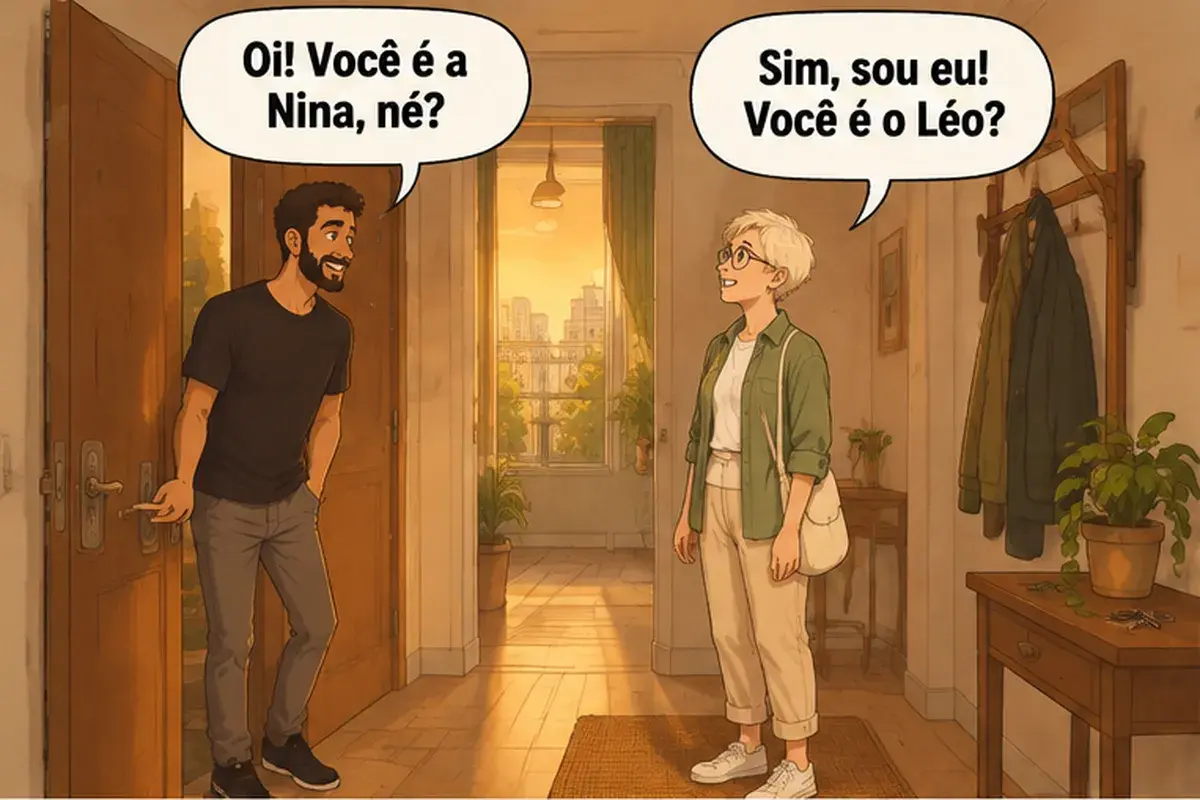
- Léo
Oi! Você é a Nina, né?
Hi! You're Nina, right?
- Nina
Sim, sou eu! Você é o Léo?
Yes, it's me! Are you Léo?
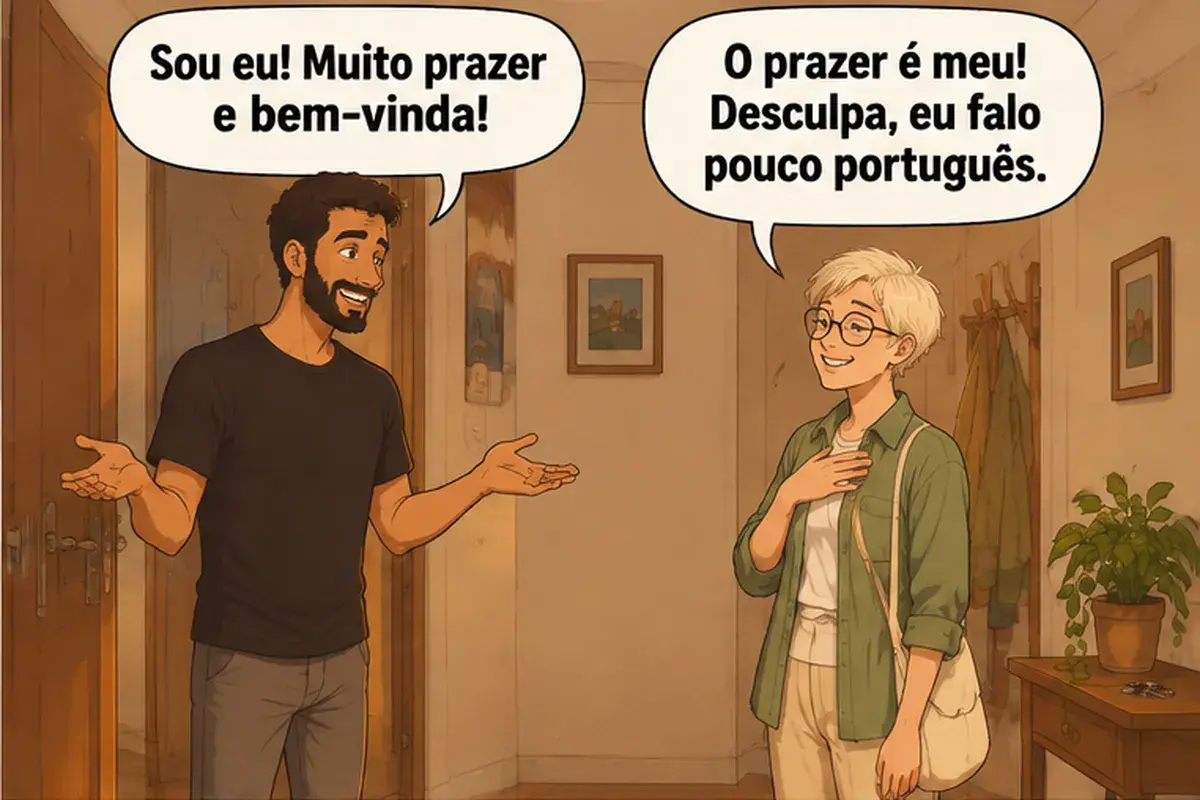
- Léo
Sou eu! Muito prazer e bem-vinda!
It's me! Nice to meet you, and welcome! (to a woman)
- Nina
O prazer é meu! Desculpa, eu falo pouco português.
The pleasure is mine! Sorry, I speak little Portuguese.
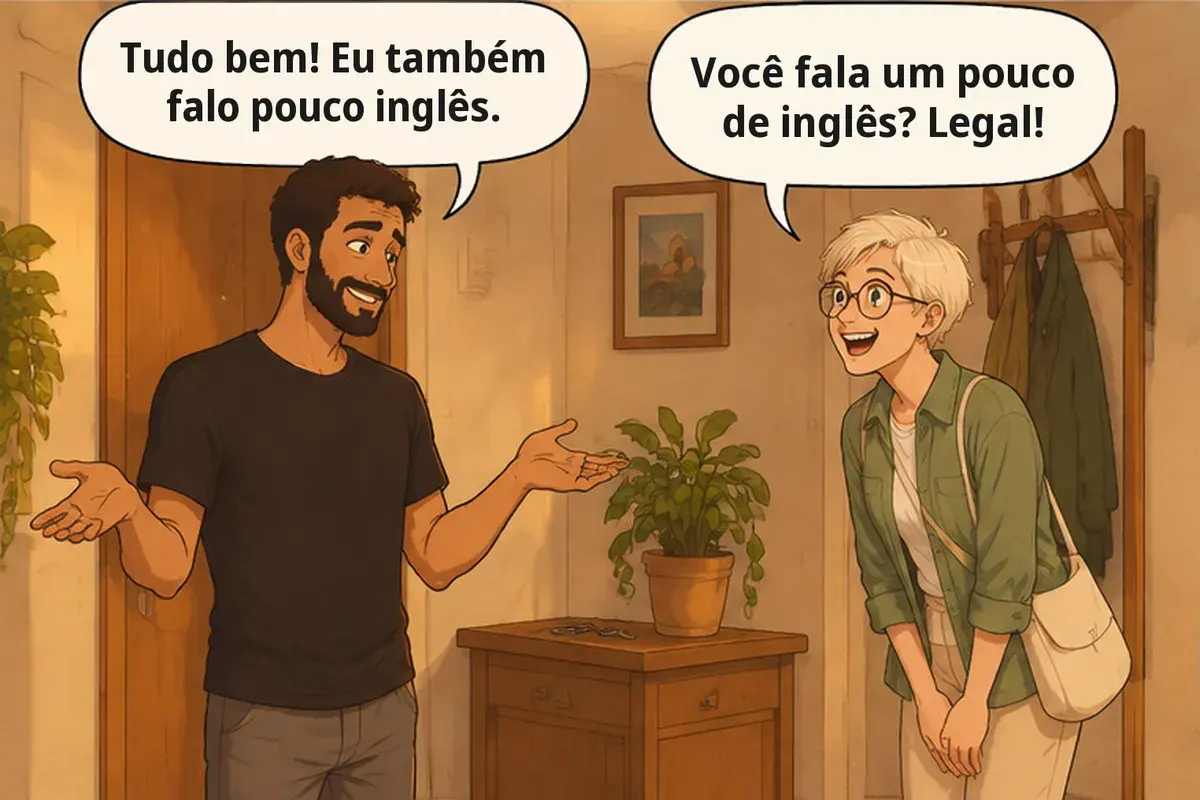
- Léo
Tudo bem! Eu também falo pouco inglês.
That's OK! I speak little English too.
- Nina
Você fala um pouco de inglês? Legal!
You speak a little English? Cool!
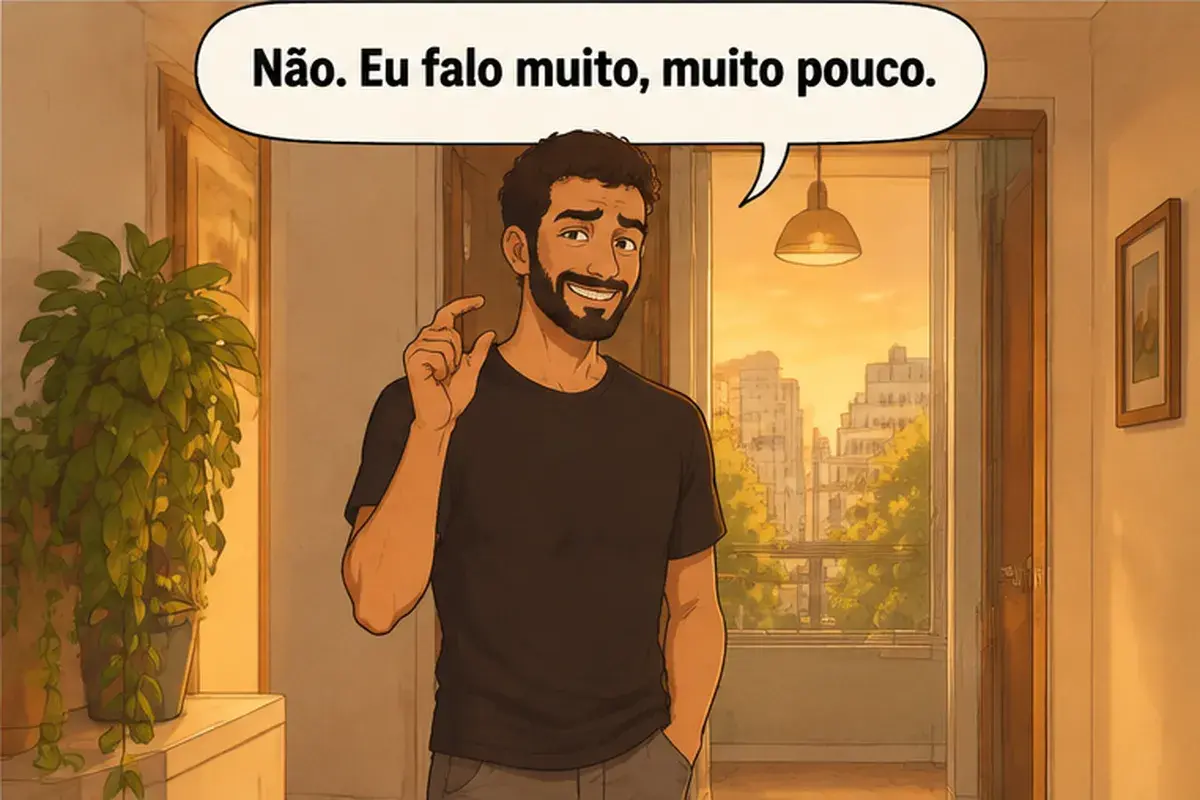
- Léo
Não. Eu falo muito, muito pouco.
No. I speak very, very little.
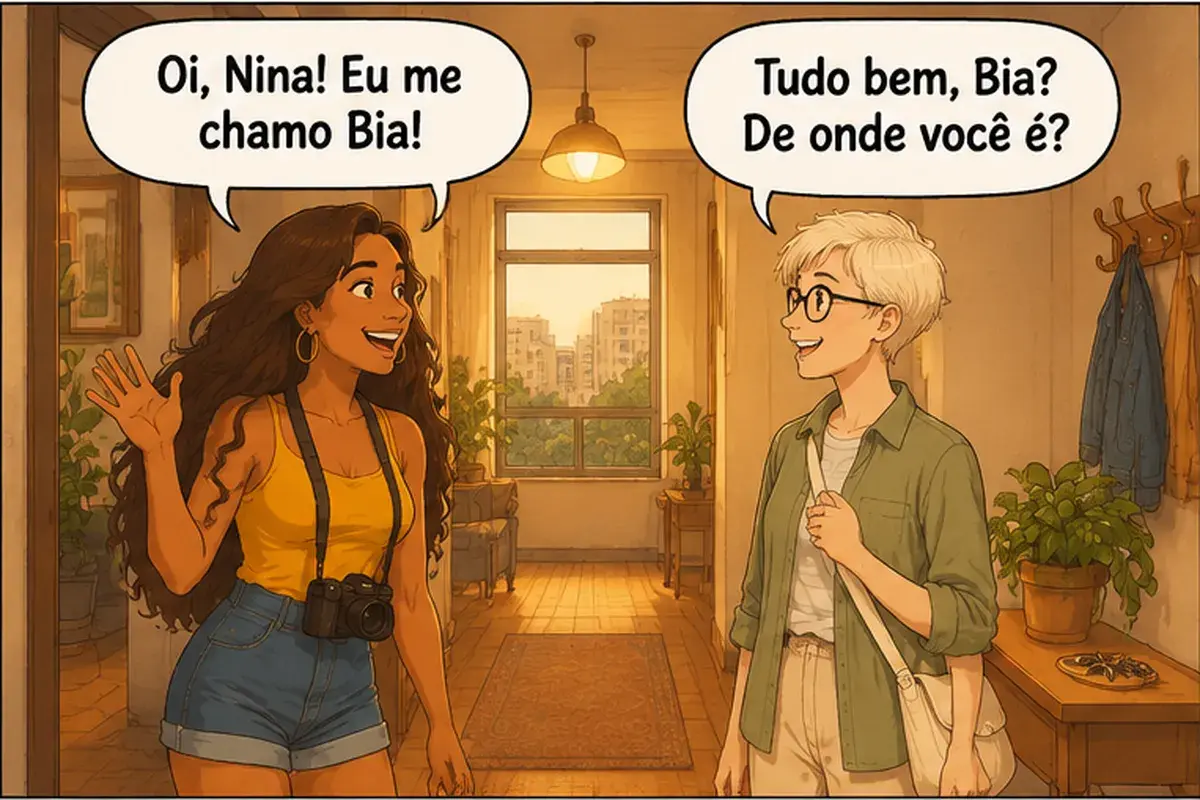
- Bia
Oi, Nina! Eu me chamo Bia!
Hi, Nina! My name is Bia!
- Nina
Tudo bem, Bia? De onde você é?
How are you, Bia? Where are you from?
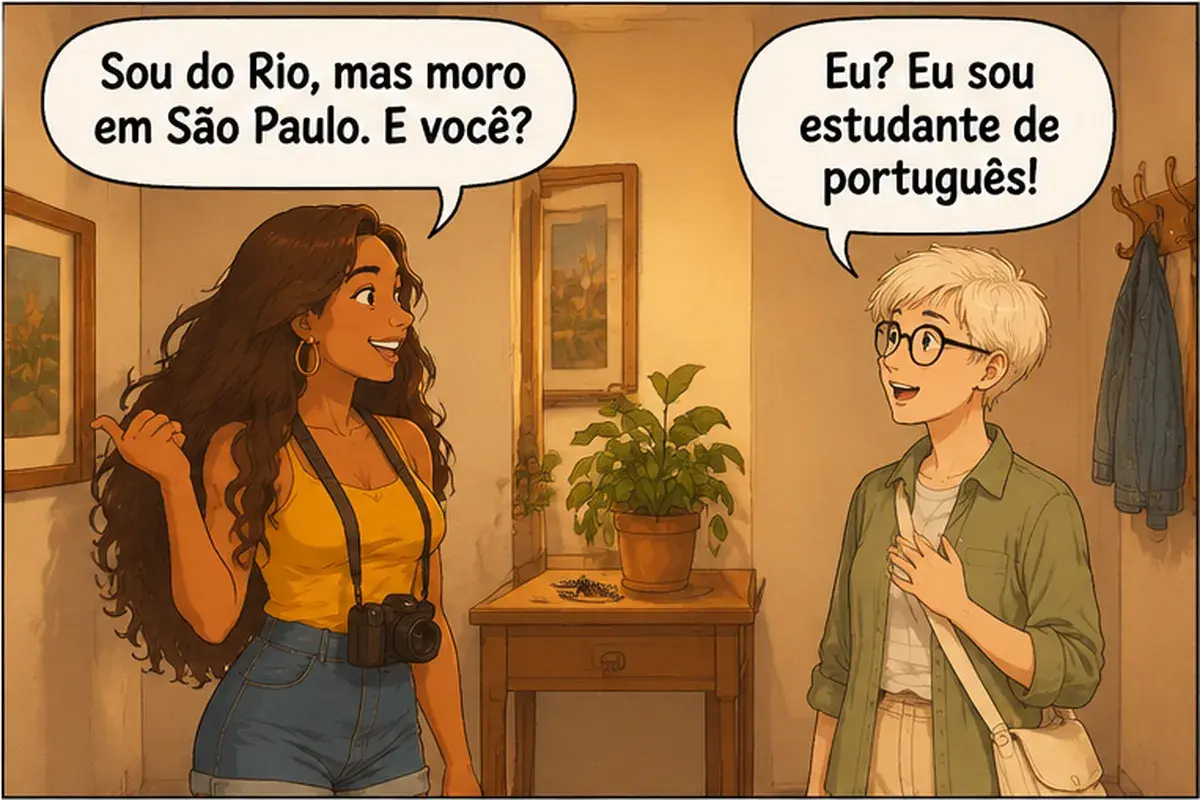
- Bia
Sou do Rio, mas moro em São Paulo. E você?
I'm from Rio, but I live in São Paulo. And you?
- Nina
Eu? Eu sou estudante de português!
Me? I'm a student of Portuguese!

- Bia
Estudante! Legal! Você fala português muito bem!
A student! Cool! You speak Portuguese very well!
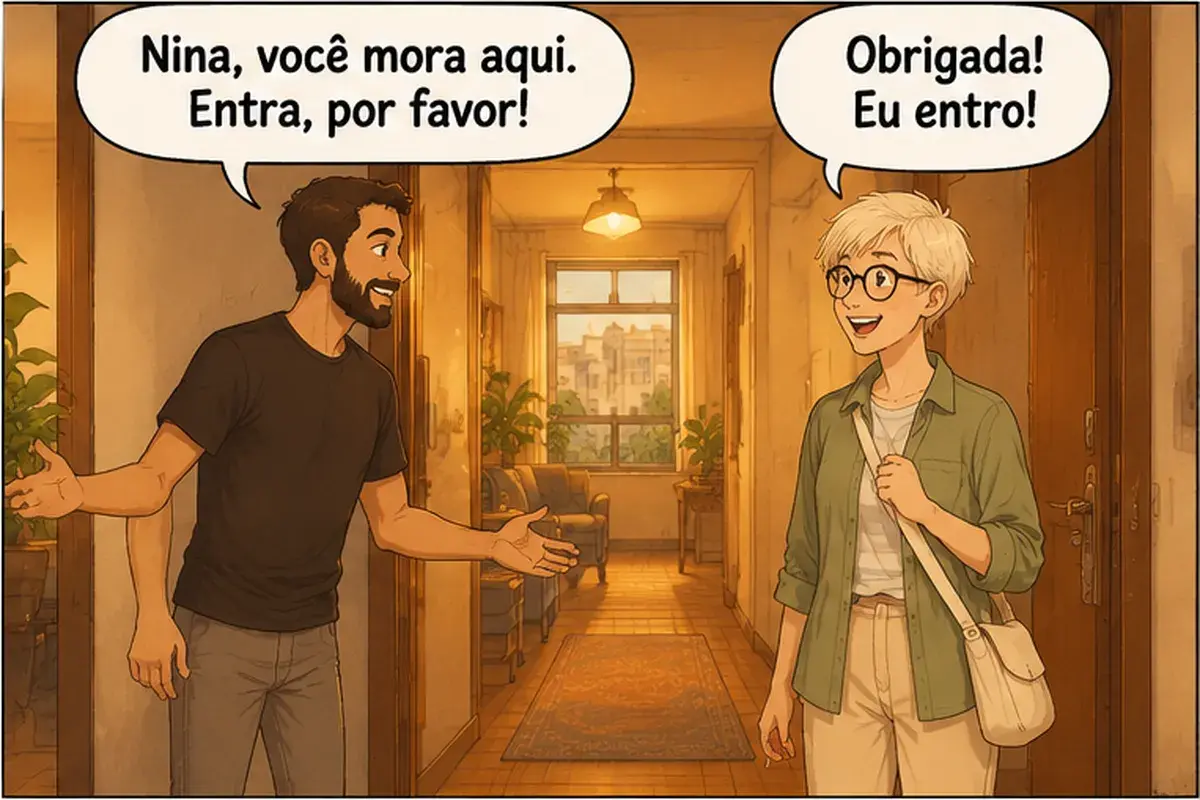
- Léo
Nina, você mora aqui. Entra, por favor!
Nina, you live here. Come in, please!
- Nina
Obrigada! Eu entro!
Thank you! I'm coming in!
Grammar for this text
Você é a Nina, né?—éis the "you / he / she" form of the irregular verbser(to be);souis the "I" form:Sou eu!(It's me!). You can't guess these forms from the infinitive, so just learn them.Néis a casual "right?": it goes at the end of a sentence and expects a "yes". Friends talk like this.Muito prazer e bem-vinda!—bem-vindameans "welcome"; the word changes with who is being welcomed. Nina is a woman, so it'sbem-vinda(ending-a); a man would hearbem-vindo(ending-o). The answerO prazer é meu!is word for word "the pleasure is mine", that is, "nice to meet you too".Desculpa, eu falo pouco português.—desculpameans "sorry", the casual form ofdesculpar(to excuse); to strangers people saydesculpe. The rule behind these forms comes at A2.Eu me chamo Bia!— the verbchamar-se(to be called):me chamois "I call myself", in English "my name is".Megoes before the verb.Sou do Rio, mas moro em São Paulo.—do=de+o, because people sayo Rio. If a place takes the articlea, you getda=de+a:a Bahia→da Bahia.Morois the "I" form ofmorar(to live).Eu falo muito, muito pouco.—poucomeans "little",um poucomeans "a little", andmuito poucomeans "very little". So Léo is joking with a straight face: he hardly knows any English.Entra, por favor!—entrais the verbentrarin the "you / he" form, but here it's a request: "come in!". This is how people ask in conversation; the rule comes at A2.
Words and grammar of the unit: Say hello and introduce yourself.
Learn the words from the texts with flashcards
In the app, you can tap any word in a text to see its translation, forms and examples, and new words stick with flashcards. 15 minutes a day.
Start for freeEverything is open for free. No card needed to sign up.