
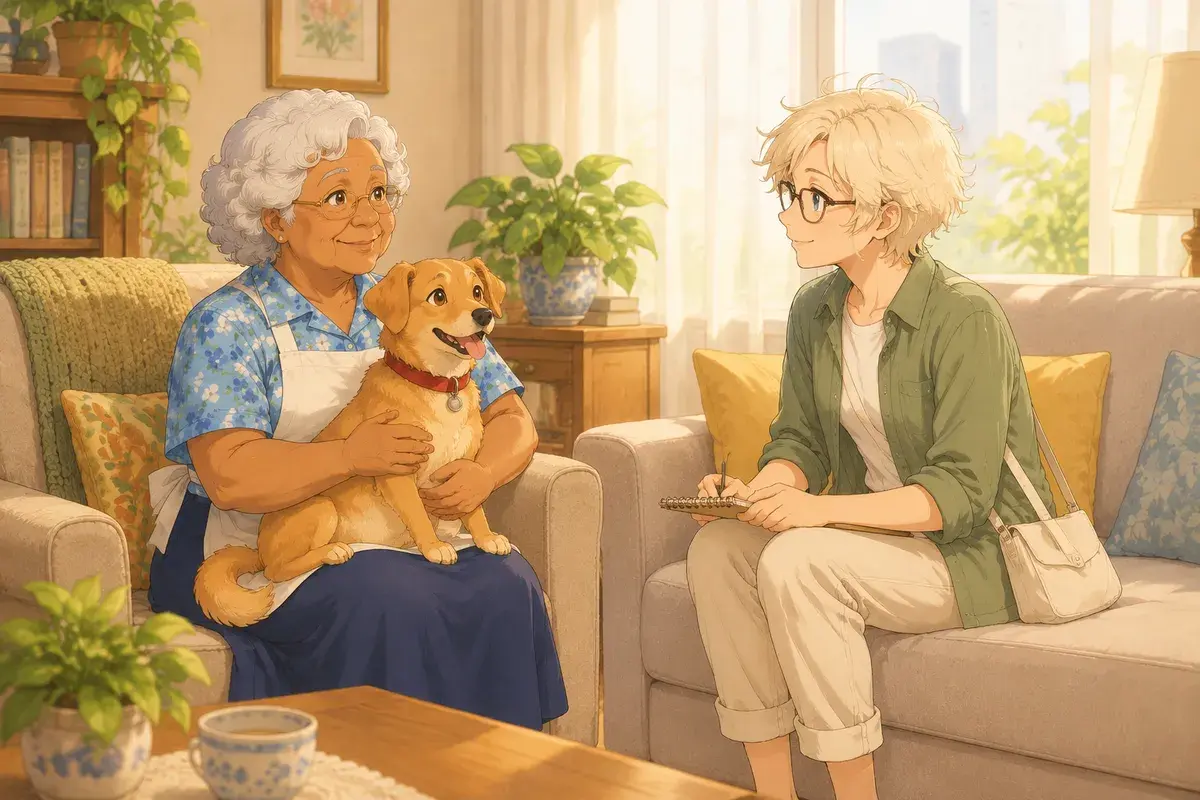
Portuguese dialogue with translation · A1 · 11 lines
Bom dia, Dona Lúcia! Tudo bem? Good morning, Dona Lúcia! How are you?
Comic · 7 panels
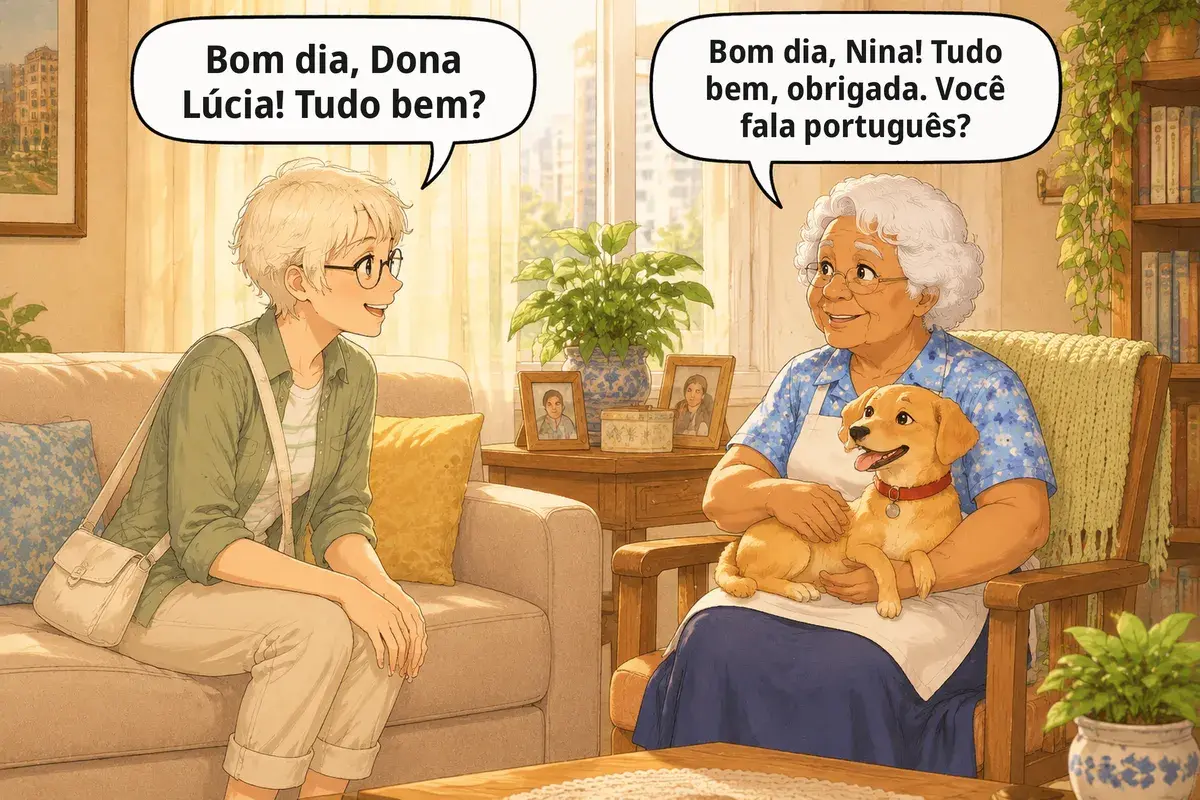
- Nina
Bom dia, Dona Lúcia! Tudo bem?
Good morning, Dona Lúcia! How are you?
- Dona Lúcia
Bom dia, Nina! Tudo bem, obrigada. Você fala português?
Good morning, Nina! I'm fine, thank you. Do you speak Portuguese?
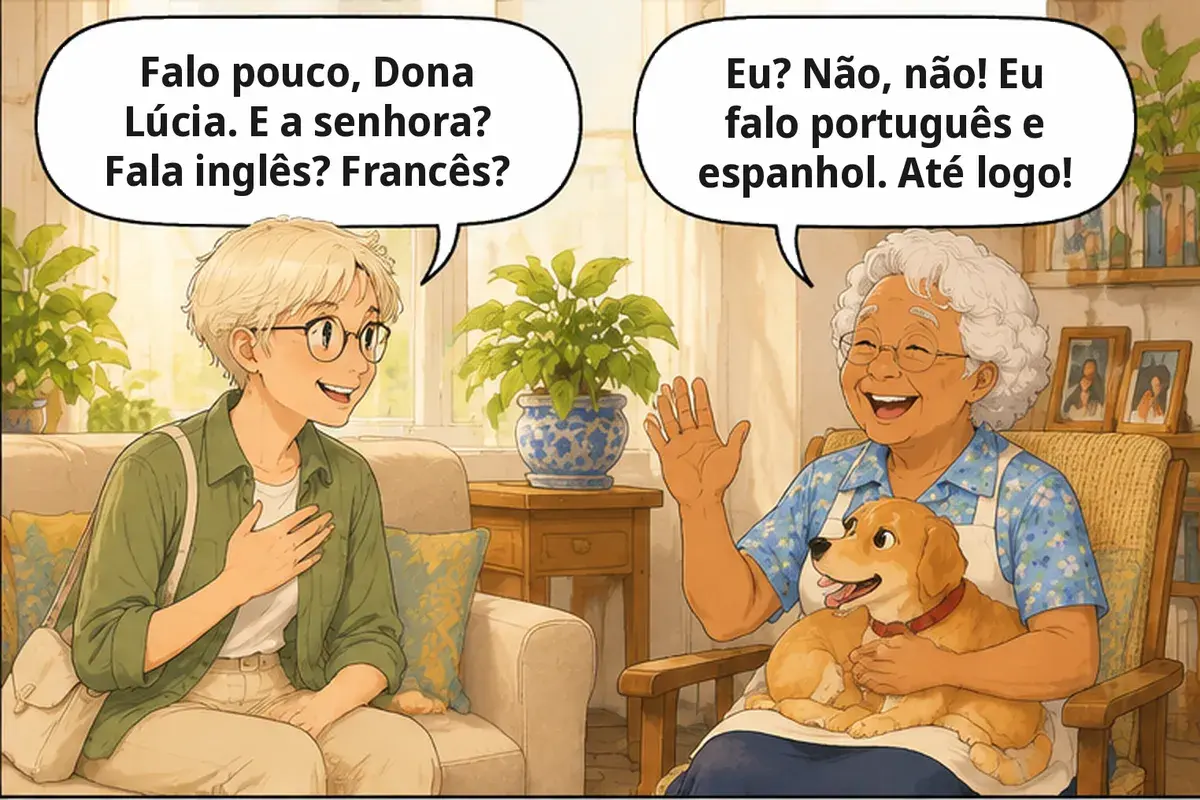
- Nina
Falo pouco, Dona Lúcia. E a senhora? Fala inglês? Francês?
I speak little, Dona Lúcia. And you? Do you speak English? French? (formal)
- Dona Lúcia
Eu? Não, não! Eu falo português e espanhol. Até logo!
Me? No, no! I speak Portuguese and Spanish. See you later!
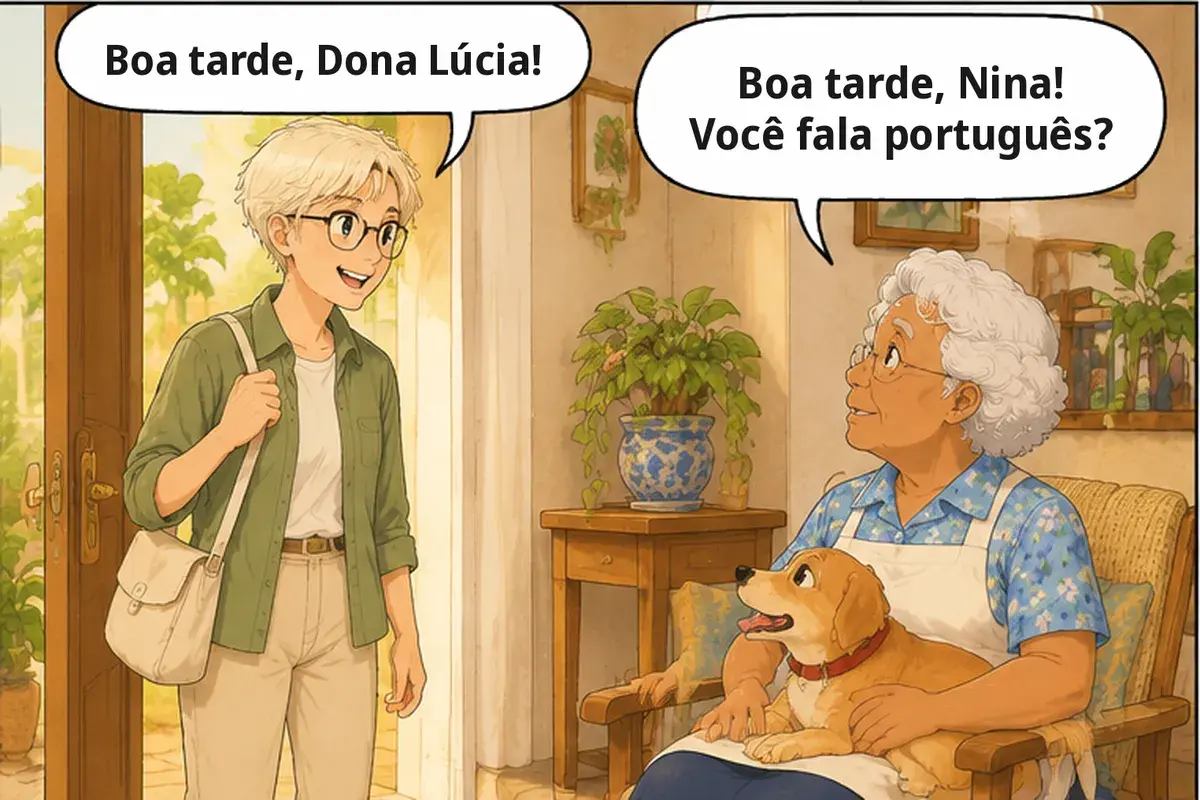
- Nina
Boa tarde, Dona Lúcia!
Good afternoon, Dona Lúcia!
- Dona Lúcia
Boa tarde, Nina! Você fala português?
Good afternoon, Nina! Do you speak Portuguese?
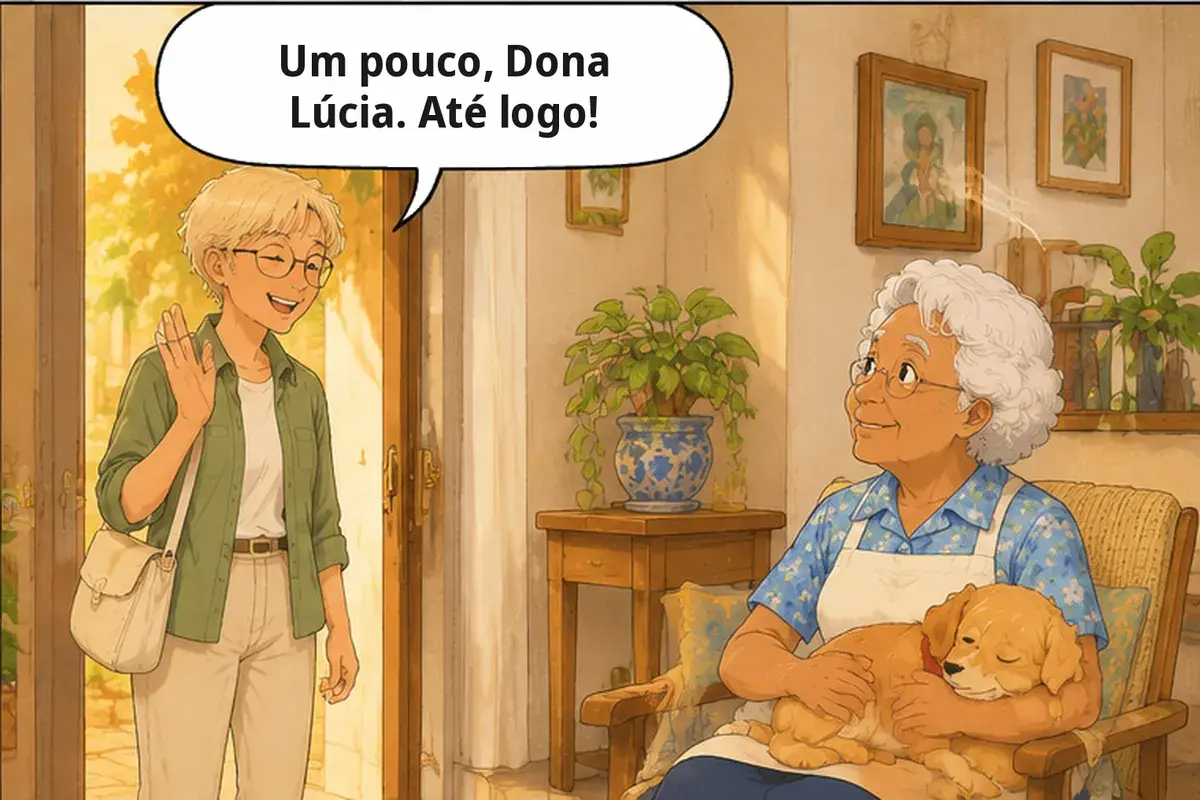
- Nina
Um pouco, Dona Lúcia. Até logo!
A little, Dona Lúcia. See you later!
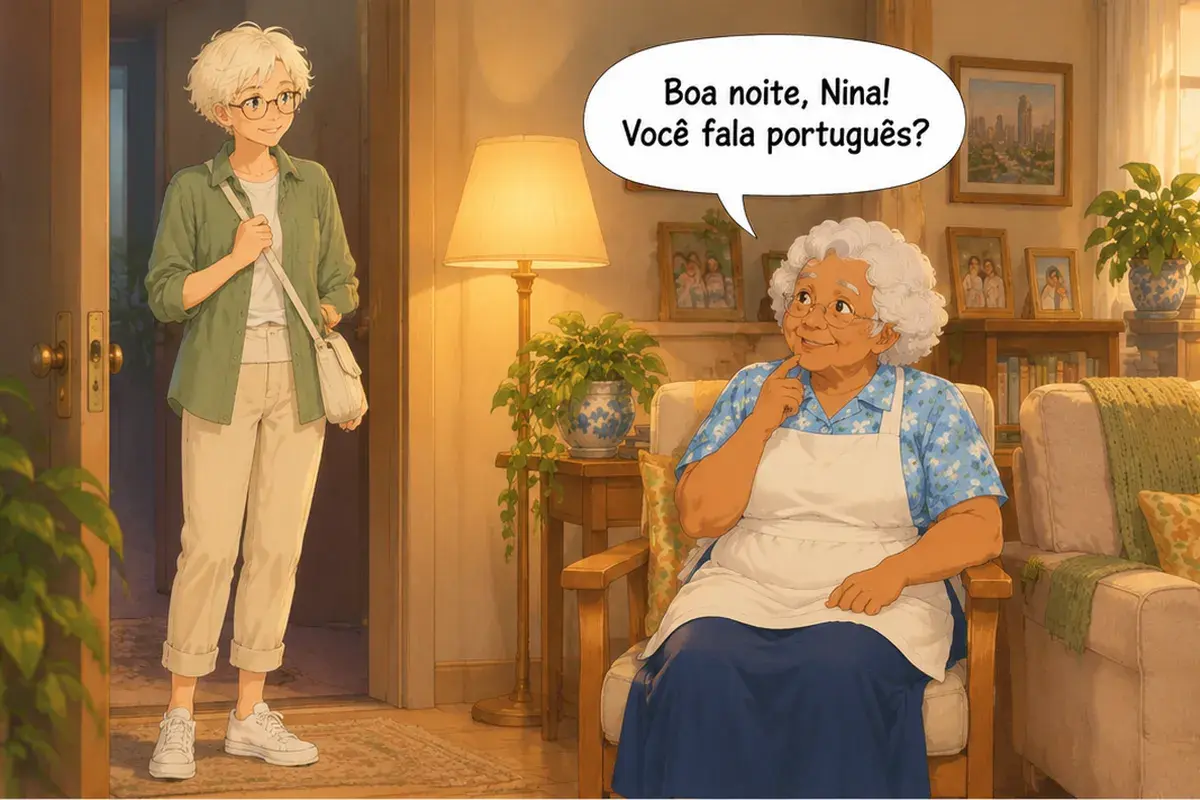
- Dona Lúcia
Boa noite, Nina! Você fala português?
Good evening, Nina! Do you speak Portuguese?
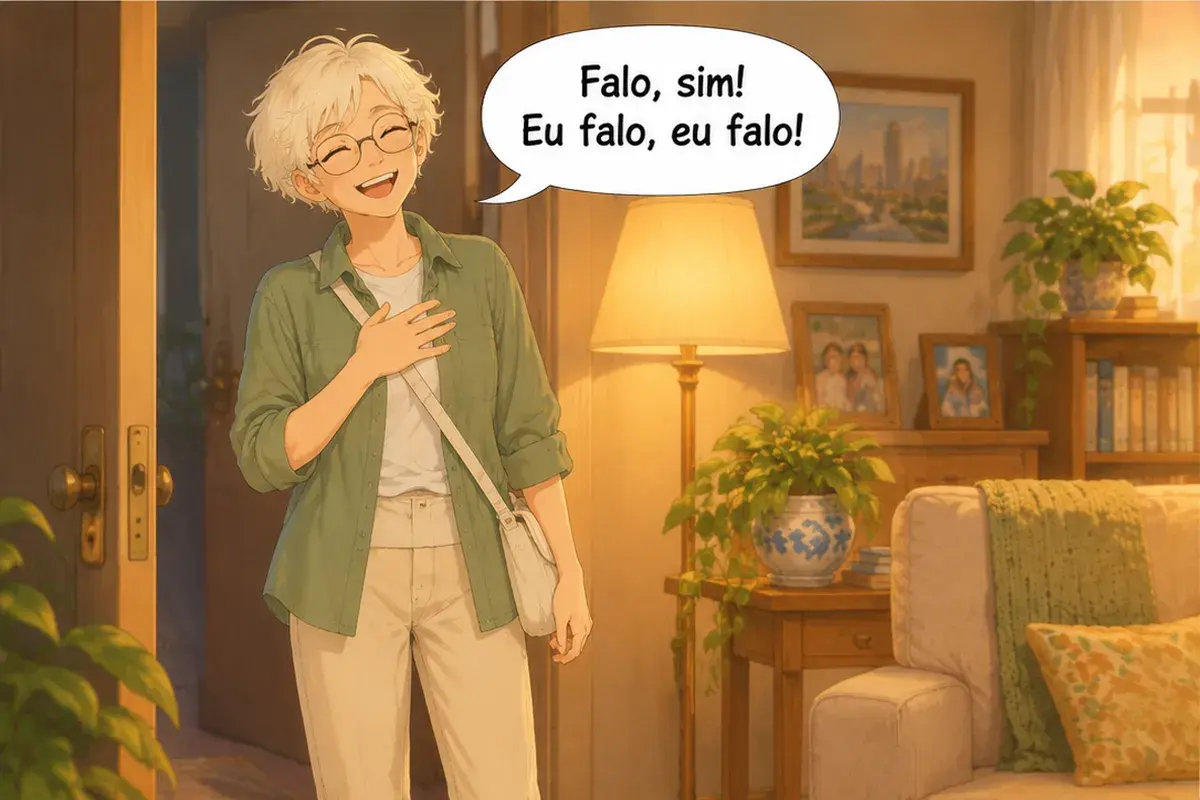
- Nina
Falo, sim! Eu falo, eu falo!
Yes, I do! I do, I do!
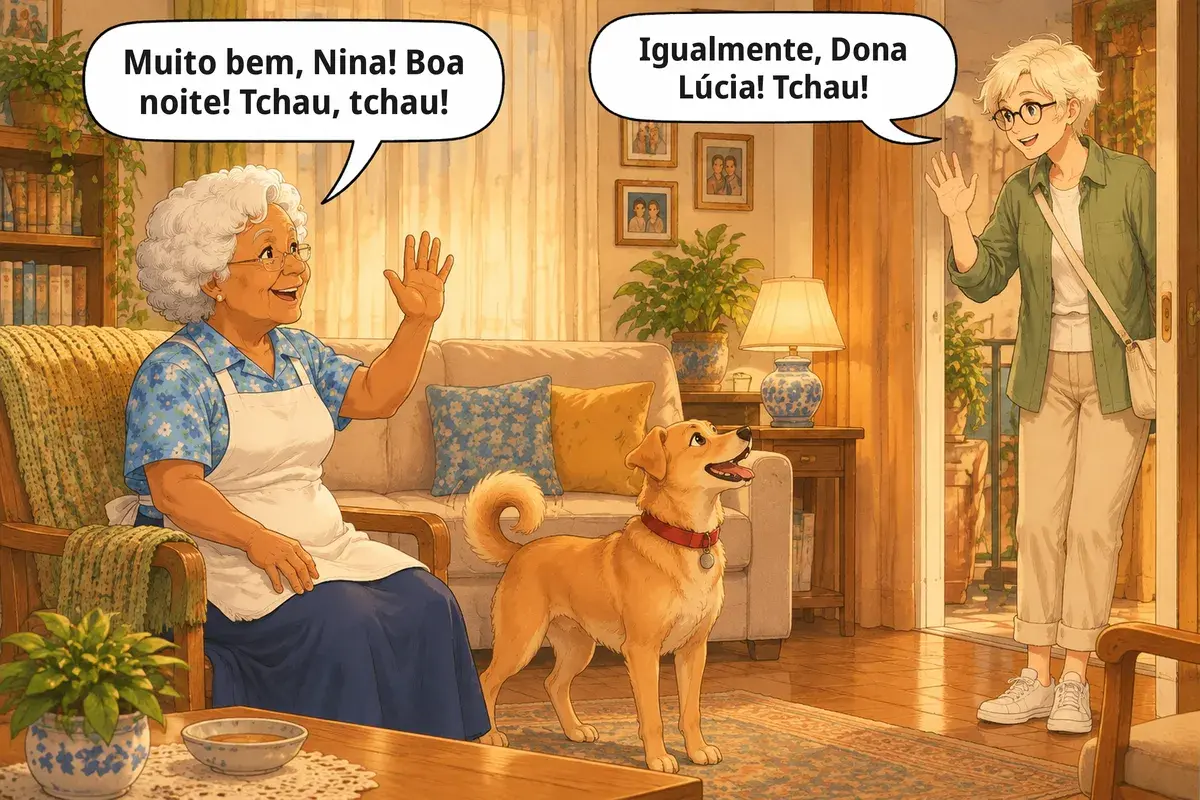
- Dona Lúcia
Muito bem, Nina! Boa noite! Tchau, tchau!
Very good, Nina! Good night! Bye-bye!
- Nina
Igualmente, Dona Lúcia! Tchau!
You too, Dona Lúcia! Bye!
Grammar for this text
Bom dia, Dona Lúcia! Tudo bem?— the text has three meetings on the stairs in one day: in the morningbom dia, in the afternoonboa tarde, in the eveningboa noite(it also means "good night"). Each one ends with a goodbye (até logo), and then a new meeting starts.Bomgoes withdia,boawithtardeandnoite: these words have different genders. The joke is that Dona Lúcia asks the same thing every time.Donais a polite word before an older woman's first name.Tudo bem?— "how are you?", and the answer is the same words.E a senhora? Fala inglês?—a senhorais the polite "you" to a woman older than you; the verb is the same as for "she":fala. To friends people sayvocê, to older peopleo senhor / a senhora.Eu? Não, não!—Eu?is like English "Me?!"; sayingnão, nãotwice makes the "no" stronger.Um pouco, Dona Lúcia.— to a question like "do you speak...?" you can answer without a verb: "A little."Falo, sim! Eu falo, eu falo!— or you can repeat the verb itself:Falo!(I do!).Simmakes the answer stronger, and repeating the verb shows she insists: after the third question of the day, Nina answers more and more boldly.Tchau, tchau!—tchaumeans "bye", a word for friends;até logois more polite. Dona Lúcia saystchauherself: Nina is no longer a stranger to her.Eu falo português e espanhol.— names of languages start with a small letter, and there's no article afterfalar:falo inglês,fala francês,falo espanhol.Igualmente, Dona Lúcia!—igualmentemeans "you too" or "likewise": it's the answer to a wish (boa noite!as a goodbye) and tomuito prazer.
Words and grammar of the unit: Say hello and introduce yourself.
Learn the words from the texts with flashcards
In the app, you can tap any word in a text to see its translation, forms and examples, and new words stick with flashcards. 15 minutes a day.
Start for freeEverything is open for free. No card needed to sign up.