

Portuguese dialogue with translation · A1 · 12 lines
Com licença, onde fica o metrô? Excuse me, where's the subway?
Comic · 12 panels

- Nina
Com licença, onde fica o metrô?
Excuse me, where's the subway?
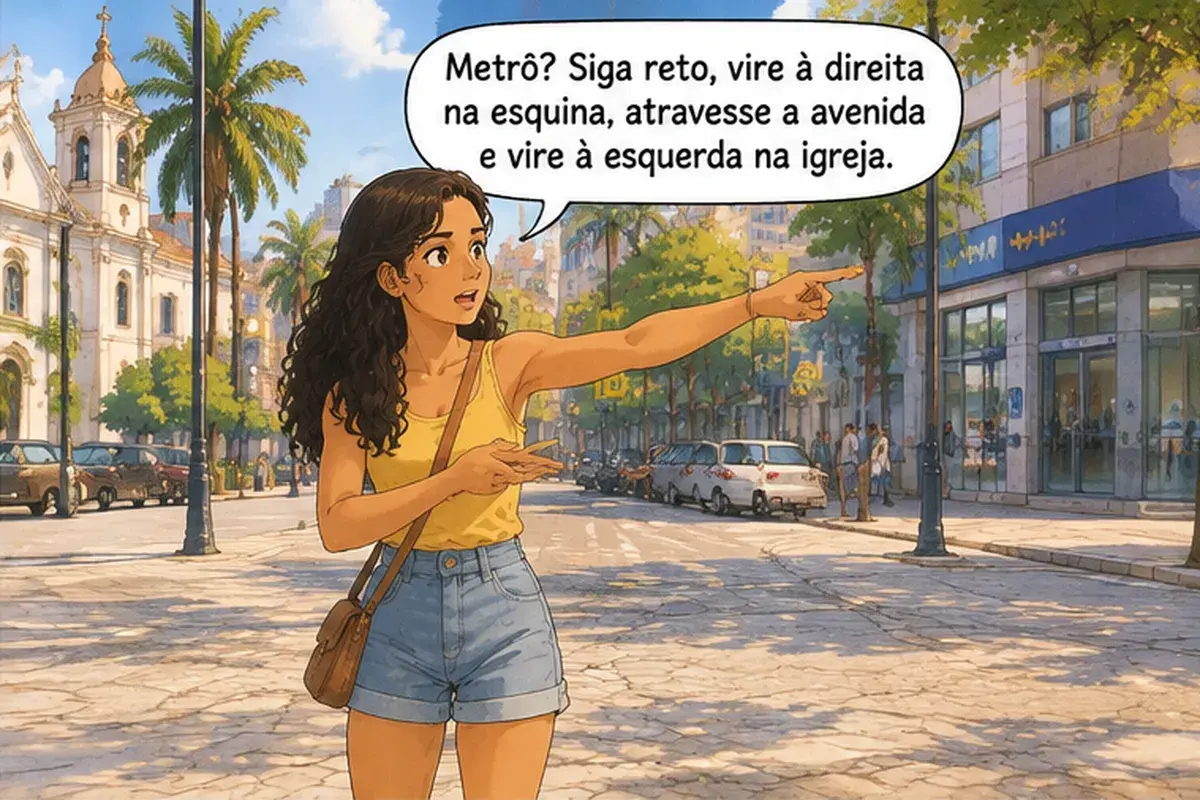
- Moça
Metrô? Siga reto, vire à direita na esquina, atravesse a avenida e vire à esquerda na igreja.
The subway? Go straight ahead, turn right at the corner, cross the avenue and turn left at the church.
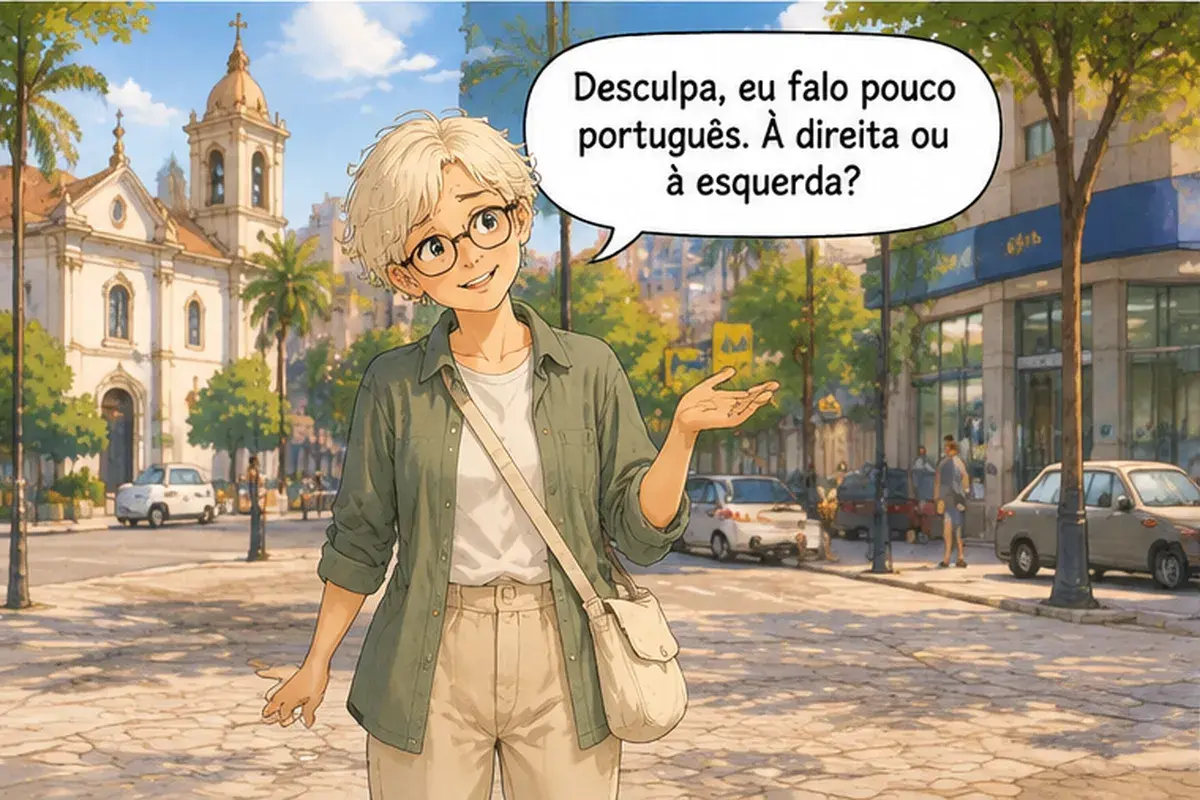
- Nina
Desculpa, eu falo pouco português. À direita ou à esquerda?
Sorry, I speak little Portuguese. Right or left?
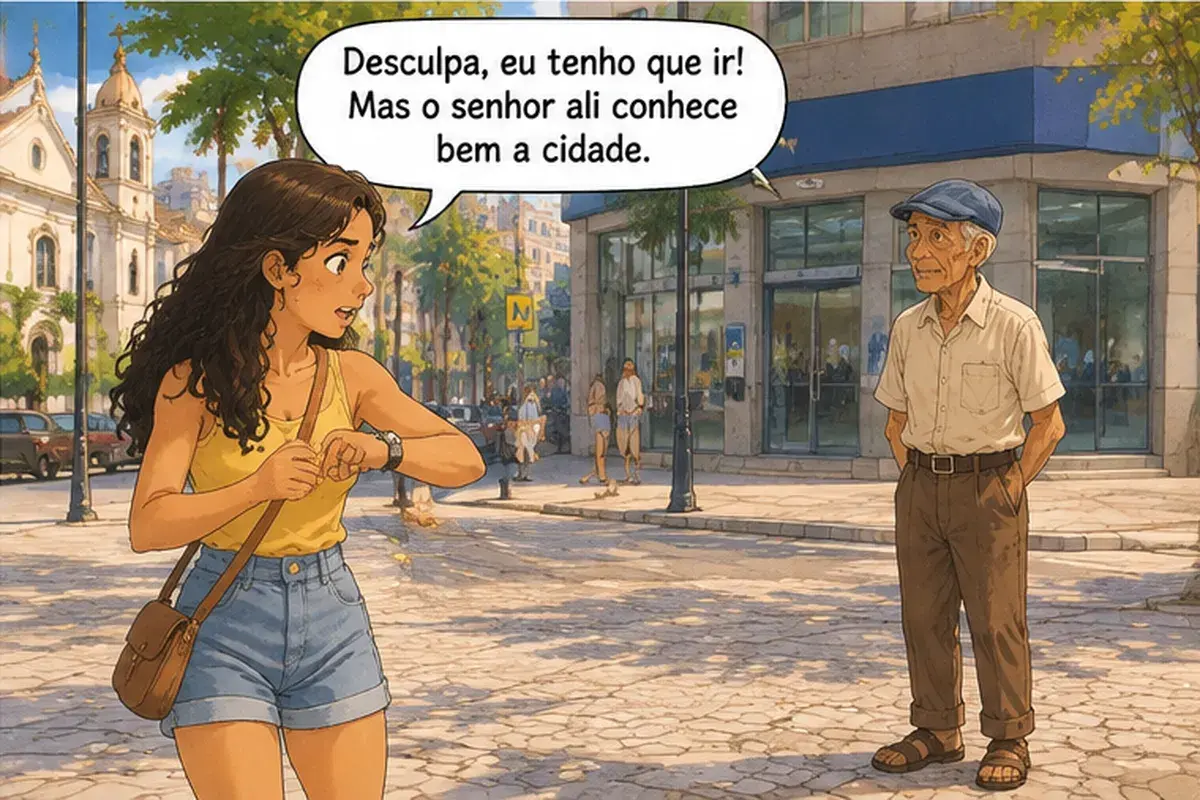
- Moça
Desculpa, eu tenho que ir! Mas o senhor ali conhece bem a cidade.
Sorry, I have to go! But the gentleman over there knows the city well.
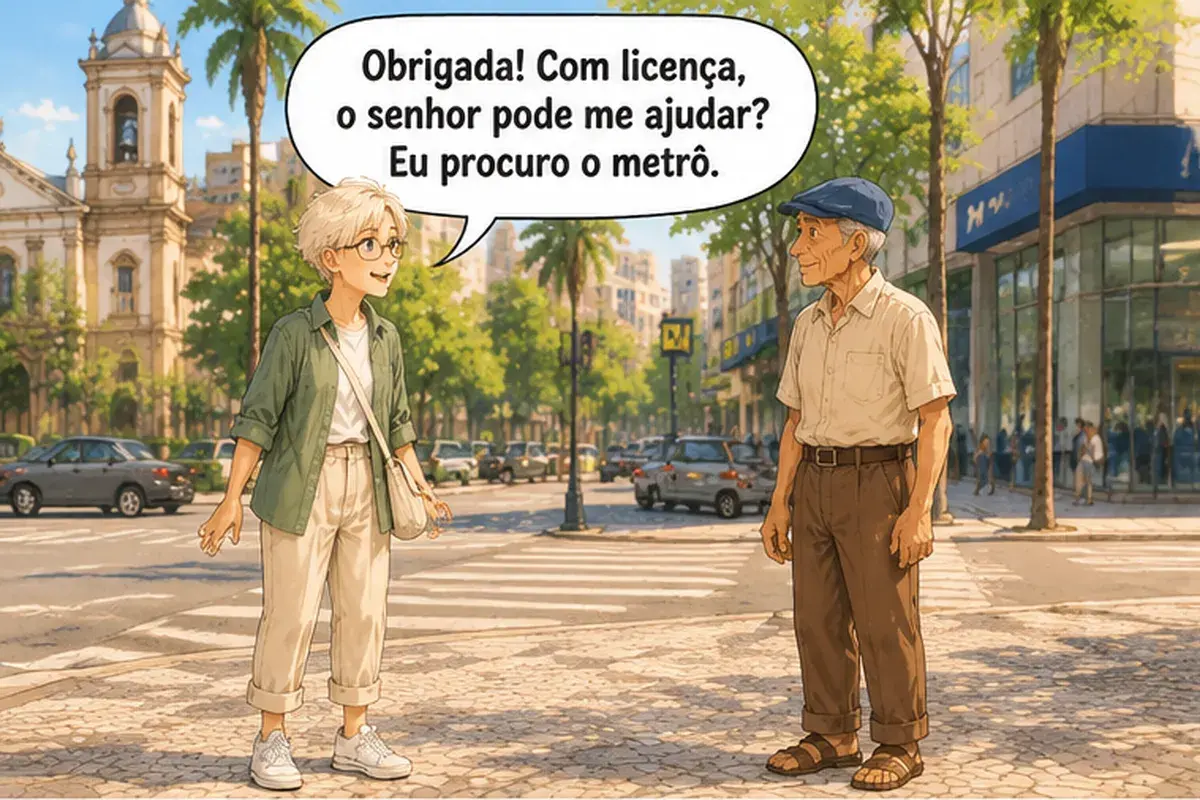
- Nina
Obrigada! Com licença, o senhor pode me ajudar? Eu procuro o metrô.
Thank you! Excuse me, can you help me? (formal) I'm looking for the subway.
- Senhor
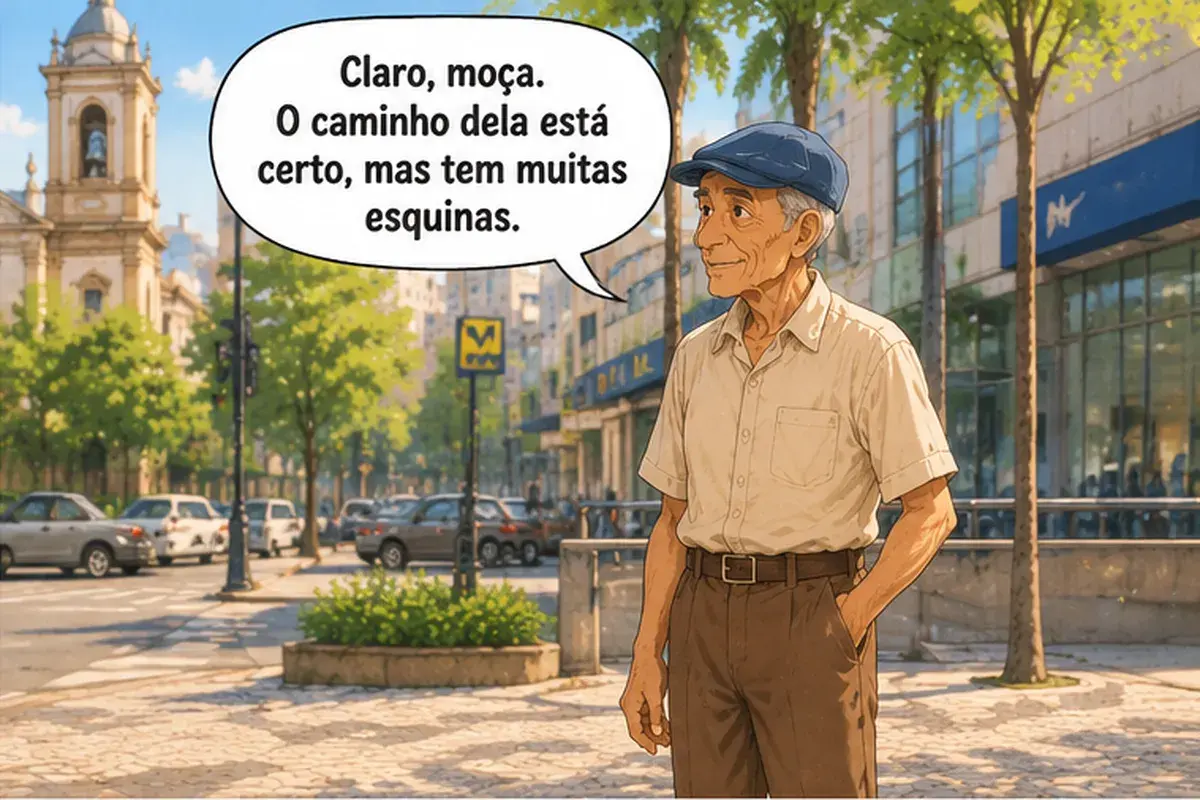
Claro, moça. O caminho dela está certo, mas tem muitas esquinas.
Of course, miss. Her route is right, but there are a lot of corners.
- Nina
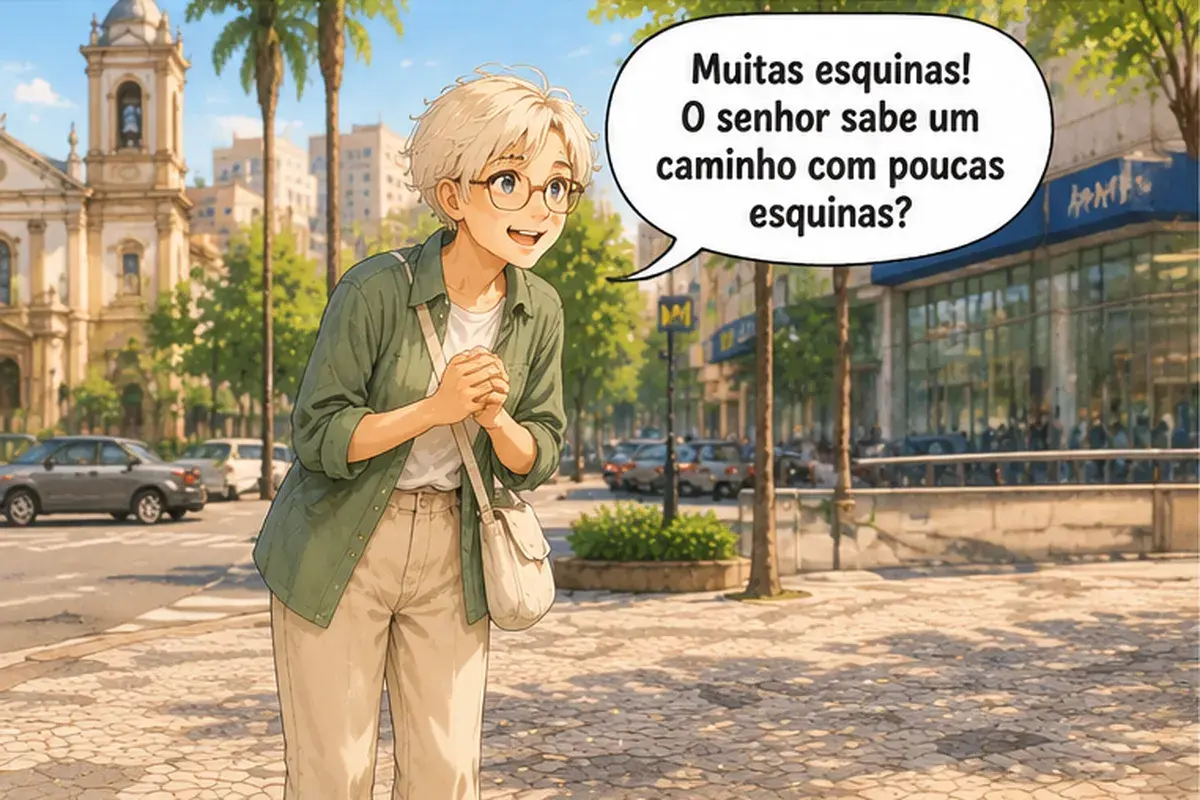
Muitas esquinas! O senhor sabe um caminho com poucas esquinas?
A lot of corners! Do you know a way with few corners? (formal)
- Senhor
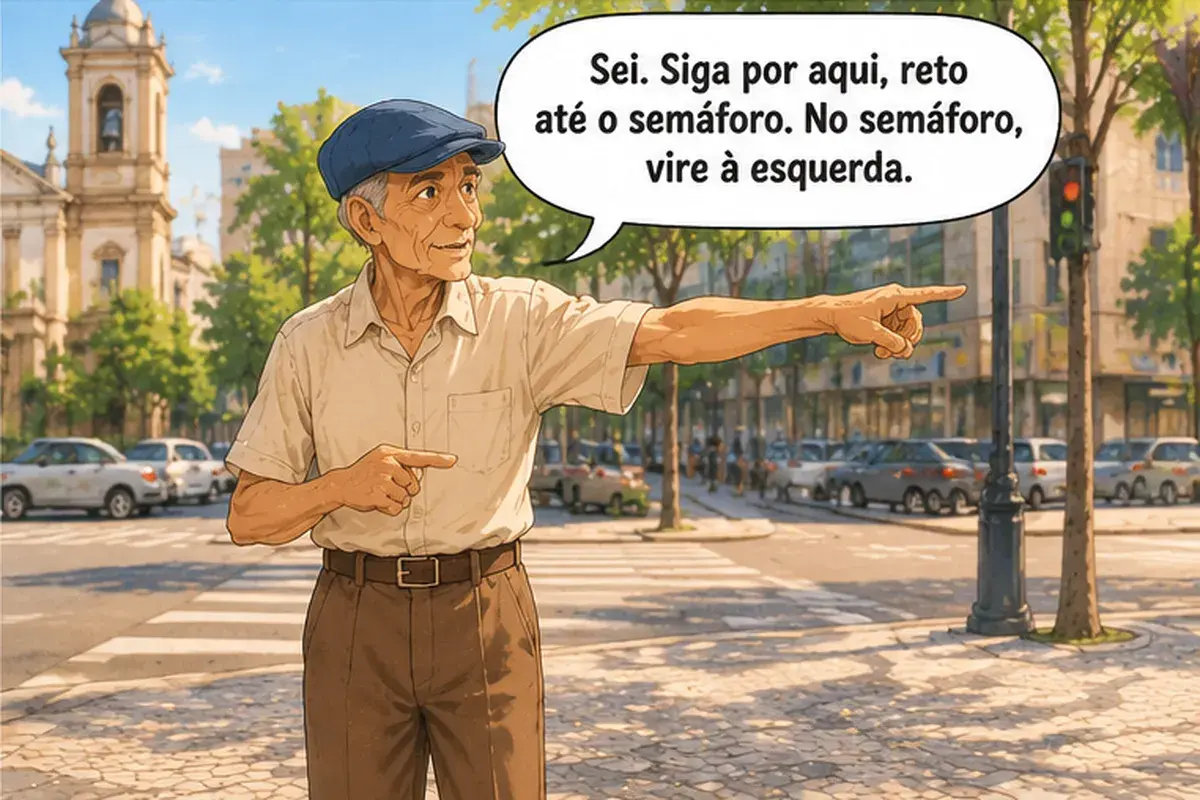
Sei. Siga por aqui, reto até o semáforo. No semáforo, vire à esquerda.
I do. Go this way, straight ahead to the traffic light. At the traffic light, turn left.
- Nina
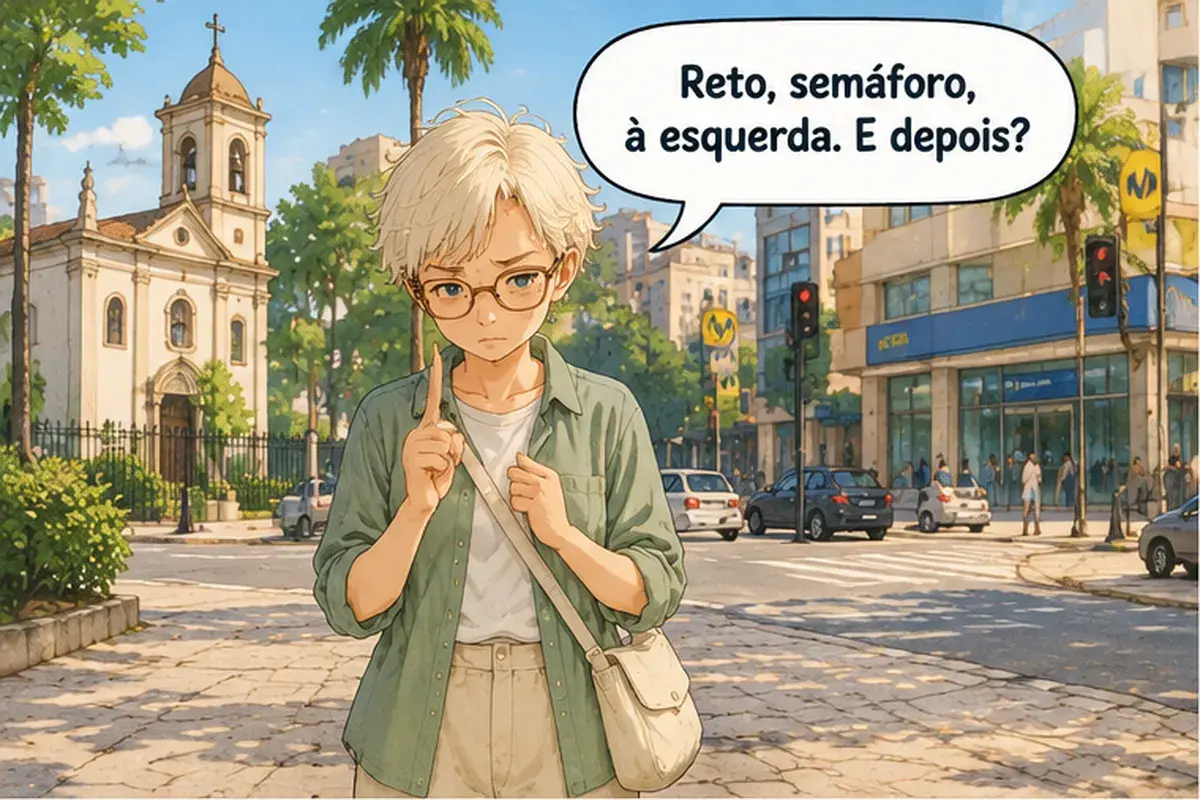
Reto, semáforo, à esquerda. E depois?
Straight ahead, traffic light, left. And then?
- Senhor
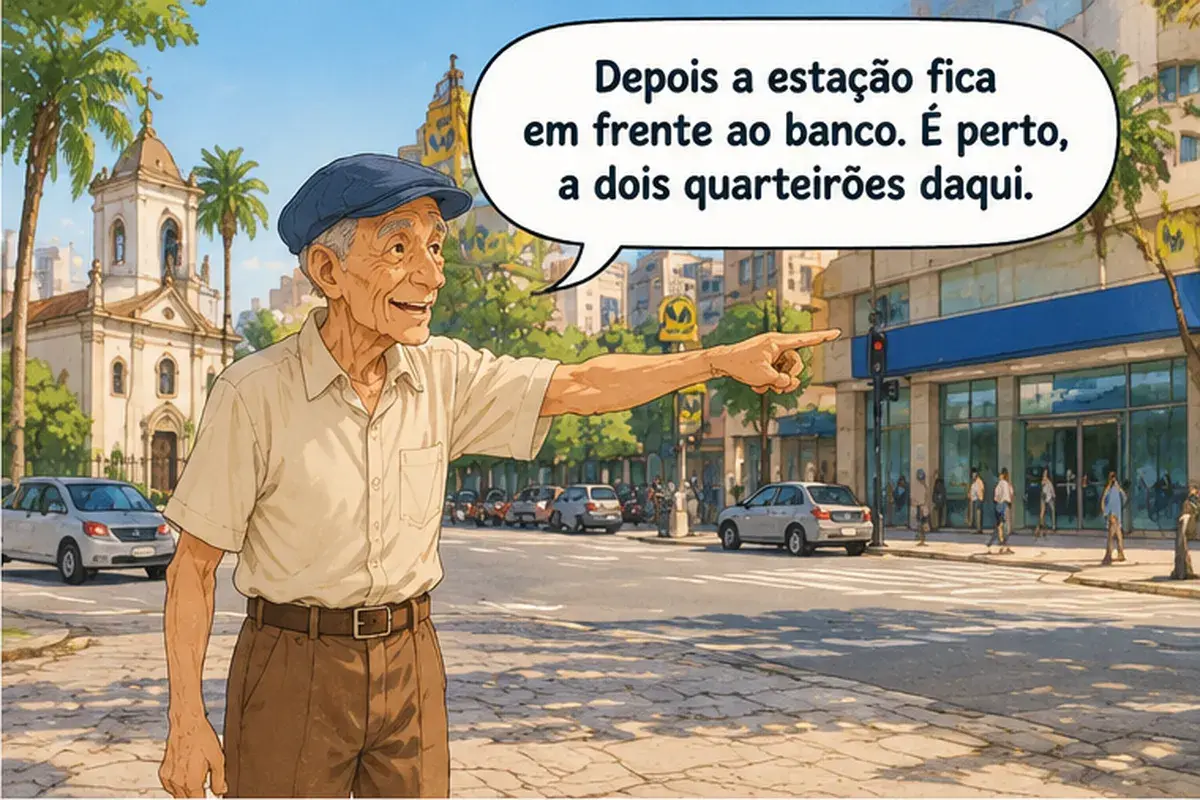
Depois a estação fica em frente ao banco. É perto, a dois quarteirões daqui.
Then the station is across from the bank. It's close, two blocks from here.

- Nina
Muito obrigada! Eu sei o caminho!
Thank you very much! I know the way!
- Senhor
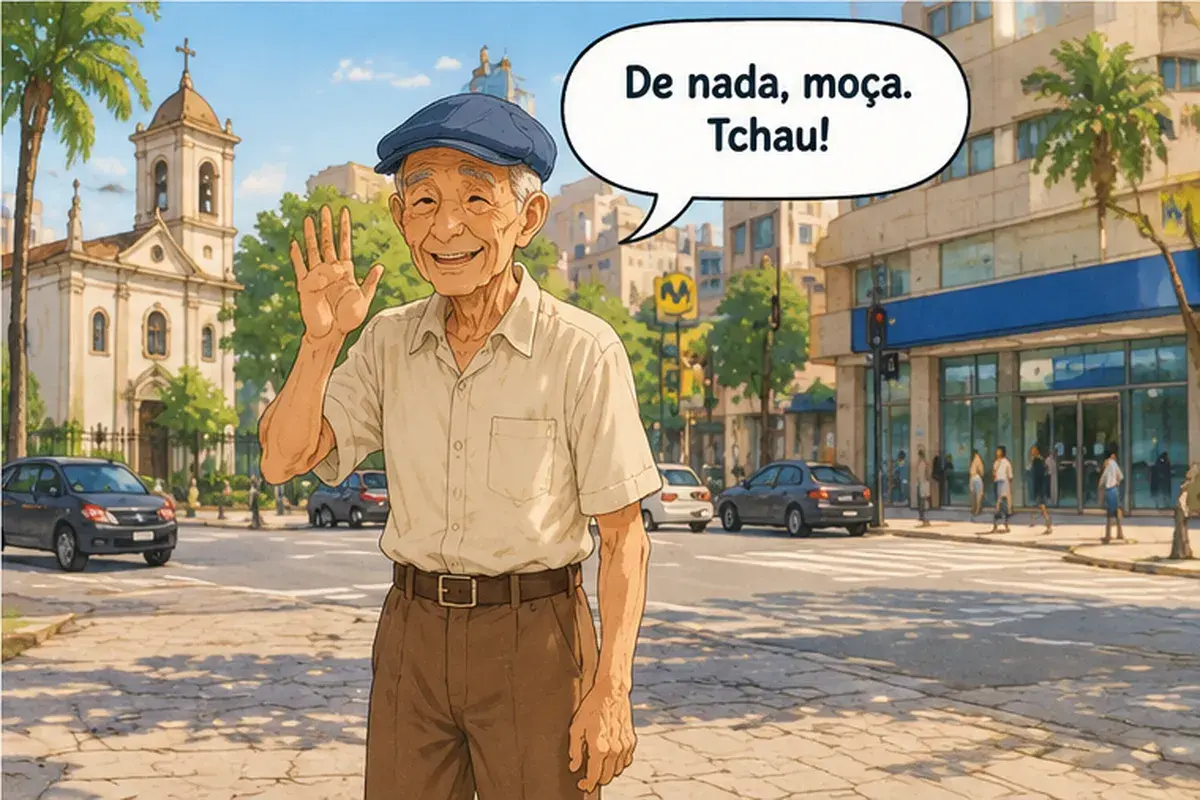
De nada, moça. Tchau!
You're welcome, miss. Bye!
Grammar for this text
- Com licença, onde fica o metrô? — com licença (literally "with your permission") is how you approach a stranger: "excuse me". fica is the você / ele / ela form of ficar (to be located): for a building or a place people usually ask onde fica...?; está is more for things and people.
- Siga reto, vire à direita na esquina, atravesse a avenida — three polite commands (you'll learn them fully at A2). Take the eu form and change the final -o: for -ar verbs to -e — viro → vire (from virar), atravesso → atravesse (from atravessar); for the others to -a — sigo → siga (from seguir; its eu form already changed e to i). à = a + a, na = em + a.
- Desculpa, eu tenho que ir! — desculpa (sorry) is a casual command of desculpar and looks just like the você / ele / ela form. tenho que + the infinitive ir (to go) means "I have to go".
- O senhor pode me ajudar? — pode is the você / ele / ela form of poder (can): with o senhor the verb is the same as with você. me ajudar — to help me (the pronoun goes before the verb).
- Sei. — the eu form of saber: irregular, the whole stem changes. No pronoun is needed: the verb shows the person. In English you'd answer "I do".
- O caminho dela está certo, mas tem muitas esquinas. — dela = de + ela (her); muitas is the feminine plural of muito, like esquinas. tem here means "there are".
- a dois quarteirões daqui — here a is a preposition of distance: "two blocks away". daqui = de + aqui; ao banco = a + o.
Words and grammar of the unit: Ask for directions and take the subway.
Learn the words from the texts with flashcards
In the app, you can tap any word in a text to see its translation, forms and examples, and new words stick with flashcards. 15 minutes a day.
Start for freeEverything is open for free. No card needed to sign up.